
Pool Filter Pressure High, Flow Low? The One Number That Explains It
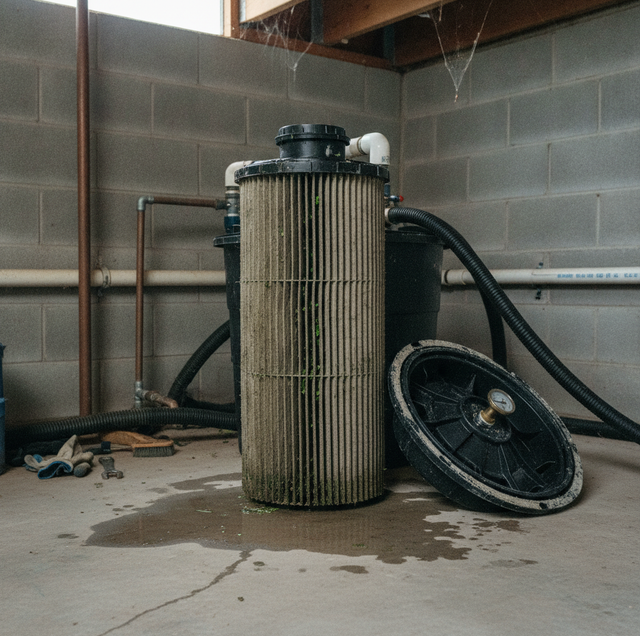
Quick Answer: High filter pressure with low return flow almost always means the filter is dirty and restricting water. The pressure gauge reads the water *before* it passes through the filter media. As the media traps dirt, resistance builds, so the pressure in front of it climbs while the flow that makes it out to the returns drops. When the reading sits roughly 8 to 10 psi above your clean starting pressure, it's time to clean or backwash.
You walk out to the pool, glance at the filter gauge, and the needle is sitting higher than you remember. Then you look at the returns, and the water is barely stirring the surface. High pressure and weak flow at the same time feels like a contradiction. It isn't. It's one of the clearest signals your equipment gives you, and once you understand what the gauge is actually measuring, the fix usually points to itself.
The Gauge Measures Resistance, Not Power
Here is the piece most pool owners miss: the pressure gauge on your filter tank is on the inlet side, reading the water as it enters the filter. It is not telling you how hard the pump is pushing. It is telling you how hard the water is having to work to get through the media on the other side.
Think of it like a crowd trying to leave a stadium through a single doorway. If the doorway is wide open, everyone flows out easily, and the pressure of the crowd behind stays low. Start narrowing that doorway, and the crowd backs up. Pressure builds behind the bottleneck while fewer people actually make it through per minute. Your filter works the same way. Clean media is the wide doorway. As dirt, debris, oils, and fine particles pack into the cartridge pleats, the sand bed, or the DE grids, the effective opening shrinks. Water piles up in front of it (higher gauge reading), and less of it reaches your returns (lower flow).
So the two symptoms are not fighting each other. They are the same event seen from two angles: restriction in the filter media.
Learn Your Clean Baseline First
Before you can tell whether a pressure reading is "high," you need to know what "normal" looks like on your specific system. That number is your clean baseline.
Right after you clean or backwash the filter, with the pump running normally, note the pressure reading. That is your baseline, the pressure of water moving through fresh, unrestricted media. Every filter and plumbing setup starts with a slightly different number, which is why there is no single "correct" psi that applies to every pool. Your baseline might be 10 psi; your neighbor's might be 18. Both can be perfectly normal.
The working rule of thumb across the trade is to clean the filter again when the gauge climbs roughly 8 to 10 psi above that clean baseline. Not when it hits a fixed number on the dial, but when it rises that much *over where it started clean*. This is the single most useful habit you can build, because it turns a vague "the pressure seems high" into a decision you can actually make.
What Actually Drives the Pressure Up
Once you know your baseline has been exceeded, the cause is almost always something that restricts the media. The usual suspects vary by filter type:
- A dirty cartridge, sand bed, or DE grid that simply needs cleaning or backwashing: This is by far the most common cause and the easiest to rule in or out.
- A filter overdue for a deep clean or media replacement: A cartridge that gets a quick rinse but never a real soak will slowly lose flow over months. Sand and DE degrade over the years.
- Oils, lotions, and scale binding into the media: Sunscreen and body oils don't hose off. They form a film in the pleats that a garden hose rinse leaves behind.
- A channeled or calcified sand bed: Old sand can develop packed clumps or open channels that water shoots straight through, so backwashing stops restoring flow.
- Too much DE added after backwashing: Overloading the grids chokes the flow from the start.
There is also a category worth separating out. High pressure can come from a restriction after the filter, not inside it. A valve on the return side that is closed or only partly open, or a return line that is pinched or scaled, pushes the pressure up the same way clogged media does. That is why checking the valves is a smart first move before you assume the media is dirty. If the media is clean and the pressure is still high, the restriction lives downstream.
Why Low Flow Alone Points a Different Direction
It helps to know what doesn't fit this picture, because it narrows the diagnosis fast.
Low flow can absolutely come from the suction side of the system, the plumbing between your pool and the pump. A clogged skimmer basket, a packed pump basket, or an air leak on the suction line all starve the pump of water. But those problems typically show up as *low* pressure on the filter gauge, because less water is reaching the filter in the first place. The pump is straining to find water, not pushing a full charge through restricted media.
That contrast is the useful part. High pressure with low flow is a specific fingerprint. It tells you the water is getting to the filter fine, then hitting a wall at or just past the media. Low pressure with low flow sends you upstream to the baskets and suction plumbing instead. Reading the gauge alongside the flow saves you from tearing apart the wrong end of the system.
Fixing It By Filter Type
The right fix depends on what kind of filter you run, and each one has its own rhythm.
Cartridge filters: Remove the cartridge and hose it down, working the spray between every pleat from top to bottom. For sunscreen and oil buildup, a rinse isn't enough. The cartridge needs a periodic soak in a dedicated filter cleaner to break down the film that a hose can't touch. Cartridges also wear out. When the pleats go soft, the fabric thins, or the flow won't come back even after a proper soak, the cartridge is done and needs replacing.
Sand filters: Run the backwash cycle to flush trapped debris out to waste, then return to filter mode. If the pressure drops back near your clean baseline, you're set. If it stays high right after backwashing, the sand itself has likely channeled or calcified, and backwashing can no longer clear it. At that point, the sand bed needs to be replaced, which restores the filter far better than repeated backwashing ever will.
DE filters: Backwash to clear the old, dirt-loaded DE, then recharge the grids with the correct amount of fresh DE. Measure it. Too many choke points flow from the moment you restart. Periodically, the grids should be pulled and deep-cleaned, so old DE and oils don't cement in place.
Across every type, if you've cleaned the media, checked the valves, and the pressure still won't behave, that points to something a pool professional should look at, whether it's worn internals, a plumbing restriction, or media at the end of its life.
Heat and Heavy Use Speed It All Up
How fast your filter fouls isn't constant throughout the year. A pool that runs hot and gets heavy swimmer traffic loads its media faster, because warm water encourages more algae and bacteria activity, and every swimmer brings in more sunscreen, oils, and organic debris. That means the gauge can walk up past your baseline in a matter of days during a stretch of hot, busy weekends.
The flip side is just as real. In cooler stretches or when the pool sits mostly unused, the same filter can hold its baseline for far longer between cleanings. This is exactly why the clean-baseline rule beats a calendar. Instead of cleaning "every two weeks" whether it needs it or not, you let the gauge tell you, and it will ask for a cleaning more often in the busy heat and less often when things are quiet.
A Word on Safety Before You Open Anything
One thing that is not optional: your filter tank holds water under pressure, and the clamp band or lid can blow off with real force if you open it while it's charged. Before you remove a cartridge lid, open a DE tank, or loosen a clamp, shut off the pump and relieve the pressure. Most filters have an air-relief valve on top of the tank. Open it and let the pressure bleed off until the gauge reads zero and air stops hissing out. Only then should you open the tank. Skipping this step is how people get hurt, and it takes ten seconds to do right. If a repair requires more than cleaning, leave it to a pool professional who can safely pull the system apart.
Frequently Asked Questions
The interval is not fixed because the rise occurs more quickly after heavy use, a big storm, or a crowded swim day. A jump of 8 to 10 psi within a day or two usually means a lot of debris hit the filter at once, rather than the gradual loading you would see over normal weeks. So watch the gauge against your own clean baseline instead of a calendar, and clean when it climbs that much above where it started fresh. In a quiet stretch, it may take much longer to get there.
The gauge is an inlet-side static reading taken with the pump running, so it reflects the resistance across the media rather than the pump's strength. A strong pump pushing against a clogged filter still shows high pressure and weak returns, because the reading is about how hard the water works to get through, not how hard the pump pushes. As dirt packs the media, resistance climbs and the pressure with it, while less water makes it out to the returns. One clog produces both readings at once.
Yes. Oils and lotions bind down into the pleats and form a film that a quick hose rinse won't remove, so a cartridge can look perfectly clean on the surface while flow is still choked underneath. To fully restore it, the cartridge needs a periodic deep soak in a filter cleaner made to dissolve that oily buildup, something plain water simply won't do.
Over the years, a sand bed can channel or calcify, meaning the grains pack into hard clumps or the water carves open channels straight through. Once that happens, backwashing no longer disturbs the bed enough to clear it. At that point, the sand itself has reached the end of its service life and needs replacing, which no amount of additional backwashing will fix.
Yes. A valve on the return side that's partly closed, or a restriction in the return plumbing, backs water up and raises the gauge just like clogged media does. Because of that, the valves and return side are worth checking first, before assuming the media is the problem. If the filter is clean and the pressure is still high, the restriction is somewhere downstream of the tank.
Look at what the pressure gauge is doing alongside the weak flow. A clogged skimmer basket, a packed pump basket, or a suction-side air leak usually shows up as *low* pressure paired with low flow, because the pump can't get a full charge of water to begin with. High pressure with low flow is the opposite signature, and it points specifically to the filter media or the plumbing after it.
Book a filter cleaning or diagnostic — get strong return flow back without guessing at the gauge. Dog Days Pools serves Clearwater and Pinellas County. CPC1460480. Call (727) 205-0566.
