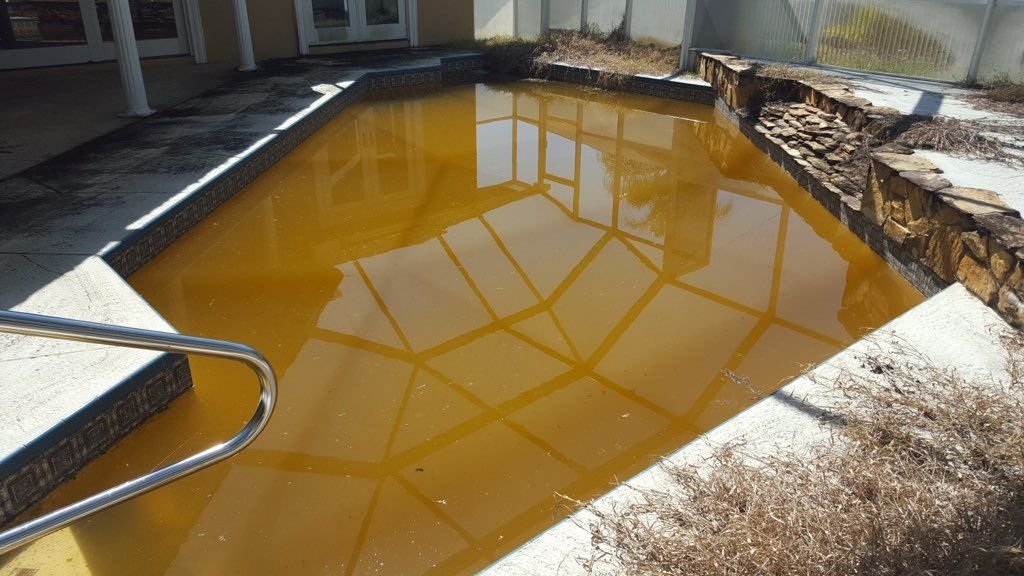
Pool problems don't announce themselves with a clear label. The pump is making a noise you've never heard before. The pool is cloudy even though you added chlorine. The pressure gauge is higher than usual, and the flow seems weak. The water turned green overnight. The salt system is showing an error code that means nothing to you. Something is clearly wrong — but what?
Dog Days Pools provides professional pool troubleshooting and diagnostic service to homeowners across Clearwater and Pinellas County. We come to your pool, systematically work through the symptoms, test and inspect every relevant system, and tell you exactly what's wrong, what caused it, and what it will take to fix it — before any repair work starts. No guessing. No replacing parts, hoping something sticks. A clear written diagnosis and a straight repair quote. No trip fee.
Why Pool Troubleshooting Starts With Diagnosis — Not Parts
The most expensive pool repair mistake is replacing parts before understanding what's wrong. Pool symptoms are almost always shared by multiple possible causes — and the most obvious cause is often not the right one:
A pump that won't prime could be a failed motor, a suction-side air leak, a clogged impeller, a closed valve, or a failed pump lid o-ring. A cloudy pool could be chemistry, filtration, or early algae. Replacing the pump before checking for an air leak wastes $400. A correct diagnosis takes 30 minutes and saves you from the wrong repair.
- Multiple possible causes for the same visible issue
- Incorrect repairs waste time and money
- Proper diagnosis prevents unnecessary replacements
- Systematic testing identifies the real problem quickly
Pool systems are interconnected. A dirty filter raises system pressure, which causes reduced flow, which causes the heater to error on low flow, which causes the salt cell to under-produce chlorine, which causes the pool to turn green. The problem looks like a green pool — the actual cause is a filter that needs cleaning.
- Every component affects overall pool performance
- Pressure, flow, and chemistry are connected
- Root cause is often different from visible symptom
- Full-system analysis prevents repeat failures
A $50–$150 diagnostic visit that correctly identifies the problem saves you from buying a $350 pump motor when the real issue is a $15 o-ring. It prevents multiple service calls and stops small problems from turning into expensive failures.
- Avoid unnecessary equipment replacement
- Save money on incorrect repairs
- Prevent repeat service visits
- Fix the issue once — not multiple times
Every diagnostic visit ends with a written summary: what symptoms were observed, what was tested, what was found, and a clear repair recommendation with a specific quote. You decide whether to proceed.
- Clear written report after every visit
- Detailed findings and test results
- Transparent repair recommendations
- No pressure — you choose next steps
Some pool problems require same-day attention. These are not routine issues and should be addressed immediately to avoid damage or safety risks.
- Burning smell from equipment pad
- Visible smoke or electrical sparks
- Pump overheating or excessive vibration
- Water level dropping rapidly
- Active leaks or burst fittings
- Electrical components not shutting off
Pool Problem Diagnostic Quick Reference — What It Could Be & What We Check
Use this table to identify the most likely cause of your pool's symptoms. These are the 20 most common pool problems Dog Days Pools diagnoses in Clearwater — with the most common causes and what a proper diagnosis involves:
| Symptom | Most Likely Cause(s) | What a Proper Diagnosis Checks |
|---|---|---|
| PUMP & CIRCULATION PROBLEMS | ||
| Pump won't prime / loses prime | Suction-side air leak (most common), blocked impeller, low water level, failed pump lid o-ring, closed suction valve | Check pump lid seal, all unions and suction fittings for air; open all valves; check impeller for debris blockage; verify water level at skimmer |
| Pump runs but no water flow | Clogged impeller, closed valve, clogged filter (high backpressure), suction line blockage | Check pressure gauge vs. normal; open all valves; backwash or inspect filter; remove pump basket and inspect impeller directly |
| Pump making loud noise / vibration | Cavitation (air in suction), failing bearings, debris in impeller, pump not primed fully | Listen to characterize noise (grinding = bearings, gurgling = air/cavitation); check for air in system; inspect impeller |
| Pump runs hot, shuts off | Thermal overload tripping — running dry, low flow, electrical issue, motor winding failure | Check flow through system; verify pump is primed; check breaker; test motor amperage under load |
| Low flow / weak jets | Dirty filter, partially closed valve, scaled salt cell reducing output, undersized pump for system | Check filter pressure; verify all valves open; inspect salt cell for scale; measure actual flow rate |
| FILTER & PRESSURE PROBLEMS | ||
| Filter pressure high | Dirty filter media (most common), closed return valve, filter needs backwash or cartridge cleaning | Record pressure; backwash/clean filter; re-check pressure; if still high, inspect media for channeling or collapse |
| Filter pressure low | Suction-side air leak, clogged skimmer or pump basket restricting intake, cracked filter lid | Check baskets and skimmer; check pump lid; inspect filter for cracked housing or media bypass |
| Water returns to pool cloudy after filter | Filter media needs replacement, DE filter grid torn, sand filter channeled | Backwash; inspect DE grids for tears; check sand for calcification or channeling; assess media age |
| Multiport valve leaking to waste | Worn spider gasket or internal valve seal failure | Remove and inspect spider gasket; replace if cracked or compressed; check seat for debris |
| WATER QUALITY & CHEMISTRY PROBLEMS | ||
| Cloudy water | High pH, high calcium precipitating, dirty filter, early algae bloom, high TDS | Full 9-parameter chemistry test; filter inspection; check for algae on walls; TDS test |
| Green water | Algae bloom — low/ineffective chlorine (low CYA, high pH, high cyanuric), equipment failure leaving pool unsanitized | Test FC, CC, pH, CYA; check equipment runtime; identify root cause before treatment — never just add chlorine to a green pool without diagnosing why it went green |
| Strong chlorine smell | High combined chlorine (chloramines) — NOT excess chlorine. The pool is under-sanitized. | Test free and total chlorine to determine CC level; shock to breakpoint chlorination level; investigate organics load |
| Burning eyes / skin irritation | pH too low or too high; high combined chlorine | Test pH and CC; adjust pH to 7.4–7.6; shock if CC elevated |
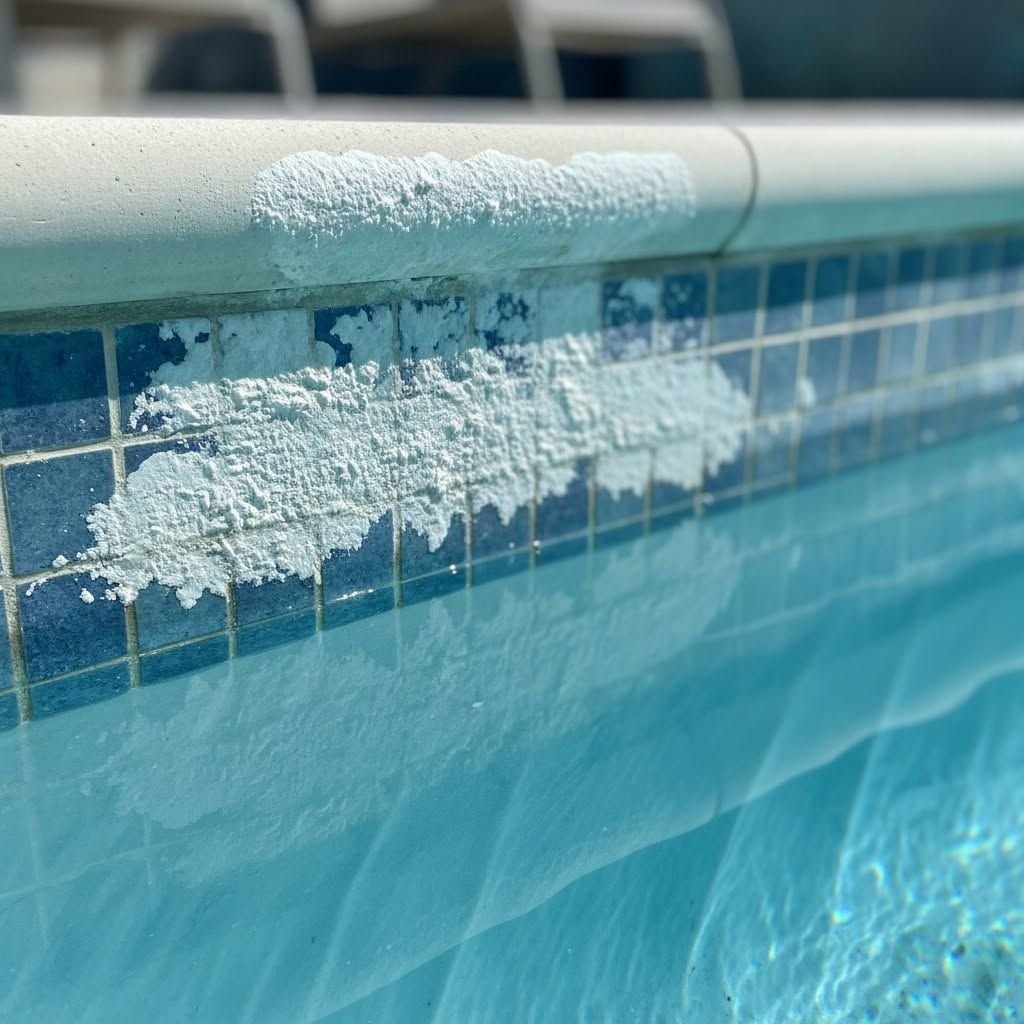
| Scale on tile / equipment | Calcium hardness too high with elevated pH causing calcium carbonate precipitation | Test calcium hardness, pH, TA; calculate saturation index; acid wash scale on surfaces; reduce CH if above 500 ppm |
| EQUIPMENT & ELECTRICAL PROBLEMS | ||
| Heater not igniting / no heat | Low flow (dirty filter, pump issue), gas supply issue, igniter failure, heat exchanger scale, GFCI tripped | Check flow rate first (heaters require minimum GPM); test gas supply; inspect igniter; check GFCI; test heat exchanger condition |
| Salt system showing error code | Check Cell (scale on cell), Low Salt (level or dirty cell), No Flow (sensor), board fault | Read specific error; test salt level independently; inspect cell for scale; check flow sensor; reference brand-specific error guide at /salt-systems-repair-maintenance |
| Automation / timer not responding | Programming error, relay failure, wiring fault, GFCI trip, control board failure | Check display for error codes; verify GFCI; test individual relay outputs; inspect wiring connections |
| GFCI breaker tripping repeatedly | Ground fault in connected equipment — pump, heater, light, or salt cell. Safety system working correctly. | DO NOT reset repeatedly without investigation. Identify which circuit is faulting; test each piece of equipment individually to isolate the ground fault source |
New Construction & Replaster Pool Startup Timeline
1. Pump & Circulation Diagnostics
Symptoms:
- Pump won't start, loses prime, or runs but doesn't circulate water
- Loud grinding, gurgling, or vibration noises from the pump
- Pump shuts off repeatedly or won't stay running
- Weak flow to the jets despite the pump running
- Air bubbles are coming from the return jets
What we check:
- Run pump and observe: priming behavior, noise, pressure gauge reading, flow at returns
- Inspect the pump lid, the strainer basket, and the lid o-ring
- Check all suction and return valves — fully open?
- Feel for vibration patterns that indicate bearing wear vs. cavitation vs. debris
- Test motor amperage under load if bearing or winding failure is suspected
- Inspect impeller for hair, debris, or calcium blockage
2. Filter & Pressure Diagnostics
Symptoms:
- Filter pressure reading higher or lower than normal
- Water clarity not improving despite pump running hours
- Water returning to the pool with visible debris or cloudiness
- The multiport valve is leaking to the waste port
- The pool equipment is making noise related to pressure buildup
What we check:
- Record the current pressure and compare it to the normal clean operating pressure for that filter
- Backwash or clean cartridges; re-check pressure to determine if the filter is the cause
- Inspect DE grids for tears if pressure normalizes, but clarity doesn't improve
- Check sand media for channeling, calcification, or age (sand needs replacement every 5–7 years)
- Inspect the multiport valve spider gasket for wear or cracking
- Verify the flow direction through the filter and return is correct
3. Water Chemistry Diagnostics
Symptoms:
- Cloudy, hazy, or discolored water with normal-looking chemistry
- The pool is turning green despite chlorine being added
- Strong 'chlorine smell' or eye/skin irritation
- Chemistry is constantly drifting despite regular treatment.
- Algae on walls or floor despite normal chlorine readings
What we check:
- Full 9-parameter chemistry test: FC, CC, pH, TA, CH, CYA, salt (if applicable), phosphates, TDS
- Identify which parameters are out of range and which are interacting
- Check stabilizer (CYA) level — Florida's most commonly overlooked parameter
- Test for phosphates if algae is recurring despite normal chlorine levels.
- Assess chemistry trend vs. last reading to identify drift direction
- Cross-reference equipment runtime (chemistry problems often trace back to insufficient filtration hours)
4. Water Loss & Leak Diagnostics
Symptoms:
- Pool requiring frequent top-ups — more than once a week
- Water level is dropping faster than expected evaporation
- Wet or soggy ground around pool, equipment pad, or plumbing run
- Pump losing prime repeatedly (suction-side air leak)
- Air bubbles from jets (suction-side leak drawing air)
What we check:
- Bucket test to confirm leak vs. evaporation (see /leak-detection-and-repair)
- Pump-on vs. pump-off test to narrow leak location
- Visual inspection of the equipment pad under operating pressure
- Dye testing at skimmer, light fittings, and shell penetrations
- Pressure testing of suction and return plumbing lines
- Full leak detection protocol — see /leak-detection-and-repair for complete scope
5. Electrical & Controls Diagnostics
Symptoms:
- GFCI breaker tripping repeatedly on pool circuit
- Timer or automation system not following the schedule
- The pool light is not working or flickering
- Salt system control panel showing error codes or blank display
- Equipment running continuously or not turning on at all
What we check:
- Check the GFCI and breaker panel for tripped breakers
- Test each piece of equipment individually to isolate the ground fault source — never reset a GFCI repeatedly without finding the cause
- Inspect timer programming and check for relay failure
- Read and interpret automation error codes; test individual outputs
- Inspect the light fixture, conduit, and GFCI for light circuit faults
- Test salt system control board voltages and output signal; check cell cable
6. Heater & Heating System Diagnostics
Symptoms:
- Heater not igniting or cycling on and off without reaching the desired temperature
- Error codes on heater display (often flow-related)
- The pool is taking unusually long to heat up
- The heater is running, but the heat exchanger scale is causing reduced efficiency
- Gas smell near the heater (immediate safety concern — call immediately)
What we check:
- Check filter pressure first — most heater errors are flow-related (dirty filter)
- Verify the minimum flow rate requirement is being met for that heater model
- Read and interpret heater error codes — each brand has specific diagnostic codes
- Test gas supply pressure and verify gas valve operation
- Inspect the heat exchanger for calcium scale (reduces heat transfer efficiency dramatically in Florida hard water)
- Test the igniter and flame sensor if no ignition is confirmed
What Happens During a Dog Days Pool Diagnostic Visit
A structured diagnostic visit follows a consistent process — we don't just look at the symptom you called about and stop there. Pool systems are interconnected, and the visible symptom often traces back to a problem in a different system.
You Describe the Problem — We Listen
Before touching anything, we want to hear the full picture: what you're seeing, how long it's been happening, what you've already tried, and whether anything changed recently (new equipment, heavy rain, a recent party, a power outage). Context changes the diagnostic approach entirely.
Visual Inspection — Everything Running
We run the equipment under normal operating conditions and watch: pump priming behavior, pressure gauge reading, flow to jets, heater and salt system status, timer, and automation panel. Many problems are visible within the first 5 minutes of observing the system under load.
Full Chemistry Test — All 9 Parameters
Water chemistry is tested on every diagnostic visit, regardless of the stated problem. Chemistry issues frequently masquerade as equipment problems and vice versa. A green pool call that skips chemistry testing can result in a misdiagnosis.
Systematic Component Testing
Based on what the visual inspection and chemistry reveal, we test specific components: pump lid seal, filter pressure (clean vs. dirty), valve positions, GFCI status, equipment connections, salt cell output, and any specific component flagged by the initial observation.
Root Cause Identification
We trace the symptom chain back to the root cause — not just the most recent visible effect. If a filter is dirty because a timer relay failed and the pump hasn't been running, the root cause is the relay, not the filter.
Written Diagnosis & Repair Quote
You receive a written summary of everything found, the identified root cause, and a specific repair quote before any work begins. You approve the work, ask questions, or take the diagnosis to consider — no pressure either way.
Why Dog Days Pools for Pool Troubleshooting & Diagnostics
No Local Competitor Has a Dedicated Troubleshooting Page
Blue Science's Clearwater pages cover weekly service, leak detection, and repairs — no troubleshooting or diagnostic content. Aqua Wizard covers pool types and services at a high level. Fresh Finish covers equipment repair but has no diagnostic framework published. This is the only dedicated pool troubleshooting resource from a Clearwater pool company — which means Dog Days captures every homeowner who types 'pool pump not working Clearwater' or 'why is my pool green' into Google.
Diagnosis Before Parts — Not Parts Before Diagnosis
The pool industry has a bad reputation for parts-swapping: replace the pump because it's making a noise, then replace the filter because the pool is still cloudy, then replace the salt cell because the chlorine is still off. Each replacement generates service call revenue. Dog Days Pools identifies the root cause first — because that's what 20+ years of doing this correctly looks like, and it's what keeps customers coming back rather than calling a second company to fix what the first company missed.
20+ Years of Clearwater Pool System Pattern Recognition
Diagnostic ability compounds with experience. After 20+ years of Clearwater pool service, certain problems become immediately recognizable — the pattern of symptoms that means a filter needs a media replacement rather than a backwash, the motor noise that's cavitation vs. bearing failure, the salt system behavior that indicates the controller rather than the cell. That pattern recognition is the difference between a diagnostic visit that takes 30 minutes and one that takes all afternoon.
No Trip Fee — You're Not Paying for the Drive
Blue Science charges a $99 diagnostic fee per call for pool repairs. On a diagnostic visit that leads to a $60 part replacement, that $99 fee nearly doubles your total bill. Dog Days Pools does not charge a trip fee. You pay for the diagnosis and the repair — not for the drive to your house.
Open 7 Days, 9am–9pm — Problems Don't Schedule Themselves
A pool problem that appears Thursday afternoon before a Friday party doesn't wait until Monday. Dog Days Pools is open seven days a week from 9am to 9pm. Call on a Saturday morning. Call on a Sunday afternoon. Call at 8pm when you notice the pump has been making a noise all day. We answer.
Our Primary Service Areas:
📍 Clearwater —Our home base — we know every neighborhood
📍Safety Harbor —Full-service pool care for Safety Harbor residents
📍Dunedin — Reliable weekly and repair service in Dunedin
📍Palm Harbor —Trusted pool pros throughout Palm Harbor
Also Serving:
📍 Oldsmar — Our home base — we know every neighborhood
📍Countryside — Experienced pool care for Countryside homeowners
📍East Lake Woodlands — Expert pool maintenance in East Lake Woodlands
📍Lansbrook — Regular service and repairs throughout Lansbrook
Not sure if we cover your area? Call (727) 205-0566 — we'll confirm coverage and give you a free estimate on the same call.
Call now to get a Free Estimate.
Call or Text
(727) 205-0566Hours
Monday – Sunday: 9am to 9pmServing all of Pinellas County
Pool Troubleshooting FAQs — Clearwater, FL
Straight answers to the most common pool problems and what’s actually causing them.
Pool Problem? Let's Diagnose It — No Trip Fee
If something's wrong with your pool and you're not sure what, call or text Larry. Describe what you're seeing — noise, color change, equipment behavior, error code, water loss — and we'll tell you on the phone whether it's something you can check yourself or whether a site visit makes sense. If we come out, you get a full diagnosis and a repair quote before any work begins.