Pool Timer Repair & Replacement in Clearwater, FL

Mechanical & Digital Timers. Intermatic, Grasslin, AquaLogic & More. No Trip Fee. Owner-Operated. Open 7 Days, 9am–9pm.

Your pool timer is the conductor of your entire equipment schedule. It tells your pump when to run, your heater when to warm up, your lights when to switch on, and your automation system when to execute every daily function. When a timer fails — whether it stops advancing, won't switch the pump on or off, trips a breaker, or simply loses its programmed schedule after a power surge — your pool stops running on the schedule you set. The pump runs at the wrong times or not at all. Water quality declines. Energy costs climb. And in Florida's heat, a pool that goes without circulation even for a day or two is a pool that starts sliding toward an algae problem.

Dog Days Pools diagnoses and repairs pool timers across Clearwater, Safety Harbor, Dunedin, Palm Harbor, Oldsmar, Countryside, East Lake Woodlands, and Lansbrook. We service mechanical timers, digital timers, and multi-circuit control systems. We replace worn trippers, failed timer motors, burned contacts, and complete timer units. No trip fee. No charge to diagnose. A clear quote before any work starts.

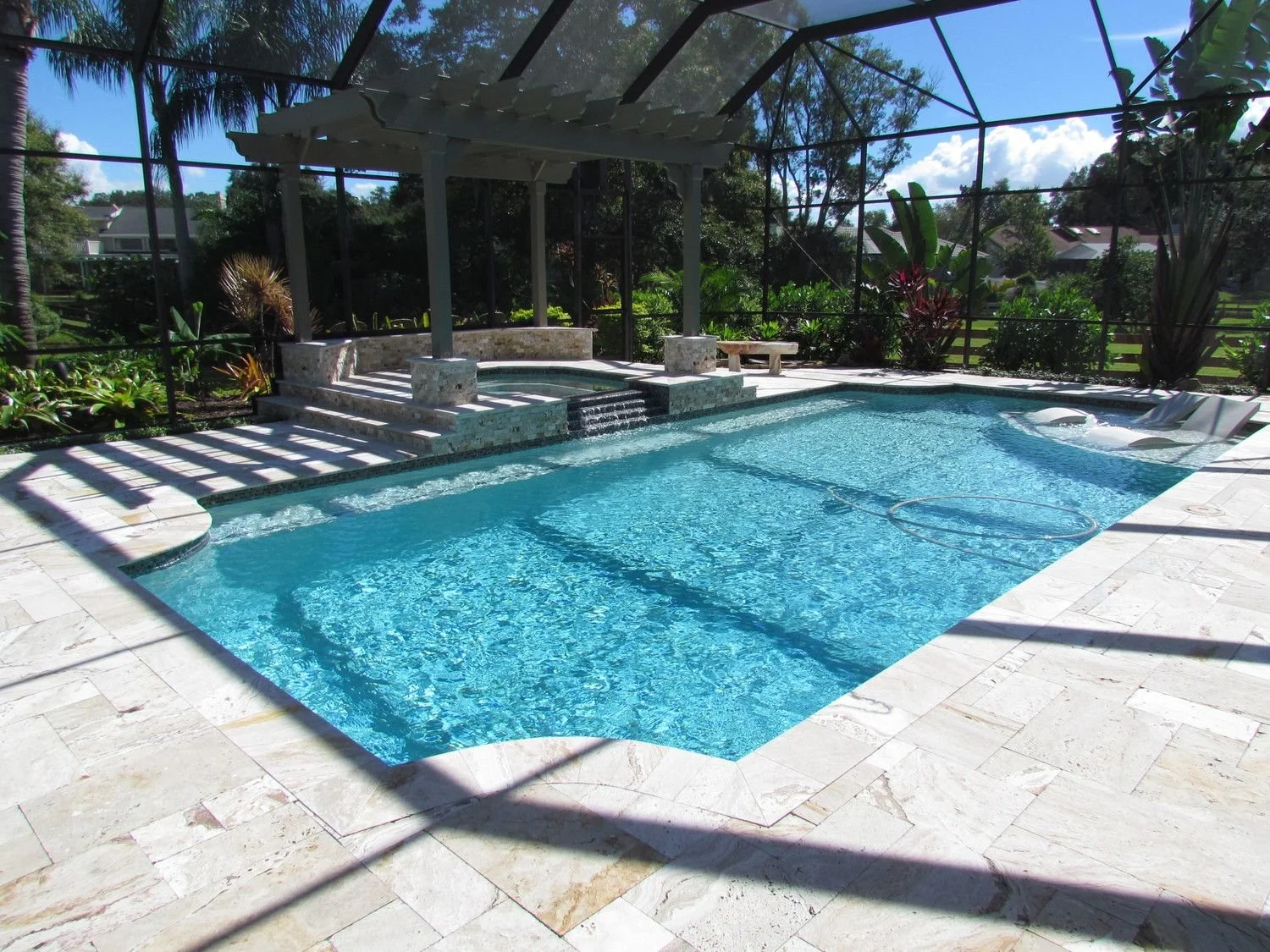
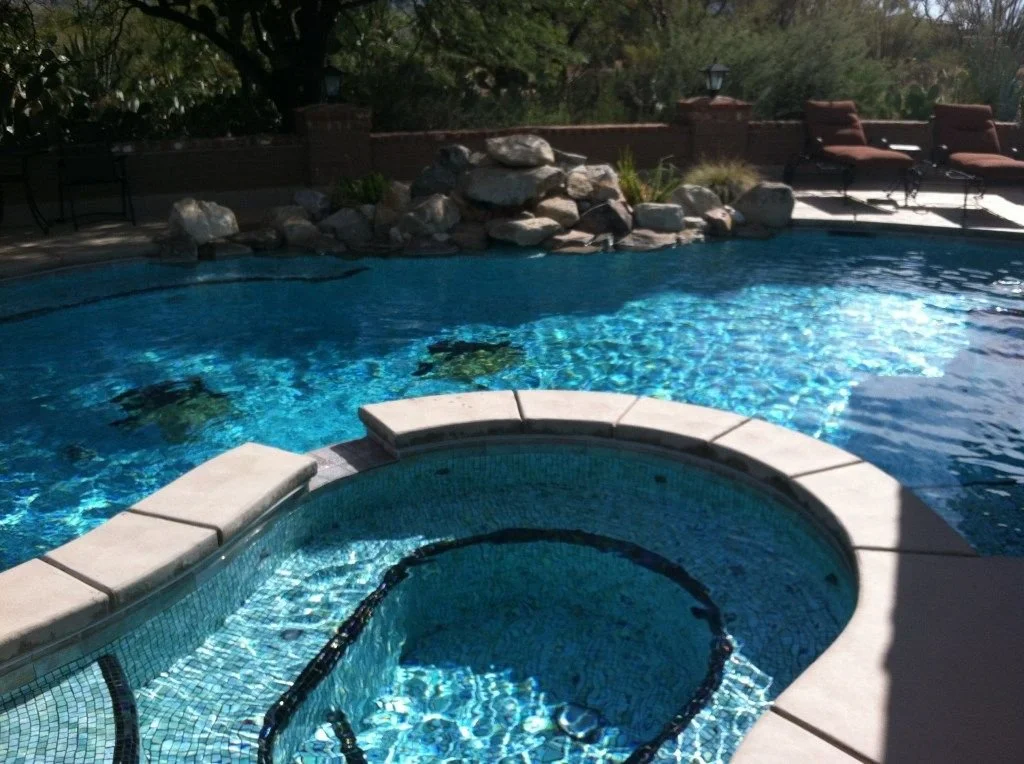
Enclosed backyard with a kidney-shaped swimming pool, surrounded by paver patio and seating area, with a screened roof, garden plants, and a house in the background.

Clearwater's Pool Timer Specialists

Mechanical & Digital Timers

Intermatic, Grasslin, Hayward, Pentair, Jandy

Same-Day Repair Available

Common timer parts carried in truck for one-visit fixes

Free Estimates. No Trip Fee.

Quote before any work begins — always

20+ Years Florida Pool Service

#1 in Clearwater & Safety Harbor, 6 years running

Open 7 Days, 9am–9pm

Weekends and evenings included — no overtime charge

Licensed & Insured

License #CPC1460480 — State of Florida

Signs Your Pool Timer Is Failing

Most pool timer problems don't announce themselves dramatically. They show up as a pump running at odd hours, a pool that won't heat up, lights that don't come on when they should, or a water bill that doesn't make sense. Here are the warning signs Clearwater pool owners should know:

Pump & Filtration Problems
  • The pump won't turn on or off at scheduled times
  • Pump running continuously — timer not cutting off
  • Pump not running at all — timer not switching on
  • The pump is running in the middle of the night unexpectedly
  • The pool pump is tripping the breaker when the timer attempts to switch on
  • Pump runs fine manually, but won't respond to the timer schedule
Timer Mechanical / Physical Issues
  • Timer clock face not advancing — hands stopped
  • Tripper tabs are broken, bent, or fallen off the dial
  • Timer box cover corroded or contact points visibly burned
  • Timer dial cracked or seized — won't turn manually
  • Water intrusion or condensation inside the timer box
  • Buzzing or clicking sound from the timer enclosure
Digital / Electronic Timer Problems
  • Display blank or shows error codes after a power outage
  • The digital timer loses the programmed schedule after a power interruption
  • Timer shows the correct time, but doesn't execute on/off events
  • Buttons are unresponsive or sticky on the digital timer panel
  • Schedule resets to the default every time power is interrupted
  • One circuit works, another on the same unit doesn't
Water Quality & Cost Clues
  • Pool water turning green or cloudy — pump not running enough
  • Electricity bill spiking — pump running outside scheduled hours
  • The pool was never heated when expected — the heater timer was out of sync
  • Pool lights are on all night, burning unnecessary electricity

Timer acting up? Call (727) 205-0566 — we diagnose all timer types, 7 days a week, no trip fee.

Pool Timer Types — Mechanical, Digital & Multi-Circuit

Pool timers have evolved considerably over the decades Florida has been building pools. The Clearwater area has a large installed base of every timer generation — from 40-year-old mechanical units still clicking away faithfully to modern digital controllers and smart automation interfaces. Here's what we service:

Mechanical / Analog Timers — Most common type in Clearwater pools | Intermatic T101, T104, T106

Mechanical timers use a rotating 24-hour clock dial driven by a small motor inside the enclosure. Plastic or metal tripper tabs clamp onto the dial at the times you want the circuit to switch on and off — the tripper physically pushes a lever that closes or opens the electrical contacts as the dial rotates past it. They're simple, reliable, and have been the standard for Florida pool timers for decades. The most common brand is Intermatic (T101 for 120V single circuits, T104 for 240V pool pumps), though Grasslin, NSI, and other brands are also common in older Clearwater installations.

  • Trippers — the most frequently replaced timer component. They snap onto the dial and break off over time, especially in the Florida heat and UV environment. A missing tripper means the timer won't switch at that scheduled time — the pump stays on past schedule or never turns on.
  • Timer motor — the motor that drives the clock dial forward. When it fails, the clock stops advancing, and your pump runs at whatever state the contacts were in when the motor died: always on or always off.
  • Internal contacts — the electrical contact points that carry current when the timer switches. Contacts corrode, pit, or burn over years of cycling. Burned contacts cause inconsistent switching — sometimes working, sometimes not.
  • Clock face and dial — cracked dials, seized bearings, and broken hands are all repairable or replaceable as standalone parts in many Intermatic models.
  • Entire timer unit replacement — when the enclosure is corroded, multiple components have failed, or the unit is 15+ years old, full replacement is often the most cost-effective call. We carry or can quickly source Intermatic T104M and T101M replacements, the two most common units in Clearwater pools.

Digital Timers — Programmable with multiple on/off events | Intermatic P1353ME, P1353 series & others

Digital pool timers replaced mechanical units in many pools built or renovated in the 2000s and 2010s. Instead of physical tripper tabs, they use a programmed schedule stored in onboard memory. Digital timers typically allow multiple on/off events per day — useful for split filtration schedules, chemical dosing pumps, and heater pre-heating windows. Their main weakness is power sensitivity: many digital timer models lose their programmed schedules during power outages unless they have battery backup, and Florida's frequent lightning and surge events can corrupt or damage the internal board.

  • Schedule loss after power outage — the most common digital timer complaint in Florida. Units without battery backup reset to factory defaults after any power interruption. The solution is either re-programming, adding battery backup where the model supports it, or upgrading to a unit with non-volatile memory.
  • Blank or error display — LCD and LED displays fail on older digital timer units, particularly after lightning surges or moisture intrusion. Display failure doesn't always mean the timer isn't functioning, but it does mean you can't read or adjust the schedule.
  • Keypad failure — buttons that stick, stop responding, or give incorrect inputs. Often caused by moisture wicking under the membrane keypad over time in Florida's humidity.
  • Board failure from surge — a direct lightning strike nearby or a significant power surge can damage the control board beyond repair. Replacement of the timer unit is the typical resolution.
  • Multi-event schedule conflicts — digital timers can be programmed into conflicting or incorrect schedules that aren't obvious to diagnose without reviewing all programmed events. We audit the schedule as part of any digital timer service call.

Multi-Circuit & Sub-Panel Timers — Controls pump, heater, lights, cleaner on independent schedules

Many Clearwater pools — particularly those built or renovated in the last 15–20 years — use a multi-circuit timer panel that controls the pump, pool heater, pool lights, and pool cleaner on separate independent schedules from a single enclosure. These are sometimes branded as Intermatic PE series, Grasslin multi-channel units, or standalone sub-panels with individual timer mechanisms for each circuit. When one circuit in a multi-circuit panel fails, the other circuits continue operating normally, which can make the failure look like an equipment problem rather than a timer issue until someone checks which circuit corresponds to the non-functioning piece of equipment.

  • Single circuit failure in a multi-circuit panel — lights not coming on while the pump runs fine. First thing to check: is the light circuit's timer or breaker at fault, not the light fixture itself.
  • Shared clock motor driving multiple circuits — if the clock stops advancing on a shared-motor panel, all circuits lose their scheduling simultaneously.
  • Intermatic PE series panels — common in Florida pool sub-panels. Individual timer mechanisms can be replaced without pulling the entire sub-panel. We carry common PE series components.
  • Breaker integration — multi-circuit panels often include the pool's dedicated breakers in the same enclosure. We inspect the breaker condition as part of any timer panel service call.
  • Wiring configuration — multi-circuit panels are the most complex timer configurations to diagnose correctly, particularly when a previous owner or contractor has non-standard wiring. We trace the circuit before recommending any part replacement.

Smart / App-Connected Timers & Automation Integration — Pentair EasyTouch, Hayward OmniLogic/ProLogic, Jandy AquaLink & Intermatic SmartPool

At the upper end of the market, pool automation systems from Pentair, Hayward, and Jandy replace traditional timers entirely with a fully programmable controller that manages every piece of equipment — pump speed settings, heating schedules, lighting scenes, valve positions, and chemical dosing — from a single touchscreen or smartphone app. Many Clearwater pool owners also use standalone smart timer products like Intermatic's PE153 SmartPool controller, which adds WiFi scheduling capability to an existing pump circuit without requiring a full automation system installation.

  • Time/schedule programming loss — automation controllers lose their programmed equipment schedules after a complete power loss if the internal battery backup has failed. We replace controller batteries and reprogram schedules.
  • Single equipment not responding to automation commands — pump, lights, or heater not activating on schedule despite the controller showing the command was sent. It could be a failed relay inside the controller, a failed valve actuator, or a wiring issue between the controller and the equipment. We trace the signal path to find the fault.
  • App connectivity issues — the controller itself is working, but the smartphone app is not receiving status updates or sending commands. Often, it is a firmware or network configuration issue rather than a hardware failure.
  • Intermatic SmartPool / WiFi timer setup — we install and configure Intermatic's smart timer products as a cost-effective upgrade path for pool owners who want scheduling flexibility without a full automation system.
  • Full automation system repair vs. Dog Days scope note — Dog Days Pools handles timer repair, schedule programming, relay diagnosis, and component-level fixes on automation controllers. Complex automation system failures requiring Pentair/Hayward factory support or control board replacement are noted at estimate and referred to appropriately.

Pool Timer Repair Services — What We Fix

Most pool timer service calls fall into one of five categories. Here's exactly what we do for each:

01

Tripper Tab Replacement — Most Common Mechanical Timer Repair

Tripper tabs are the small plastic clips that snap onto the rotating dial of a mechanical timer and physically push the switching lever to turn your pool circuit on or off. They're inexpensive components, but when they break off, crack, or fall out — which is extremely common in Florida's heat and UV environment — the timer loses its on or off trigger at that time position. The pump runs past schedule or never turns on at the right time. We replace individual tripper sets on Intermatic and compatible timers and verify the dial is advancing and switching correctly after replacement. This is often the fastest and least expensive timer repair we make.

02

Timer Motor Replacement

The motor inside a mechanical timer drives the clock dial at exactly one revolution per 24 hours. When the motor fails, the clock stops advancing. Whatever state the contacts were in when the motor died is the state the circuit stays in — either always-on (pump runs until the breaker trips from overheating) or always-off (no filtration, chemistry crashes). Timer motor replacement is a straightforward repair on Intermatic T-series units — we replace the motor module, verify the clock resumes at the correct speed, and confirm the trippers are switching the contacts cleanly.

03

Contact Cleaning & Replacement

The electrical contacts inside a mechanical timer are the points that carry full pump current every time the timer switches on or off — typically twice a day, every day, for years. Over time, the contacts pit and corrode from electrical arcing, causing intermittent switching, failure to close fully, or burned contacts that no longer conduct reliably. We clean and inspect contacts on every mechanical timer service call. When contacts are pitted or burned beyond cleaning, we replace the contact assembly. Ignoring burned contacts leads to further arcing that can damage the wiring inside the timer enclosure.

04

Digital Timer Re-Programming

After power outages, surges, or accidental resets, digital pool timers need to have their pump schedules, heater pre-heat windows, light schedules, and cleaner run times re-entered correctly. This sounds simple, but it's a common source of frustration — digital timer user interfaces vary significantly across brands and models, and incorrect programming can result in the pump running too little (water quality issues) or too much (unnecessary electricity costs). We reprogram digital timers to match your desired schedule and confirm each programmed event is executing correctly before we leave.

05

Full Timer Unit Replacement

When a timer has multiple failed components, extensive corrosion inside the enclosure, a damaged housing, or is simply at the end of its useful life, full unit replacement is the right call. We evaluate the condition of the enclosure, wiring, and circuit integrity and give you an honest assessment of whether repair or replacement makes better financial sense. For the most common Clearwater pool timer — the Intermatic T104M 240V — we typically carry a replacement unit and can complete the swap in a single visit. We also replace Intermatic T101M 120V units and common multi-circuit panel components.

06

Timer Box Corrosion & Weatherproofing

Florida's combination of humidity, salt air, and outdoor UV exposure is extremely hard on pool timer enclosures. Timer boxes mounted in direct sun or in locations exposed to lawn irrigation spray are particularly vulnerable. Corroded terminal screws and backplates, degraded wire insulation, and water-infiltrated enclosures are all serious electrical safety issues beyond just causing timer malfunctions. We assess the enclosure condition during every timer service call and flag wiring or box issues that need addressing. Replacing a corroded enclosure is a far better outcome than an electrical fault in a wet outdoor environment.

How to Program a Pool Timer for Clearwater, FL — What the Settings Should Be

A correctly programmed pool timer isn't just about convenience — it directly affects water quality, equipment longevity, and your monthly electricity bill. Here's what optimal timer settings look like for a Florida pool:

How Long Should a Pool Pump Run Each Day in Clearwater?

Florida's year-round warm water and heavy bather loads require more daily circulation than pools in cooler climates. The general recommendation is to run your pump long enough to turn the entire pool volume over once every 24 hours — and in warm Florida weather, many pool pros recommend 1.5 to 2 complete turnovers per day to maintain chemistry stability. For a typical Clearwater residential pool of 12,000–20,000 gallons with a single-speed pump, this typically translates to 8–12 hours of daily run time. Variable-speed pumps running at lower RPMs can often achieve adequate circulation in fewer total hours because they run for longer stretches at optimal filtration efficiency rather than short bursts at full speed.

Heater Timer Settings

Pool heater timers need to be set to run the heater only while the pump is also running — a heater firing without water moving through it will overheat and trigger the high-limit shutoff, which is a stress event for the heat exchanger. The heater timer should be set to start 15–30 minutes after the pump timer turns on (allowing the pump to prime and establish flow before the heater fires) and to stop 15–30 minutes before the pump shuts off. For morning use, pre-heating the pool by starting the heater 2–3 hours before anticipated swim time is the most energy-efficient approach.

Best Time of Day to Run Your Pool Pump in Florida

For most Florida pool owners, splitting the pump's daily run time between two periods is more effective than one long continuous run. A common schedule: run 4–6 hours during the cooler overnight hours (midnight to 6am) when off-peak electricity rates may apply, and UV degradation of chlorine is lowest, then run 2–4 hours midday or afternoon to maintain circulation during the peak bather period. Running at least some circulation during the day when the sun is actively heating the water also helps prevent thermocline stratification — temperature layers in the water that allow algae to establish before being circulated to the filter.

Pool Light Timer Settings

Pool light timers are typically set to match your evening swim schedule and outdoor entertainment hours — commonly 6pm to 11pm or a similar evening window. Running pool lights on a timer rather than manually ensures they're never left on accidentally overnight, which wastes electricity and shortens LED fixture life unnecessarily. For pools with multiple light circuits (pool light + spa light + landscape lighting), multi-circuit timer programming allows each to run on its own schedule.

Freeze Protection Settings (Florida Pools)

Florida pools generally don't face the hard freeze risks that concern northern pool owners, but during unusual cold snaps — particularly in Pinellas County, where temperatures occasionally dip below 40°F overnight — running the pump during cold periods protects the plumbing and equipment from the light freezing that does occasionally occur. Some digital timers and automation systems have a built-in freeze protection setting that automatically activates the pump when temperatures drop below a threshold. We verify freeze protection settings are correctly configured on any digital or automation timer we service.

Why Clearwater Pool Owners Choose Dog Days Pools for Timer Repair

No Trip Fee — Blue Science Charges $99 Just to Show Up

Blue Science charges $99 for every service diagnosis call in Clearwater. That's the fee before they tell you what's wrong, let alone fix anything. Dog Days Pools does not charge a trip fee or a diagnostic fee for timer repair calls. We come to your pool, diagnose the timer problem, and give you a clear quote. You only pay when you approve actual work. On a repair that might total $100–$150 for parts and labor, a $99 trip fee from a competitor represents a significant percentage of the total job cost.

Open Weekends and Evenings When Competitors Aren't

Fresh Finish Pools is open Monday through Friday, 9am to 5pm. JJB Pools and Spas operates on standard weekday business hours. If your timer stops working on a Friday night and your pool pump runs continuously through the weekend, that's two days of unnecessary electricity costs and potential equipment stress before most local companies answer the phone. Dog Days Pools is open seven days a week from 9am to 9pm. Call Saturday morning when you notice the pump hasn't shut off. We answer.

We Carry Common Timer Parts — Many Repairs Same Day

The most frequently failed mechanical timer components — Intermatic T104M and T101M tripper sets, clock motors, and contact assemblies — are standard truck stock for us. For the most common Clearwater pump timer failures, we diagnose and fix the problem in one visit without ordering parts or scheduling a return trip. For full-time unit replacements on Intermatic T104M (240V pump timer) and T101M (120V) units, we typically carry replacements in the truck. Digital timer re-programming requires no parts at all — same-day resolution on every call.

We Understand Florida Timer Schedules

Pool timer settings are not the same in Clearwater as in a pool in Phoenix or Chicago. Florida's year-round swimming, high bather loads, warm water temperature, and summer rainy season chemistry challenges all require specific timer configurations to keep chemistry stable without running the pump and heater more than necessary. We set your pump schedule, heater pre-heat window, and light schedule to match both your usage patterns and Florida's climate — not a generic one-size-fits-all program.

Timer Repair Is Part of a Complete Pool Assessment

When we come out for a timer issue, we're not looking only at the timer box in isolation. We run the system and check that the equipment the timer controls is actually responding correctly once the timer switch is repaired. A pump that wasn't running because of a failed timer may have other issues that developed during the downtime — chemistry imbalance, algae starting to establish, and filter pressure changes. We flag anything we notice during the visit and give you the full picture, not just the narrow answer to the narrow question of whether the timer box itself is working.

Pool Timer Repair & Replacement Service Area

Dog Days Pools provides pool timer repair and replacement across Clearwater and surrounding Pinellas County communities:

Our Primary Service Areas:

📍 Clearwater —Our home base — we know every neighborhood

📍Safety Harbor —Full-service pool care for Safety Harbor residents

📍Dunedin — Reliable weekly and repair service in Dunedin

📍Palm Harbor —Trusted pool pros throughout Palm Harbor

Also Serving:

📍 Oldsmar — Our home base — we know every neighborhood

📍Countryside — Experienced pool care for Countryside homeowners

📍East Lake Woodlands — Expert pool maintenance in East Lake Woodlands

📍Lansbrook — Regular service and repairs throughout Lansbrook

Not sure if we cover your street? Call (727) 205-0566 — we confirm coverage and give you a free estimate on the same call.

Call now to get a Free Estimate.

Call or Text

(727) 205-0566

Hours

Monday – Sunday: 9am to 9pm
Clearwater, FL 33761
Serving all of Pinellas County

Pool Timer FAQs — Clearwater, FL

Straight answers to the questions Clearwater pool owners ask most about pool timer repair and replacement.

My pool pump won't turn off — could it be the timer? +
Yes, and it's the first thing to check. If the pump is running continuously and won't shut off, the most common causes are: (1) a missing or broken tripper tab on a mechanical timer — the tab that would have physically pushed the switching lever to the off position has broken off; (2) a failed mechanical timer where the clock motor has died and the contacts are stuck in the closed (on) position; or (3) the manual bypass on the timer box has been engaged — either accidentally or deliberately — leaving the circuit always on regardless of the timer schedule. Before calling us, check whether the manual override lever on the side of your timer box is engaged. If it is, push it back to the auto position and see if the pump shuts off at the next scheduled time.
My pool pump doesn't turn on at the scheduled time. What should I check? +
Work through this sequence: (1) Check the trippers on a mechanical timer — if the on-tripper is missing or bent, the timer has no trigger to close the circuit. (2) Check that the clock dial is actually advancing — if it's stopped, the timer motor has failed and needs replacement. (3) Check the breaker for the pump circuit — if the breaker has tripped, the timer may be functional but has no power to switch. (4) On a digital timer, verify the programmed schedule wasn't erased by a power outage — blank or default-reset digital timers are extremely common after Florida lightning events. If all of those check out, the timer's internal contacts may have failed and are no longer completing the circuit when the timer switches. That requires hands-on diagnosis.
My digital pool timer keeps losing its schedule after power outages. How do I fix this? +
This is the most common digital timer complaint in Florida, and it's caused by digital timers that store their programmed schedule in volatile memory — memory that requires continuous power to maintain. When the power cuts, the memory clears and the timer resets to factory default. The solutions, from simplest to most comprehensive: (1) Re-program the schedule after each outage — a short-term fix but unsustainable in a state with frequent summer storms. (2) Check whether your specific timer model has a battery backup compartment — some Intermatic digital models have a 9V or AA battery slot that maintains memory through outages; if yours has one and the battery is dead, replacing it will solve the problem. (3) Upgrade to a timer model with non-volatile (flash) memory that retains programs through power loss. We can evaluate your current unit and recommend whether battery backup or a replacement with better memory architecture is the right call.
How much does pool timer repair or replacement cost? +
Simple repairs are quite affordable: tripper tab replacement is typically $50–$80, including parts and labor. Clock motor replacement runs $80–$150, depending on the model. Contact cleaning and adjustment are usually included in any timer service call. Digital timer re-programming after a power outage is a straightforward labor call, typically $60–$100. Full mechanical timer unit replacement — including the most common Intermatic T104M 240V pool pump timer — typically runs $150–$280 installed, depending on enclosure condition and whether any wiring work is needed. Multi-circuit panel timer component replacement varies more widely based on which components have failed and the panel configuration. We provide a specific written quote after diagnosis — all estimates are free, and no work starts without your approval.
What is the difference between the Intermatic T101 and T104 timer? +
Both are the industry-standard mechanical pool timers and the most common units you'll find on Clearwater pools. The T101 (and its M variant, the T101M) is a 120-volt single-circuit timer, typically used to control pool lights, pool cleaners, or low-voltage accessories. The T104 (and T104M) is a 240-volt timer built for pool pumps and larger equipment — it's the one controlling the pump on most Florida pools. The 'M' suffix on both models indicates the current design with a plug-in module for the clock motor, which makes motor replacement simpler. If you're looking at your timer box right now, the voltage rating is printed on the label inside the cover. Swapping a 120V timer for a 240V circuit or vice versa is dangerous — voltage matching is non-negotiable on any timer replacement.
Can I replace my old mechanical timer with a digital or smart timer? +
Yes, and for many Clearwater pool owners it's worth considering — particularly if your mechanical timer is aging and you're already replacing it. The advantages of upgrading: digital timers allow multiple on/off events per day (useful for split filtration schedules and heater pre-heat windows), some models add freeze protection logic, and smart WiFi timers like the Intermatic PE153 add remote schedule control from your phone without requiring a full automation system installation. The main caution is voltage matching — your replacement must match the voltage and amperage of the circuit it's replacing. We advise on the right replacement unit for your specific setup and install it correctly.
How long should a pool timer last? +
A well-maintained Intermatic mechanical pool timer in Florida will typically run 10–20 years before needing full replacement — many last even longer. The most frequently replaced components are the tripper tabs (every few years in Florida's UV environment), the clock motor (usually 8–15 years), and the contacts (often cleaned and maintained indefinitely, replaced when pitting becomes severe). Digital timers have shorter practical lifespans in Florida's outdoor conditions — 5–10 years is typical before UV degradation, moisture intrusion, or board failure makes replacement more sensible than repair. The enclosure and wiring condition often outlast the timer mechanism itself, which is why replacement unit swaps into existing enclosures are common.
My pool timer is working, but my pump still won't start. What else could it be? +
If you've confirmed the timer is switching correctly — the dial is advancing, the trippers are in place, and you can hear the contact click when the timer switches — but the pump still doesn't start, the problem is not the timer. Work through the pump circuit: (1) Check the breaker serving the pump — it may have tripped independently. (2) Check the pump capacitor — the most common reason a pump hums but won't start is a failed run capacitor, and a timer that correctly switches power to a pump with a dead capacitor will appear not to be working. (3) Check for a failed pump motor. (4) Check wiring connections at the pump motor terminals.

Timer Acting Up? We Fix All Types — No Trip Fee

Whether your Intermatic mechanical timer has a broken tripper, your digital timer lost its schedule after a power surge, your pump is running all night, or your automation schedule is out of sync — Dog Days Pools is ready to help. We service all pool timer types across Clearwater and Pinellas County, seven days a week from 9am to 9pm.

Call or text Larry directly. No trip fee. No runaround. A straight diagnosis and a clear quote before any work starts.