
What to Check Before Buying a Home with an Existing Pool
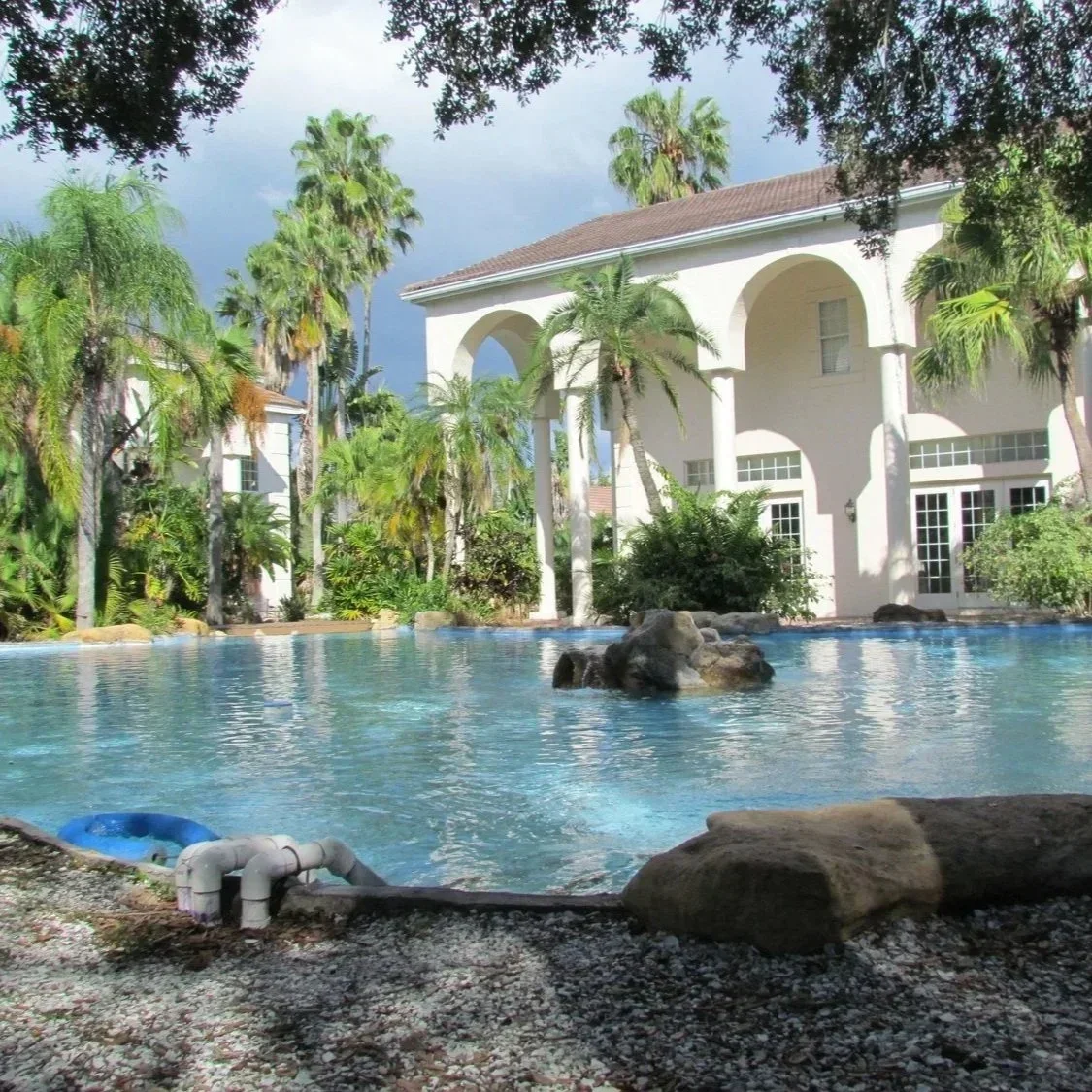
The pool looked perfect during the showing. Clear water, tile that still had some shimmer, and the seller mentioned the pump had been "recently serviced." Three weeks after closing, the filter pressure alarm kept tripping. You opened the equipment pad and found a pump twelve years past its expected lifespan, a filter with a cracked manifold patched with pool putty, and wiring to the light niche that hadn't been touched since the house was built. What felt like a bonus feature on the listing had become a repair bill that rivaled the home inspection itself.
A properly maintained pool in Florida's climate gets used year-round, and the upfront cost is already baked into the purchase price. But a pool in questionable condition is a liability that doesn't show itself on a casual walk-through. Most general home inspectors aren't licensed pool contractors. They'll flag obvious problems — major surface cracks, visible equipment leaks — but they won't pull apart filter housings, check salt cell output, or gauge whether the plaster has two more years of life or two more months. That's a different skill set.
Here's what to actually look at before you close on a home with an existing pool.
Know What Type of Pool You're Buying
Pool type matters before you assess anything else, because what to look for — and what problems cost to fix — differs significantly by construction.
Gunite or concrete pools are the most common type in Florida. They're plastered interiors over a steel-reinforced shell — durable structurally, but the plaster surface needs replastering every ten to fifteen years. The main vulnerabilities are surface chemistry wear, tile adhesion at the waterline, and slow weeping at fittings.
Fiberglass pools have a gel-coat finish over a molded shell. The gel coat can develop spider cracks, chalking, or osmotic blistering (small bubbles where water has penetrated the surface). None of these are structural failures, but all require professional attention. Fiberglass can't be replastered — repairs use gel-coat patching or a specialized resurfacing system.
Vinyl-liner pools, less common in Florida than in colder climates, have a plastic liner stretched over a frame with a lifespan of seven to twelve years. A liner that's wrinkling, fading heavily, or pulling away from the coping is at the end of its life — replacement runs $3,500 to $5,500 installed.
Knowing the pool type before you start inspecting means you know what failure looks like and what replacement costs to budget for.
Start at the Equipment Pad
The equipment pad is the most useful place to spend time before making an offer. The pump, filter, and any supplemental systems — salt chlorinator, heater, automation controller — will tell you about the pool's maintenance history and what's coming due.
Ask about the pump's age. Residential pool pumps have a useful life of eight to twelve years with regular maintenance. A variable-speed pump that's four years old is a different situation than a single-speed pump from 2012. Age matters not just for function but for energy cost — an older single-speed pump running full speed all day can add $50 to $80 per month to the electric bill compared to a variable-speed motor at the same runtime.
Look at the filter housing for discoloration, hairline cracks, or mismatched hardware. A homeowner-patched filter isn't automatically a deal-breaker, but it tells you problems have been DIY'd rather than properly serviced. Cartridge filters should have intact pleating; persistently high pressure gauge readings mean the filter is overdue for service or has a restriction inside.
Examine the plumbing connections at the pump basket for calcium deposits, staining around unions, or PVC fittings that feel slightly soft under hand pressure. PVC that's become brittle from UV exposure or chemical imbalance will feel almost chalky. Any sign of active moisture — damp soil under the pad, white calcium halos around fittings — deserves a closer look before closing.
Read the Pool Surface for What It's Not Saying
The pool surface is probably the most expensive repair variable on this checklist, and it's also the one most likely to go unnoticed during a walk-through because water hides most of it.
On a gunite pool, plaster in good shape is smooth and uniform in color. Surface texture that feels like fine sandpaper — rough enough to scratch bare feet — is plaster that's past its maintenance window. How fast it deteriorates from there depends on chemistry history. A pool run chronically low on calcium hardness slowly dissolves its own plaster surface, and no amount of adding calcium later reverses that damage. In Clearwater and most of Pinellas County, tap water is relatively soft, which makes calcium hardness management a real maintenance discipline — not just a checkbox. Pools without professional oversight often show accelerated plaster wear within seven to ten years as a result.
Staining tells a story. A brown or orange stain that lifts when you rub a chlorine tab directly on it is organic — algae, tannins, or debris — and not structural. A stain that doesn't respond is more likely metal contamination from iron or copper in the water, pointing either to the fill source or corroding equipment (heater cores and old copper fittings are common culprits). The stain can be treated, but if you don't address the source, it comes back.
At the waterline, look for individual tiles that are lifting, missing, or showing cracked grout. Calcium scale at the waterline is expected and cleanable. Tile sections that have dropped or pulled away from the beam mean the beam behind them has shifted or the adhesive has failed. A few loose tiles is a minor repair. Re-tiling an entire waterline is not.
The Leak Question Deserves a Real Answer
A pool loses water every day to evaporation and splash-out. In Florida's heat, normal evaporation can account for a quarter to a half inch per day at peak summer. The problem is that the gap between "this is normal" and "this pool has a structural or plumbing leak" isn't visible until you test for it.
Ask the seller what their typical weekly water loss is. Adding more than about an inch and a half per week warrants a bucket test before closing: fill a bucket to pool water level, set it on a step, and compare how much both the bucket and the pool drop over 24 to 48 hours. A pool losing two or three times what the bucket loses has a leak somewhere.
Where the leak is matters as much as whether there is one. A leaking union at the equipment pad is a same-day fix for a few hundred dollars. An underground return line leak means pressure testing, excavation, and several days of work. A leak at the shell or main drain falls somewhere between those two. None are automatic deal-killers, but all should be known quantities before you agree on a price.
Electrical and Safety Items That General Inspectors Often Miss
Pool electrical is a specialty, and general home inspections frequently provide thin coverage here — not out of negligence, but because pool systems require a different inspection lens.
All pool lighting and nearby receptacles require GFCI protection. Ask whether the pool light's upstream GFCI resets properly and when it was last tested. A light niche where the lens gasket hasn't been replaced in years can allow water intrusion — a shock hazard independent of GFCI status. Older halogen lights are particularly prone to this. An LED conversion runs $300 to $600 per light and eliminates most light maintenance for the next decade.
Florida requires residential pools to have compliant barriers — self-closing, self-latching gates, a fence at least four feet high, no gaps a child could pass through. A pool that doesn't meet those requirements may need upgrades before it satisfies a safety inspection or your homeowner's insurance carrier. Verify compliance before closing.
The timer or automation controller tells you about operational history. A mechanical timer with a single, unmoded time block suggests the pool has been running without professional oversight. A variable-speed controller with multiple programmed settings suggests someone was paying attention to both performance and energy cost.
What to Ask the Seller — and What Their Answers Tell You
| Question | A good answer | A concerning answer |
|---|---|---|
| Who serviced this pool in the last two years? | Named company or licensed technician with frequency noted | Vague, or "we've been doing it ourselves" |
| How old is the pump? | Year or model number on hand | "I'm not sure, it came with the house" |
| Has the pool ever turned green? | Isolated incident with professional treatment | Recurring, or "once or twice every summer" |
| When was the pool last resurfaced? | Year known, ideally within the last 10 years | Unknown, or "it's the original plaster" |
| Have you noticed unusual water loss? | Aware of normal evaporation range | "We just keep topping it off" |
A seller who answers with specifics has been engaged with the pool. One who doesn't know the pump age or can't name who last serviced it is telling you the pool has been running on hope rather than maintenance — worth factoring into how you negotiate and how urgently you schedule a separate pool inspection.
What a Pre-Purchase Pool Inspection Covers That a Home Inspection Doesn't
A general home inspection covers the pool as a minor line item. The inspector checks whether the pump runs, looks for visible surface cracks, and notes any obvious equipment concerns. That's the floor, not the ceiling.
A pre-purchase pool inspection by a licensed pool contractor goes considerably further: water chemistry testing, equipment performance evaluation, surface assessment, electrical compliance check, and leak risk evaluation. In Florida, look for a state-licensed Certified Pool Contractor (CPC). The typical cost runs $150 to $300 depending on pool size. If the inspection surfaces $6,000 in deferred maintenance that wasn't priced into the offer, that $200 inspection paid for itself thirty times.
Schedule the pool inspection to coincide with a full pump cycle so you can watch the equipment run under normal operating conditions. A pump that holds pressure through the whole visit tells you something different than one that starts fine but drops flow after 15 minutes.
Common Findings and What They Cost to Fix
| Finding | Typical repair cost (FL market) | Worth negotiating? |
|---|---|---|
| Pump replacement (variable-speed) | $800–$1,500 installed | Yes — a near-certain near-term cost |
| Filter cleaning or cartridge replacement | $100–$350 | Minor; request a service credit |
| Pool replaster (standard white gunite) | $4,500–$7,500 | Yes — or ask for a price reduction |
| Plumbing leak at equipment pad | $200–$600 | Yes if multiple fittings affected |
| Underground pipe leak | $1,500–$4,000+ | Yes — get a written quote before closing |
| LED light conversion (per light) | $300–$600 | Minor; negotiate if multiple lights needed |
| Salt cell replacement | $400–$900 | Yes, especially on older systems |
| Pool fence/barrier upgrade | $500–$2,000+ | Yes — safety compliance is non-negotiable |
Get any repair estimate in writing from a licensed pool contractor before you sign. That document is what you bring to the negotiating table.
Frequently Asked Questions
Most include a basic visual check — whether the pump runs, whether there are visible cracks or equipment leaks. They're not pulling filter cartridges, testing water chemistry, or performing a leak assessment. If the pool is a meaningful part of the purchase, a separate inspection by a licensed pool contractor is worth scheduling before closing.
A pump past ten to twelve years old is approaching the end of its practical service life. That doesn't mean it fails tomorrow, but the cost of replacement shifts from a hypothetical to a planning item. A single-speed pump that's twelve-plus years old and showing any bearing noise or seal weepage should be treated as a near-term replacement in your budget calculations — not a "wait and see."
Staining falls into two categories. Organic staining — brown, patchy, often from algae or debris — typically lifts with a chlorine tab rubbed directly on the spot. Metal staining — blue-green from copper, rust-orange from iron — doesn't respond to chlorine and requires a dedicated metal treatment. Metal staining also has a source: corroding equipment, mineral-heavy fill water, or both. Treat the stain and ignore the source and it comes right back.
Not automatically. A leaking fitting at the equipment pad is a minor repair. An underground return line leak is significant but solvable, with a known cost once assessed. A leak in the shell itself is the most serious scenario. Have a licensed contractor evaluate it, get a written estimate, and factor that into your offer. A repairable leak at a known price is a negotiating point — not necessarily a reason to pass.
Salt cell condition comes up frequently. A cell that's been degrading slowly reduces chlorine output over months — the seller may not have connected a mildly cloudy pool to a cell that's past its useful life. Salt cells typically last three to seven years and run $400 to $900 to replace. A water test and cell inspection will tell you what's left. Deferred filter service also shows up often — high pressure readings are easy to ignore until the system backs up.
In most cases, yes — Florida's climate means a pool gets used from January through December, not just three months a year. Ongoing maintenance runs roughly $100 to $175 per month for weekly professional service, more if the pool has deferred work at the start. A well-maintained pool adds to the home's marketability. A neglected one costs real money to bring back. The inspection is what tells you which one you're buying.
Dog Days Pools provides professional pool services in Clearwater, Safety Harbor, Dunedin, Palm Harbor, Oldsmar, and throughout Pinellas County — including weekly maintenance, green pool clean-up, pump and filter repair, pool leak detection, and pool resurfacing. Whether you need a thorough inspection before purchasing a home with a pool or ongoing service for your existing pool, our licensed team (CPC1460480) brings more than 20 years of Florida pool experience to every job. Call (727) 205-0566 to schedule service.
