

What Causes Pool Stains, and Which Ones Actually Come Out
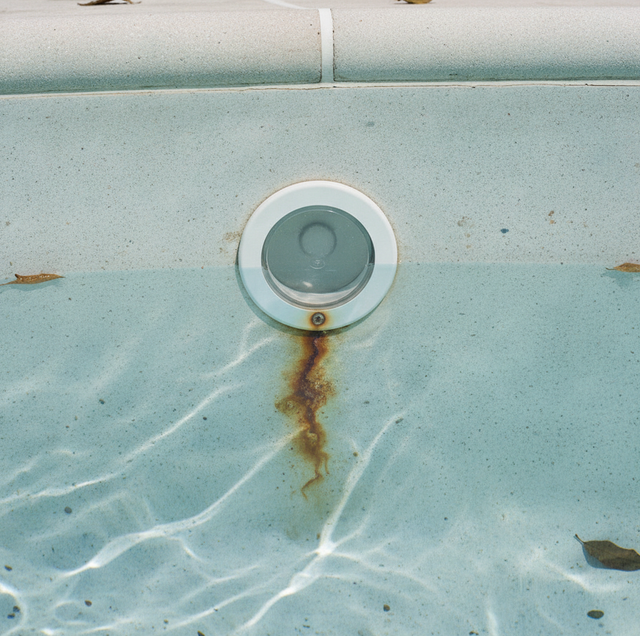
You notice a smear on the plaster near the steps, or a rust-colored streak creeping out from under the light. Before you dump anything into the water, know this: not every pool stain responds to the same treatment, and reaching for the wrong bottle can lock the mark in for good.
Quick Answer: Pool stains fall into two families. Organic stains (green, brown, reddish) come from leaves, algae, and debris and usually lift with a chlorine or shock treatment plus scrubbing. Metal and mineral stains (rust-orange, blue-green, purple, gray-white) come from iron, copper, manganese, or calcium in the water and need an ascorbic acid treatment with a sequestrant, or a pro for hardened scale. Chlorine does not remove metal stains.
Two Stain Families, Two Completely Different Fixes
Pool stains sort into two groups, and figuring out which group you have decides everything that follows. Once you know the family, the treatment is obvious. Guess wrong, and you can waste an afternoon and a jug of product while the stain digs in deeper.
It works the way a laundry stain does. Grass on a knee and rust off an old nail both look dark on the fabric, but bleach lifts the grass and does nothing for the rust. The same split holds in the pool. One family is living or once-living matter; the other is metal and mineral that came in through the water itself.
The first family is organic. These are stains left behind by things that landed on the surface and sat there: leaves, acorns, berries, seed pods, dead worms after a storm, and algae that took hold before you caught it. Organic stains tend to read green, brown, or reddish, and they often show up right where debris collects, a shady corner, the bottom of the deep end, or the crack between two steps.
The second family is metal and mineral. These come from metals dissolved in the water or from minerals dropping out of unbalanced water, not from anything that fell in. They stain a wider range of colors, and they ignore chlorine completely.
Reading the Color: What Each Stain Is Telling You
Color is your first clue, though it is not proof. Here is the rough map.
Green, brown, and reddish marks usually point to organic sources, leaves, and algae doing what leaves and algae do. Rust-orange or rust-brown is almost always iron. Blue-green, sometimes darkening toward black, is copper. A purple-to-black stain can be due to manganese, which is less common but can appear in certain water sources. A white or gray crust that you can feel with a fingernail is calcium scale, a mineral deposit rather than a color stain.
Color narrows the field, but two things muddy it. Iron and organic stains can both look brownish, and underwater lighting shifts how a color reads. So color gets you a hypothesis. The tablet tests below confirm it.
The Tablet Tests: Confirm the Family Before You Treat
You can identify the family in a couple of minutes with two things most pool owners already have. This little diagnostic saves you from treating a metal stain with chlorine, which is the single most common and most costly mistake.
Hold a chlorine tablet directly against the stain for about a minute, or set it on the mark if it is on a flat bottom surface. If the spot lightens noticeably, you are looking at an organic stain. On a separate spot, hold a vitamin C (ascorbic acid) tablet against the stain for the same minute. If that spot fades instead, you have a metal stain.
Whichever tablet fades, the mark tells you the family, and the family tells you the treatment. If the chlorine tablet does the work, treat it as organic. If the vitamin C tablet does the work, treat it as metal. If neither budges a hard, raised crust, you are dealing with scale, which is its own category.
Fixing Organic Stains: Chlorine and Elbow Grease
Organic stains are the friendly ones. Because they come from carbon-based matter, oxidizers break them down. Raise the free chlorine with a shock treatment, brush the stained area firmly, and give it time. Most organic stains lift over a few hours to a day, sometimes with a second brushing.
Balance the water first so the chlorine works efficiently, then apply the shock and keep the pump running to circulate it. A stubborn organic stain in a low-flow corner may need direct brushing right at the spot, since that is where debris sat longest, and the stain set deepest. Once it clears, the fix for keeping it away is simple: get debris out of the pool before it has time to settle and cast its shadow on the surface.
Fixing Metal Stains: Ascorbic Acid and a Sequestrant
Metal stains need the opposite approach, and this is where people go wrong. Chlorine will not remove a metal stain. It can make it worse because chlorine oxidizes the metal, which can make the color darker and set it more firmly into the surface.
The right move is an ascorbic acid (vitamin C) treatment. Ascorbic acid pulls the metal back off the surface and into solution. But here is the catch that traps many pool owners: once the metal is floating in the water again, it will fall right back out and re-stain unless you hold it there. That is the job of a sequestrant. You add a sequestrant so that dissolved iron or copper stays bound in the water, then you filter or partially drain it off.
There is one more step people skip, and it is why the stain sometimes comes back a month later: you have to find and stop the source of the metal. If the metal keeps arriving, the stain keeps returning, no matter how well you treat the surface.
Where the Metal Comes From
Metal does not appear out of nowhere. Iron and copper usually enter the water through a handful of routes. Well water is common, since groundwater often contains dissolved iron. Old or corroding metal pipes shed iron. A pool heater's heat exchanger, if it is corroding internally, releases copper into the water that flows through it. And some algaecides are copper-based, so an owner fighting algae can accidentally seed a copper stain in the process.
Chasing the source matters as much as the treatment. Treat the surface and ignore the source, and you are on a loop. Fix the source and treat once, and the stain stays gone.
Fixing Calcium Scale: This One Is a Pro Job
Calcium scale is the outlier. That white or gray crust is a hard mineral deposit formed from high-calcium water, often along the waterline, on tile, and on pebble finishes. It is not a color sitting on the surface; it is a solid layer bonded to it.
Because of that, neither chlorine nor vitamin C touches it. Scale removal involves a controlled acid treatment or bead blasting, and both should be left to professional hands. An acid strong enough to cut scale is strong enough to etch plaster and damage tile if it is misjudged, and blasting requires the right media and technique, so the surface underneath survives. This is the category where the honest answer is to call a pro rather than experiment.
A Word on Chemical Safety
Pool chemistry deserves respect. Never mix pool chemicals together, and never combine chlorine products with acids, which can release dangerous gas. Add one product at a time, let it circulate, and follow the label. Store chemicals separately and dry. And for anything involving strong acid or blasting to remove scale, leave it to a professional with the right equipment and protection rather than attempting it yourself.
Preventing Stains Before They Start
The cheapest stain is the one that never forms. Three habits handle most of it. Keep your water balanced, since balanced chemistry both discourages organic stains and keeps minerals in solution instead of precipitating onto the surface. If you know your water carries metals, run a sequestrant as regular maintenance so the iron and copper never get a chance to plate out. And clear debris promptly, especially after storms, so leaves and organic matter do not sit long enough to leave their mark.
Do those three, and you spend far less time treating stains and far more time enjoying a clean surface.
Frequently Asked Questions
Hold a chlorine tablet against the stain for about a minute, then hold a vitamin C tablet against a separate spot. An organic stain lightens under the chlorine tablet, while a metal stain fades under the vitamin C tablet. Contact time is the thing people miss: give each tablet a full 30 to 60 seconds, and watch what happens the next day. A mark that lightens under vitamin C and then creeps back within about 24 hours confirms a live metal source still feeding it, not just a surface deposit.
Greens, browns, and reddish marks are usually organic, from leaves and algae. Rust-orange points to iron. Blue-green or black points to copper. Purple to black can indicate manganese. Location refines the read: a stain sitting directly under a light niche or a ladder anchor usually means that specific metal fixture is corroding and shedding into the water right there. A fresh organic mark also wipes or brushes away far more easily than one that has set in, which is another quick way to sort the two.
Those are metal stains, and chlorine cannot lift them. The mechanism is the problem: chlorine oxidizes iron or copper to a higher, more insoluble oxidation state, which sets the color harder into the surface rather than releasing it. That is why the correct order is to first lower the chlorine, then run an ascorbic acid treatment paired with a sequestrant. Adding more chlorine only drives the reaction the wrong way.
A sequestrant binds metals in the water, keeping them dissolved rather than precipitating and staining the surface. After you remove a metal stain, adding a sequestrant helps prevent the freed iron or copper from redepositing while it is still suspended in the water. It is especially important on well water, where dissolved metals are constantly arriving.
Iron and copper enter pool water from well sources, corroding metal pipes, and a heater's heat exchanger breaking down internally. Copper can also come from copper-based algaecides. The prevention that actually holds is to test for metals whenever you fill from a well or add a batch of fresh water, and to dose a sequestrant on every top-off so the metal never gets a chance to plate onto the plaster in the first place.
No. The crust is calcium carbonate, a hard mineral deposit rather than a surface stain, so neither chlorine nor vitamin C lifts it, and scrubbing barely dents it. Removing it means a controlled acid, either muriatic or dry sulfamic acid, applied carefully. Over-acidizing etches plaster permanently, so this stays a professional job, especially on tile and pebble surfaces, where the wrong dose ruins the finish underneath.
Get a stain diagnosis and the right treatment the first time — Dog Days Pools serves Clearwater and Pinellas County. CPC1460480. Call (727) 205-0566.