
Weekly Pool Service vs. DIY: An Honest Comparison
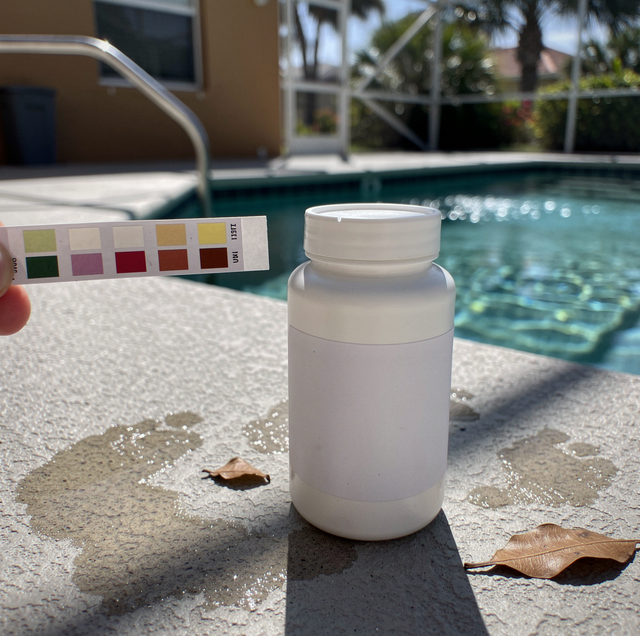
You dip the test strip on a Saturday morning, hold it up against the bottle, and squint. Chlorine reads somewhere between zero and "maybe." The water still looks clear, but there's a faint haze along the bottom steps that wasn't there last weekend, and you're now trying to remember whether you added stabilizer three weeks ago or five. That fifteen-second read is the whole decision in miniature: pool chemistry doesn't announce itself, and by the time you can see a problem with your eyes, the chemistry has usually been off for days.
What a Saturday Test Strip Actually Tells You
That gap between "looks fine" and "is fine" is where the DIY-versus-service question actually lives. It isn't about who loves their pool more or who's willing to put in effort. It's about whether the read you get on a Saturday morning is close enough to reality to keep the water in balance the other six days of the week.
Chlorine Demand Changes Faster Than a Weekly Glance Can Catch
Sunlight breaks down free chlorine through UV exposure, and the rate of that breakdown depends on sunlight intensity, water temperature, and the amount of stabilizer (cyanuric acid) protecting the chlorine molecule. Bather load adds a separate strain on top of that: more swimmers means more chlorine consumed neutralizing what they bring into the water, on top of whatever the sun is already burning off. A pool that held a clean 3 ppm reading on Sunday can be functionally unprotected by Wednesday afternoon after a run of hot, high-sun days and a pool party's worth of extra bathers. Algae spores are airborne and constantly landing in your water; they only take hold when chlorine drops low enough, for long enough, for them to multiply faster than the sanitizer can knock them back.
A once-a-week DIY check catches a snapshot. It doesn't catch the dip that happened on Tuesday and corrected on its own, and it definitely doesn't catch the dip that happened on Tuesday and kept sliding until Friday. Weekly professional service closes that gap differently: a trained technician draws on the water's chemical history (chlorine demand, pH drift, alkalinity, stabilizer level) at each visit, adjusting the dose to what the pool actually needs that day, not what a generic weekly routine assumes it needs.
Heavy rain adds another layer. A hard afternoon storm dilutes chlorine and alkalinity in a hurry and washes leaves, pollen, and dirt straight into the water, giving algae spores something to feed on just as your sanitizer level is dropping. If that storm rolls through on a Tuesday and your only chemistry check is the following Saturday, the pool has had four unsupervised days to go sideways.
A Skipped Cleaning Window Turns Into a Multi-Day Recovery Project
Here's the part that catches a lot of DIY pool owners off guard: algae doesn't grow at a steady pace. It reproduces exponentially once conditions favor it, so a pool that looks "a little cloudy" on Monday can look fully green by Thursday, even though nothing dramatic happened in between. What would have been a five-minute chlorine adjustment on Monday becomes a shock treatment, a brush-down of walls and steps, a filter cleaning to catch the dead algae, and a day or two of re-testing before the water clears.
This is less a question of who's more diligent and more a question of response time. A missed brushing session or a late chemical top-off during a busy work week is easy to let slide when you're doing it yourself, because there's no one else checking your work. Weekly service builds the response into the schedule itself: the visit happens on the same day regardless of how your week went, and a technician who was already there last Tuesday can spot a chemistry trend heading in the wrong direction before it turns into a green pool.
If you handle chemistry yourself, a liquid reagent test kit gives a more accurate reading than paper strips, especially for chlorine and pH, which drift fastest.
Troubleshooting Equipment Takes Pattern Recognition, Not Just Attention
A pool pump that's running louder than usual could mean a failing bearing, debris caught in the impeller, cavitation from a clogged skimmer basket, or a leak on the suction side pulling in air. Those four causes sound different, look different when you open the pump, and call for four different fixes. Someone who services pumps regularly has heard that hum a hundred times and can usually narrow it down before opening the housing. Someone doing it themselves is starting from scratch every time, which means more guessing, more time spent testing parts that didn't actually need attention, and a longer stretch with a pump running under stress.
Filters have the same pattern. A high-pressure gauge reading with weak return flow at the jets almost always means the filter is due for cleaning or backwashing, but the fix looks different depending on whether it's a sand, cartridge, or DE filter. A broken lateral inside a sand filter is a separate failure mode underneath all of that, and the telltale sign is sand blowing back into the pool through the returns; missing that distinction turns what should have been a routine cleaning into a much longer teardown to find and replace the broken part. Salt systems bring their own troubleshooting curve: a cell that's stopped producing chlorine as fast as it used to might be scaling up on hard-water deposits, nearing the end of its typical three-to-five-year service life, or dealing with a bad flow switch, and telling those apart without meter readings usually means more trial and error than a first-timer wants to spend on a cell they can't easily test.
Never open a pump's electrical connections or attempt any wiring or gas-line work on a heater yourself. Those repairs carry real shock and gas-leak risk and should go to a licensed technician, full stop.
Consistency Is Harder to Self-Enforce Than It Sounds
Weekly pool care isn't complicated in any single step. Test, adjust, skim, brush, empty the baskets, check the equipment pad. What's hard is doing all of it on the same schedule, every week, including the week you're traveling, the week work runs long, and the week it's raining every time you planned to get out there. A DIY routine only works as well as its worst week, because pool chemistry doesn't pause while life gets in the way.
Professional weekly service removes that variability by design. The visit isn't contingent on your schedule, your energy after a long day, or whether you remembered to buy more chlorine tablets. That's not a knock on anyone's follow-through; it's just a structural difference between a task you personally own and one built into someone else's route.
How DIY and Weekly Service Actually Compare
| Factor | Doing It Yourself | Weekly Professional Service |
|---|---|---|
| Time commitment | Multiple short sessions per week, plus supply runs and equipment learning curve | One scheduled visit; chemistry and equipment handled on site |
| Testing consistency | Depends on your schedule; easy to skip a week during travel or busy stretches | Fixed weekly cadence regardless of your calendar |
| Chemical accuracy | Reactive, based on the reading in front of you that day | Trend-based, drawing on the pool's chemical history from prior visits |
| Equipment troubleshooting | Trial-and-error diagnosis; higher chance of misreading a symptom | Pattern recognition from repeated exposure to the same failure modes |
| Storm and heavy-use recovery | Response depends on when you next check the water | Built-in weekly checkpoint catches drift before it becomes visible |
| Physical effort | Brushing, skimming, backwashing, and chemical handling fall on you | Routine physical labor is handled as part of the visit |
Where DIY Actually Holds Its Own
None of this means self-maintenance is a bad idea across the board. Daily skimming, brushing the waterline, emptying skimmer and pump baskets, and keeping an eye on the water level are all tasks that reward a little attention and don't require specialized knowledge to do well. A homeowner who's home most days and is willing to glance at the equipment pad regularly can absolutely keep a pool looking decent between more technical checkpoints. Topping off water after evaporation, brushing away early algae film before it sets in, and keeping the pool deck free of leaves and debris are all things most homeowners can handle reliably with a little practice.
The harder line to hold yourself to is the chemistry math and the equipment diagnosis, both of which reward repetition in a way that daily skimming doesn't. If you're someone who travels often, works long or unpredictable hours, or doesn't want water chemistry occupying a slot on your weekend, that's the part of the job most worth handing off, even if you keep doing the visual upkeep yourself.
When It's Time to Bring In a Second Set of Eyes
A few situations tend to push people from DIY toward weekly service, or at least toward a one-time visit to reset the baseline. A pool that's gone green after a vacation or a stretch of neglect needs a structured cleanup, not just more chlorine dumped in and hoped for. A pool that's steadily losing water beyond what evaporation explains needs leak detection, which involves pressure-testing lines and checking fittings rather than guessing. A timer or automation system that's stopped keeping an accurate schedule, or valves and pipes that are losing prime or sucking air at the skimmer, are mechanical problems that benefit from someone who's traced that exact symptom before. And ahead of a storm, or right after one, a professional startup or cleanup visit can get a pool back to a stable baseline faster than trial-and-error testing across several days.
The choice isn't permanent, either. Plenty of pool owners handle the daily visual tasks themselves and bring in weekly service for the chemistry and equipment side, which splits the labor along the line where knowledge and repetition actually matter most.
Frequently Asked Questions
Three times a week is a reasonable minimum during peak swim season, and daily is better if the pool sees heavy bather load or recent rain. Testing only once a week, even carefully, leaves several days where you're guessing at what happened in between.
Mark the water level with tape, place a bucket on the pool step filled to the same level, and compare the drop in both after 24 hours with the pump running on its normal schedule. Then repeat the comparison for another 24 hours with the pump switched off. If the pool loses noticeably more than the bucket in both tests, that points to a leak rather than evaporation. If most of the extra loss occurs while the pump is running, the leak is more likely on the pressure side of the system; if the water keeps disappearing at a similar rate with the pump off, that points to a suction-side or structural leak instead. Either way, it's worth having it traced before it affects equipment or a resurfacing job.
Yes, and that timing is what catches most owners off guard. A cell can lose meaningful output well before the water shows any cloudiness, so going by sight alone gives no warning at all. Checking the cell's actual production reading against its normal range, rather than waiting for a visual cue, is the only way to catch the drop at that early stage.
A quick visual check and an occasional strip test between visits are good habits, mainly to catch an obvious problem like a sudden color change after a storm. It's not meant to replace the technician's reading, just to flag anything unusual before the next scheduled visit.
A pump that keeps tripping its thermal overload and shutting itself off, then restarting a few minutes later once it cools, is usually struggling against a restriction it can't overcome, whether that's a clogged impeller, a closed valve somewhere in the line, or a motor winding down from wear. A steady climb in the pressure gauge paired with weaker return flow over several weeks, even between filter cleanings, points the same direction: something in the system is making the pump work harder to move the same amount of water.
Often, yes. A power interruption can reset a timer to its default schedule or cause it to lose its programming entirely, which means the pump could end up running far less or far more than intended until someone notices and resets it.
Schedule a weekly service visit — get a consistent chemistry check and equipment look-over built into your routine. Dog Days Pools serves Clearwater and Pinellas County. CPC1460480. Call (727) 205-0566.
