
Why Is Your Pool Eating Through Chlorine in Summer?
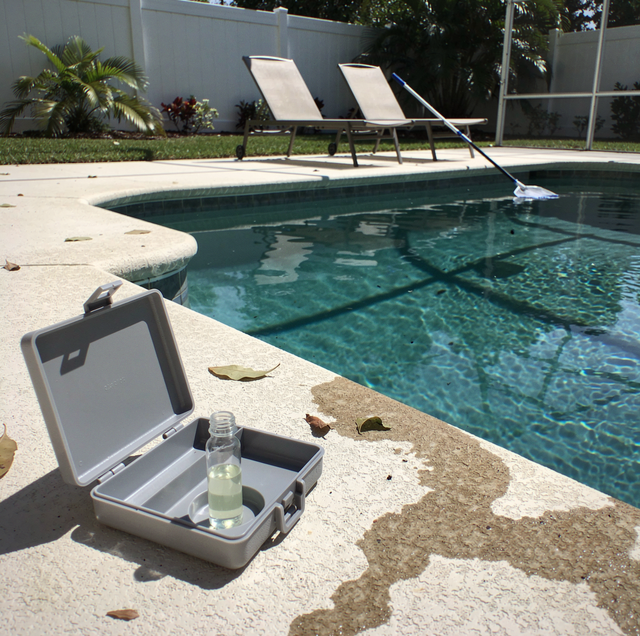
You shock the pool at night, test it the next morning, and the reading looks fine. By mid-afternoon it's gone, and swimmers are complaining about stinging eyes in water that should still be sanitized. Nothing about your routine changed since spring. The pool did. Warm-weather chemistry runs on a faster clock, and once the temperature and sun angle shift, the same dose of chlorine simply doesn't last as long or cover as much ground. Figuring out which part of that clock is running fastest is the difference between a quick chemistry fix and weeks of chasing a number that won't hold.
The Sun Is Breaking Chlorine Apart Faster Than You Can Replace It
Free chlorine in water exists mostly as hypochlorous acid, a molecule that's chemically unstable when it's hit directly by ultraviolet light. UV photons split the molecule, converting the active sanitizer into chloride and other byproducts that no longer kill anything. This isn't contamination pulling chlorine down; it's sunlight physically dismantling the chemical. The rate depends on UV intensity and how many hours of direct exposure the water gets, which is exactly what peaks in summer: longer days, a higher sun angle, and more hours when the surface sits in full light rather than in shade. Manufacturer estimates for unstabilized water suggest a large share of free chlorine can be lost within a couple of hours of strong midday sun, and even a partially protected pool loses ground steadily through a long afternoon. A reading that looked fine at 9 a.m. can be functionally gone by 3 p.m. without anything else going wrong.
More Swimmers and More Storm Debris Both Add to the Workload
Chlorine doesn't just sanitize; it also oxidizes any organic material that enters the water, and that job competes directly with disinfection for the same available supply. Sweat, sunscreen, body oils, hair products, and saliva all ride in with swimmers, and summer means more people in the water for longer stretches: pool parties, kids swimming for hours instead of a quick evening dip, and more total bather-hours per week than any other season. Each swimmer adds a real load that has to be broken down before that chlorine is available for anything else. Rain adds a second front. A heavy afternoon storm washes in pollen, leaf litter, dust, and whatever else has collected on the deck, diluting the water as it adds contaminants, so the existing chlorine gets stretched thinner right when demand spikes. A pool that handled a quiet April week without trouble can get overwhelmed by a single busy, storm-soaked July weekend using the exact same chemical routine.
What Stabilizer Actually Buys You, and Where It Falls Short
Cyanuric acid, sold as a pool stabilizer or conditioner, works by temporarily bonding to the chlorine molecule and shielding it from UV light without blocking its sanitizing ability. The bond acts like a loose umbrella that chlorine can duck under and still do its job; it substantially slows the sun's rate of breakdown rather than stopping it outright. Without any stabilizer, an outdoor pool in full summer sun is fighting UV loss with nothing on its side. That's the two-sided part of the story, though: stabilizer only helps up to a point, and more isn't automatically better. Push cyanuric acid too high, and it starts locking up the chlorine that's present, weakening its actual sanitizing punch even though a test strip still reports a normal free-chlorine number. The goal in summer isn't maximum stabilizer; it's a level that blunts the UV effect without dulling the chlorine's ability to work.
Algae Is Drawing Down Chlorine Before You Can See It
Organic debris and bather waste are passive load; algae is active competition. Even microscopic algal cells, present long before the water shows any green tint, are living organisms that chlorine must oxidize and kill on an ongoing basis, and they reproduce continuously in warm, sunlit water. A small, invisible population can consume a steady trickle of chlorine around the clock, and because algae keeps multiplying if it isn't fully suppressed, that trickle can turn into a flood over a matter of days. One byproduct worth watching is combined chlorine, the fraction that's already reacted with contaminants and is no longer useful as a sanitizer. A combined-chlorine reading that creeps up alongside a free-chlorine number that won't hold is a strong hint that something biological, not just sun and swimmers, is pulling the number down.
Telling Normal Summer Demand From an Early Bloom
Both explanations produce the same complaint, chlorine disappearing fast, so the useful question is how to tell them apart before wasting a week guessing. Normal seasonal demand tends to rise gradually with the calendar, tracks with how many people used the pool and whether it rained, and responds predictably to a routine shock: dose it, and the level holds through the next test. Algae-driven demand behaves differently. The level keeps sagging even after a shock that should have overwhelmed ordinary organic load, the water looks slightly duller or takes on a faint green or yellow cast before anyone would call it a "green pool," and the pool walls or steps feel a bit slicker than usual to the hand. A simple overnight test helps separate the two: dose the water to a normal target in the evening after the sun is down, then test first thing the next morning before any UV exposure again. Some overnight loss is normal even in the dark from ongoing chemical reactions, but a loss that's dramatic relative to what plain time and temperature should account for points toward a biological demand rather than routine summer chemistry. Filter pressure and flow are worth a glance too; poor circulation lets warm, still pockets of water turn into algae-friendly zones even while the rest of the pool tests fine.
Matching Your Routine to What Summer Actually Does to Chlorine
Once you know which mechanism is driving the loss, the fix follows. If it's plain UV and bather-load demand, the answer is usually a higher baseline chlorine target during the hottest months, a stabilizer level that's actually in range rather than assumed, and testing more often than a spring or fall schedule calls for, since a number checked once every few days can swing wildly in between. If overnight testing and a stalled response to shock point toward algae getting a foothold, treating it as a biological problem, not just a chemistry gap, matters: a larger corrective dose, attention to circulation and brushing, and a recheck within a day rather than assuming the next routine dose will catch up. Reacting to a fast chlorine drop by simply pouring in more chlorine, over and over, without figuring out which of these is happening wastes chemical and time alike, and in the algae case it can let the underlying population keep growing while the free-chlorine number looks temporarily okay right after each dose.
Frequently Asked Questions
Yes, and it matters more than most people expect: longer pump run time keeps water moving through the filter and skimmer, which pulls out the organic debris that would otherwise sit in the water consuming chlorine, and it prevents the warm, stagnant pockets near steps, corners, and behind ladders where algae gets its first foothold. A pump cycle that was adequate at 75-degree water temperatures often needs an extra hour or two once temperatures climb into the high 80s or 90s.
It can, because a salt cell still produces chlorine that's just as vulnerable to UV breakdown and bather-load demand as chlorine added by hand; the salt system only changes how the chlorine is generated, not how fast the sun or swimmers use it up. A cell that's aging or undersized for the pool's volume can also fail to keep pace with a summer demand spike even while producing normally in cooler months.
Loss accelerates during the hours of highest UV intensity, roughly from late morning through mid-afternoon depending on the season and sun angle, and it's compounded on days with clear skies rather than cloud cover, since cloud layers scatter UV and reduce the UV reaching the water's surface. A pool tested at 8 a.m. and again at 4 p.m. on a cloudless July day can show a much larger swing than the same test pair in October.
Most test kits and guidance treat combined chlorine above roughly 0.2 to 0.5 parts per million as a signal that chlorine is being consumed by contaminants rather than staying available as a free sanitizer, and a rising trend over several days in warm weather is a stronger warning sign than a single high reading, since bather load alone can cause a short-lived bump that clears with normal circulation.
A cover blocks direct UV exposure while it's on, which meaningfully slows sun-driven chlorine loss during the hours the pool isn't in use, but it also traps heat and can raise water temperature, and warmer water on its own speeds up both chemical reactions and any algae growth already present. The net effect depends on how much of the day the cover is actually on versus the pool sitting open and swum in.
Because algae reproduces faster as water temperature and sunlight increase, a population that's been quietly consuming chlorine for several days without anyone noticing can become visibly green within 24 to 48 hours once it outpaces whatever chlorine is being added, especially if a filter cycle gets skipped or a storm dilutes the water at the same time.
Not sure if it's normal demand or an early bloom — let us test the water and get your chlorine levels back up. Dog Days Pools serves Clearwater and Pinellas County. CPC1460480. Call (727) 205-0566.
