

Single-Speed vs. Variable-Speed Pool Pump: Which One Actually Saves More?
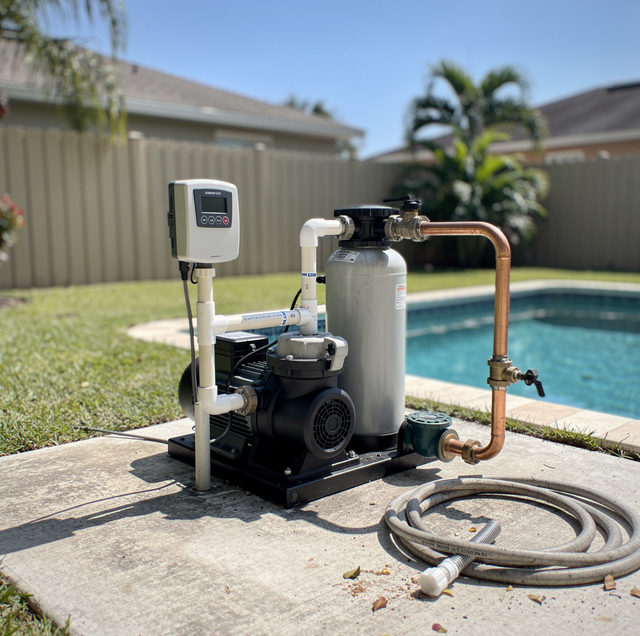
Stand next to a pool equipment pad at two different houses, and you'll hear the difference before you see it. One pump roars to life at full volume the moment the timer clicks on, runs flat out for hours, then shuts off hard. The other hums up gradually, settles into a quiet whir, and barely registers unless you're standing right next to it. Both machines are doing the same basic job, moving water through a filter and back into the pool, but the motor design underneath each one changes almost everything else: the electricity draw, the noise on the patio, how long the equipment lasts, and how much attention it needs along the way. Picking between them isn't really about brand preference. It comes down to how each motor is built and whether that mechanism matches how your pool actually gets used.
How a Single-Speed Pump Actually Works
A single-speed pump uses an induction motor built to run at one fixed speed, typically around 3,450 rotations per minute, because that's the speed the motor's internal winding pattern locks it to when it's connected to standard power. There's no dial and no controller, and there's no way to slow it down without rewiring the motor for a different pole count. Flip the breaker or timer on, and the motor jumps straight to full speed within a second or two. That's the entire control scheme: on at full output, or off. Because the impeller spins at a constant high speed, the pump pushes water at nearly its maximum flow rate the entire time it runs, whether the pool needs that much circulation or not. Manufacturers like Hayward and Pentair have built reliable single-speed models for decades precisely because the design is mechanically simple: fewer parts that can fail, no electronics to fry, and a motor that's easy to diagnose when something goes wrong. The tradeoff is that "full speed" is the only setting, even for a task like skimming light debris that doesn't need anywhere near that much water movement.
How a Variable-Speed Pump Changes the Physics
A variable-speed pump replaces that fixed-speed induction motor with a permanent-magnet motor paired with a built-in controller, the same basic motor technology used in a lot of modern appliances built to run efficiently at different outputs. Instead of a single speed, the controller can spin the motor anywhere from a few hundred rotations per minute to the same high range as a single-speed pump, and it can shift between speeds on a programmed schedule throughout the day. This matters because of a principle called the affinity laws, which describe how a pump's power draw relates to its speed: cut the motor speed in half, and the energy it takes to spin the impeller drops to roughly an eighth of what it was, not half. A variable-speed pump can run for many more hours a day at a low speed built for gentle filtration and still use meaningfully less energy than a single-speed pump running for a few hours at full blast, because the motor spends most of its time in the low, cheap end of that curve rather than the expensive top end. Brands like Jandy and Pentair build these motors with programmable controllers so an installer or owner can set different speeds for filtration, spa jets, and cleaning cycles rather than treating every task the same way.
Energy Use: Why Speed Control Changes the Math
The practical effect of the affinity laws shows up in how much electricity gets drawn over the course of a day. A single-speed pump has a single energy cost per hour of operation, determined by its fixed motor speed, and the only way to use less electricity is to run it for fewer hours. That creates a real conflict: cutting runtime to save energy also reduces filtration and turnover, which, in a climate with fast chemical burn-off and frequent storm debris, is exactly the wrong trade-off to make. A variable-speed pump breaks that link. Because slowing the motor cuts power draw far faster than it cuts flow, you can run the pump longer each day at a lower speed and still land on meaningfully lower total energy draw than a single-speed pump managing the same turnover target at full throttle for a shorter window. Longer, gentler run times also mean the filter sees steadier flow throughout the day instead of a few hours of high-velocity blasting, which tends to produce steadier water clarity with less peak strain on the filter media.
Noise Levels You'll Actually Notice
Noise comes down to two things: how fast the motor spins and what kind of motor is doing the spinning. A single-speed induction motor running at its one fixed speed produces a steady, fairly loud hum, and because that's the only speed available, there's no quiet mode to fall back on. Pumps installed near a patio, bedroom window, or shared property line tend to be the ones owners complain about most, simply because the motor never runs at anything other than full output. A variable-speed pump's permanent-magnet motor is inherently quieter at any given speed, and because it spends most of its scheduled run time at low or moderate speeds rather than full throttle, the noise it produces most of the day is noticeably softer, often described as a background whir. It will still ramp up to a louder, more single-speed-like sound during a scheduled high-speed cycle, such as cleaning or spa-jet mode, but that typically accounts for only a small fraction of its daily runtime.
Comparison at a Glance
| Feature | Single-Speed Pump | Variable-Speed Pump |
|---|---|---|
| Motor type | Fixed-speed induction motor, one output only | Permanent-magnet motor with programmable controller |
| Energy use | Full draw every hour it runs; no low setting | Meaningfully lower draw at reduced speeds; affinity laws cut power far faster than flow |
| Noise level | Steady, louder hum at full speed the whole cycle | Quiet hum at low/moderate speeds; louder only during high-speed cycles |
| Control flexibility | On or off at one speed; no scheduling by task | Multiple speeds programmable for filtration, cleaning, spa jets |
| Lifespan and reliability | Simple design, few parts, easy diagnosis; motor bearings work harder at constant full speed | More components and electronics; gentler operation reduces wear, but a failed control board is a different repair than a burned motor winding |
| Best-fit scenario | Small pools, light usage, owners who want the simplest possible equipment | Pools that run long daily cycles, owners focused on lower energy draw and quieter operation |
Lifespan and Reliability Tradeoffs
Reliability is not a simple "one wins" story; it's a tradeoff between mechanical simplicity and electronic sophistication. A single-speed motor has fewer parts that can fail: a winding, a shaft, bearings, and a seal. When something does go wrong, it's usually one of those few components, and a technician can diagnose it quickly because there's no controller board or variable-frequency drive to troubleshoot. The tradeoff is that the motor and bearings are always working at their hardest setting every time the pump runs, and that constant full-speed operation adds mechanical stress over years of service, particularly in a climate where the pump runs close to year-round rather than seasonally.
A variable-speed pump introduces a control board and electronics that a single-speed motor simply doesn't have, and that's one more component that can potentially fail, especially in a hot, humid equipment pad environment where heat and moisture are constant companions for anything electronic. What it gains in exchange is gentler mechanical operation: bearings and seals spend most of their working life at low or moderate speeds rather than constant maximum stress, which tends to extend wear-related component life even as it introduces a different category of possible repair. In practice, this means single-speed failures tend to be motor or bearing issues, while variable-speed failures more often involve the control board or programming, and each requires a different kind of service call.
Which Pool Owners Benefit Most From Upgrading
The pump that saves the most energy and runs the quietest isn't automatically the right choice for every pool. A smaller pool with light bather load, run for a short daily cycle, may never rack up enough hours for a variable-speed motor's efficiency curve to matter much, and the simpler single-speed design can be the more sensible fit for an owner who wants minimal equipment complexity. The upgrade pays off most clearly for pools that already run long daily filtration cycles to handle heavy sun exposure, frequent storm debris, or a salt system that needs steady turnover to keep the cell working properly. Owners bothered by equipment noise near outdoor living space, or anyone running a spa function or automated cleaning system that benefits from multiple programmed speeds, also tend to get the most out of the added control.
What Switching Actually Involves
Replacing a single-speed pump with a variable-speed model is a simple physical swap in most cases, since the two share compatible plumbing connections, but the electrical and programming side is different enough that it's worth planning for. Variable-speed pumps often require a dedicated timer or automation setup capable of running multiple programmed speeds, rather than the simple on/off timer a single-speed motor uses. Getting the schedule dialed in for filtration, cleaning, and any spa or water-feature functions takes some initial setup. Once that schedule is set, though, day-to-day operation for the pool owner is largely hands-off. The pump handles its own speed transitions on the programmed schedule, and the main thing left to check periodically is that the schedule still matches how the pool actually gets used through changing seasons.
Frequently Asked Questions
Running longer hours at a low speed does not wear a variable-speed motor out faster than a single-speed motor running fewer hours at full output. The motor spends most of that extended runtime at reduced rotational speed, which puts less mechanical stress on bearings and seals per hour than constant maximum-speed operation does, so total wear over a day tends to be comparable or lower, even though the clock runs longer.
Yes, and often more consistently, because filtration effectiveness depends on total water turnover over a day, not on how fast the water moves at any single moment. A variable-speed pump reaches the same or better daily turnover by running longer at a moderate flow rate, which also avoids the short bursts of high-velocity flow that can push finer debris past a filter designed for steadier conditions.
Not necessarily. A single-speed pump's steady hum at full output is normal for that motor design and doesn't by itself indicate a problem. A sudden change in pitch, a new grinding or rattling sound, or noise that gets louder over time is a better signal to have the pump checked, regardless of which motor type is installed.
The mechanical maintenance, checking the basket, inspecting seals, and keeping the impeller clear, is similar for both types. The difference shows up in troubleshooting: a variable-speed pump's control board occasionally needs a programming check or reset if speeds or schedules stop behaving as expected, which isn't a step a single-speed pump's simpler on/off operation ever requires.
In most cases, yes, since variable-speed pumps use the same basic plumbing as single-speed models. Older, narrower pipe runs can occasionally limit how much flow benefit a larger variable-speed motor delivers at higher speeds, so it's worth having the existing plumbing sized and inspected before assuming full performance from a new motor.
It follows a schedule programmed into its built-in controller, with different speeds assigned to different tasks such as daily filtration, a spa jet function, or a scheduled cleaning cycle. Some setups pair the pump with broader pool automation so the schedule can be adjusted seasonally, but the pump itself simply executes whatever speed program has been set.
Not sure which pump design fits how your pool actually runs — let's take a look at your setup and talk through the options. Dog Days Pools serves Clearwater and Pinellas County. CPC1460480. Call (727) 205-0566.