
Pool Heater Not Heating? 8 Reasons the Water Stays Cold
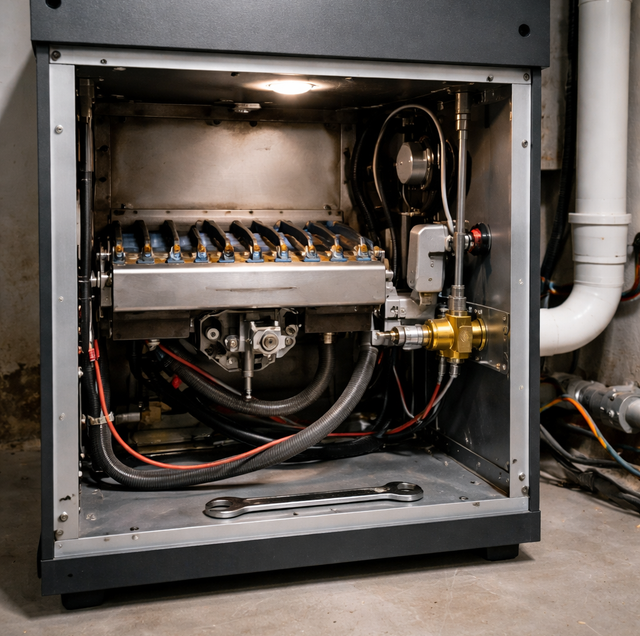
Quick Answer: Most pool heaters that run without warming the water are starved for flow, locked out on a safety switch, or (for heat pumps) fighting cold air or a dirty coil. Confirm the thermostat setpoint, clean the filter, open every valve, and make sure the pump is primed. Anything involving gas, refrigerant, or the burner belongs to a licensed tech.
You set the temperature, the unit hums to life, and hours later the water is still too cold to enjoy. A pool heater that runs but never lifts the temperature is one of the more frustrating problems in a backyard, partly because several unrelated faults produce the same symptom. The good news is that a handful of causes account for most cases, and a few of them are checks you can safely make yourself before calling anyone.
Start With Flow: The Rule Behind Most Cold Water
Almost every pool heater is built around one requirement: enough water has to move through it. A heater warms water as it passes through, so if the flow drops too low, the unit either can't transfer heat effectively or trips a safety device and shuts the heat off while the pump keeps running. That single fact explains a surprising share of "it runs but won't heat" complaints.
A car radiator makes the comparison easy. Coolant has to circulate past the fins for the radiator to shed heat; block that circulation and the whole system overheats no matter how hard the fan spins. A pool heater is the same idea in reverse, adding heat instead of dumping it, and it depends just as heavily on steady flow.
Flow gets choked by ordinary maintenance items. A filter packed with dirt, a skimmer or pump basket full of leaves, a valve someone left half closed, an undersized or tiring pump, or air trapped in the system after a service call can all drop the flow rate below what the heater needs. Because these are the most common culprits and the safest to inspect, they are where you should look first.
How the Heater Type Changes the Diagnosis
The three common heater types fail for different reasons, so knowing which one you have narrows the search.
Gas heaters: A gas heater fires a burner to warm water quickly. When it runs without heating, the usual suspects are low or interrupted gas supply, a dirty or partly clogged burner, a worn igniter or flame sensor that won't sustain the flame, or a safety lockout. Everything behind the heater's panel, including the burner, gas valve, and ignition parts, is licensed work. Homeowner checks stay on the outside: confirm the gas supply is actually turned on, and that flow and the thermostat are correct.
Heat pumps: A heat pump doesn't burn anything. It pulls warmth out of the surrounding air and moves it into the water using refrigerant, much like an air conditioner running backward. That design makes it efficient but also sensitive to conditions. If it's low on refrigerant, if the evaporator coil is caked with dirt or blocked by leaves and grass, or if the fan isn't pulling air properly, output falls off, and the water barely warms. Refrigerant is sealed, EPA-regulated territory, so a heat pump that isn't performing is a service call, not a repair to attempt yourself.
Electric resistance heaters: Smaller electric heaters warm water with an element rather than a burner or refrigerant. They share the same flow dependence as the others and rely on their thermostat and safety switches. Electrical faults inside these units are pro work as well.
Ambient Air and Sizing Limits on Heat Pumps
A heat pump can only harvest as much warmth as the air holds, so its output naturally drops as the surrounding air cools. Below roughly the mid-50s Fahrenheit, many models slow dramatically or stop making useful heat, and on a chilly, breezy morning even a healthy unit can seem weak. This cuts both ways through the year: the same heat pump that struggles on a cold snap will recover the pool quickly on a warm, humid afternoon when there's plenty of heat in the air to move.
Undersizing produces a similar picture in any season. A heat pump matched to a smaller pool, or one asked to overcome a large, uncovered, wind-exposed surface, may run constantly and still fall behind, especially while it's trying to raise the temperature from cold rather than hold a set point. That isn't a fault so much as a mismatch, and a pro can confirm whether the unit is simply too small for the demand.
Safety Lockouts: High-Limit and Pressure Switches
Heaters carry safety devices that cut the heat when something is wrong, and a tripped switch mimics a broken heater almost perfectly: the pump runs, the panel may light, but no heat reaches the water.
A pressure switch (sometimes called a flow switch) confirms water is actually moving before the heater will fire. If flow is too low, it keeps the heat off on purpose, which is why the flow checks above so often solve the problem. A high-limit switch shuts things down if the water leaving the heater gets too hot, usually because flow was inadequate and heat built up in one spot. Some units latch this fault and need to be reset once the underlying flow issue is fixed. Repeated trips point to a flow restriction or a failing component and are worth a professional look rather than repeated resets.
Checks You Can Safely Make Yourself
Before you call, walk through the items that don't involve gas, refrigerant, or electrical internals. These resolve a real share of no-heat calls on their own.
Because low flow trips most no-heat calls, start there before assuming the heater is broken. Confirm the setpoint sits above the current water temperature, clean or backwash the filter, open every valve, and empty the skimmer and pump baskets so nothing starves the pump.
Confirm the setpoint and mode: Make sure the thermostat or control is set above the current water temperature and that the system is in heat mode, not just filtration. On combined pool-and-spa systems, check that heating is directed to the body of water you're actually using. A setpoint quietly bumped down, or a controller left on the spa side, is a common and harmless cause.
Clean or backwash the filter: A dirty filter is the leading flow killer. Backwash a sand or DE filter, or rinse and clean a cartridge, then watch whether the heater behaves once flow improves. A pressure gauge reading well above the clean baseline is a strong hint the filter is the problem.
Open every valve and empty the baskets: Trace the plumbing and confirm the valves feeding and returning from the heater are fully open. Clear the skimmer and pump baskets of leaves and debris so nothing starves the pump.
Verify the pump is priming and moving water: Look for a full, bubble-free pump basket and steady return flow in the pool. Air pockets, a low water level below the skimmer, or a pump losing prime all reduce flow enough to keep a heater from firing.
Clear the area around a heat-pump coil: For a heat pump, gently clear leaves, grass clippings, and debris away from the coil and keep shrubs and covers back so the unit can pull air freely. Do this with the system off, and stay outside the cabinet. Anything requiring you to open the unit is a service task.
Confirm the gas supply is on (gas heaters): For a gas heater, check that the gas supply valve is on and that other gas appliances are working normally, which tells you supply is present. Do not open the heater or touch the burner or gas valve. If you ever smell gas, leave the area immediately and call your gas utility from a safe distance before doing anything else.
The Role of a Pool Cover
Sometimes the heater is working, and the water still won't warm, because it's losing heat as fast as the unit adds it. An uncovered pool sheds enormous amounts of heat to evaporation, and a windy or cool night makes it worse. A cover slows that loss dramatically and lets a properly sized heater actually gain ground. If your water creeps up during the day and gives it all back overnight, the fix may be a cover rather than a repair. Like the seasonal swing on heat pumps, this matters year-round: a cover holds heat on cool nights and cuts evaporation and chemical loss during hot, sunny stretches too.
When to Call a Professional
Some problems sit firmly outside homeowner territory. Call a licensed pool tech when the heater repeatedly trips its high-limit or pressure switch after you've addressed flow, when a gas heater won't ignite, or the burner looks dirty or sooty, when a heat pump runs constantly but barely warms the water or ices up, or whenever the issue points toward gas, refrigerant, wiring, or the control board. A pro can test the actual flow rate, read fault codes, check refrigerant charge and gas pressure, and inspect the burner and ignition safely. Chasing those parts yourself risks gas or refrigerant hazards and often voids the warranty.
A sulfur or rotten-egg odor near a gas heater can signal a gas leak, so leave the area immediately and call your gas utility from a safe distance before doing anything else. Black soot or scorch marks around the vent point to incomplete combustion, which produces carbon monoxide. Neither is a homeowner fix.
Frequently Asked Questions
A gas heater typically raises water temperature by roughly 1 to 3 degrees Fahrenheit per hour depending on size and pool volume, while a heat pump works more slowly, often a fraction of that per hour. Raising a whole pool several degrees can take the better part of a day, so give the unit a full run before concluding it isn't working, and time it from a covered pool for a fair read.
On some integrated setups, the salt system and heater share a controller and plumbing loop, and a heavily scaled salt cell can raise back-pressure or throw an error that pauses the whole equipment cycle, including the heater. A cell coated in white calcium scale, common with hard water, is the tell. Cleaning or servicing the cell can restore normal operation on those systems even though the cell itself doesn't produce heat.
Short-cycling like this often points to a high-limit switch tripping almost immediately because flow is marginal, or to a flame-sensing fault on a gas unit that lights then loses the flame signal within seconds. The heater keeps trying and quitting, so the water never gains temperature. It's a distinct pattern from a unit that runs steadily without heating and usually needs a tech to read the fault.
Heavy rain can flood a heat pump's fan area or trip a GFCI that cuts power to the unit, and storm debris blown against the coil chokes airflow. A lightning event can also fault the control board. If the heater quit right after a storm, check that power is restored and the coil area is clear before assuming an internal failure.
Yes, on a variable-speed pump. Energy-saving low speeds can drop flow below the minimum the heater's pressure switch requires, so it never fires even though everything is technically working. Programming a higher speed during heating hours, or a dedicated heat schedule, usually solves it without any repair.
Yes, and both are reasons to keep your distance rather than investigate. A sulfur or rotten-egg odor can signal a gas leak; leave the area and call the gas utility. Black soot or scorch marks around the vent suggest incomplete combustion, which wastes gas and produces carbon monoxide. Neither is a homeowner fix; shut the unit down if you safely can and call a licensed tech.
Book a heater diagnostic before your next swim — a licensed tech finds the real fault fast and gets the water warm again. Dog Days Pools serves Clearwater and Pinellas County. CPC1460480. Call (727) 205-0566.
