
Why Is Water Coming Out of My Pool’s Backwash Line?
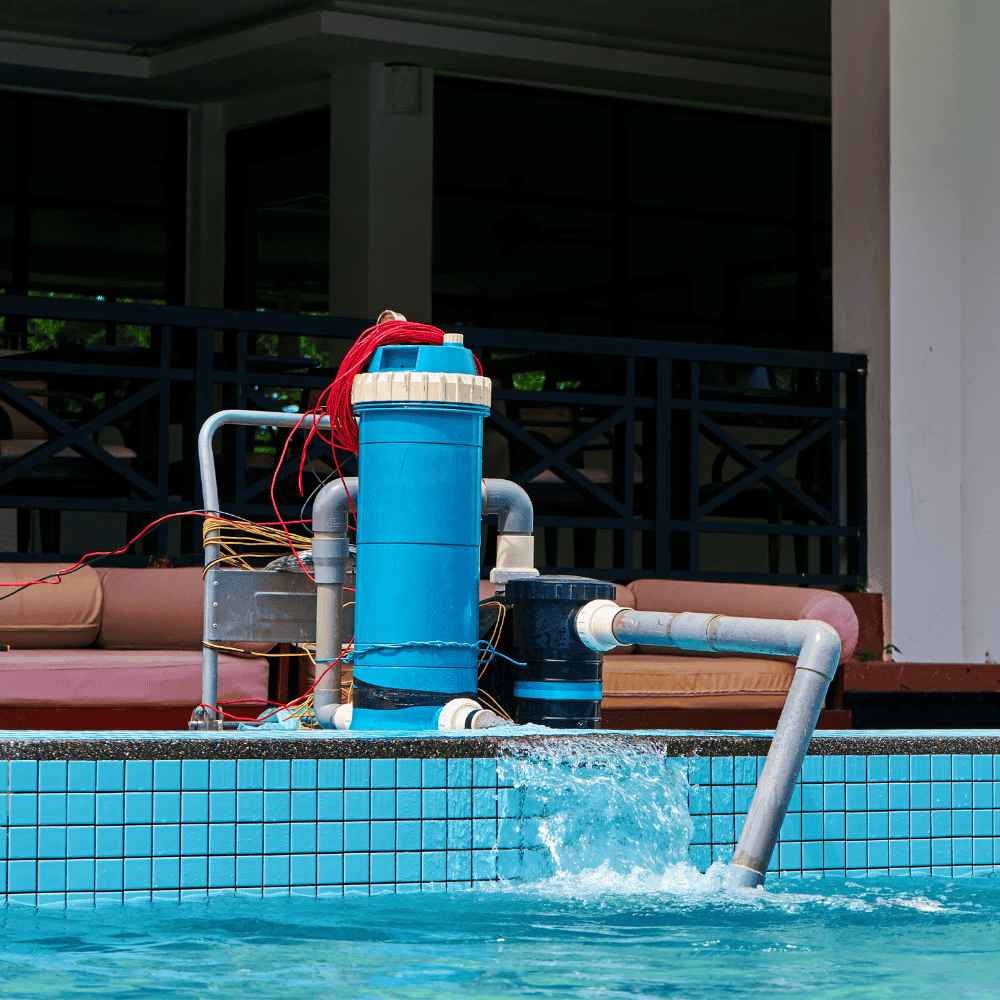
You notice a trickle seeping out of the backwash line while the pump is running — or maybe a steady stream strong enough to puddle in the grass beside the equipment pad. The multiport valve is turned to Filter, not Backwash. So why is water leaving through an exit that should be sealed shut?
The answer is almost always inside the valve itself. Understanding what's failing there — and why it keeps getting worse if you ignore it — will save you from adding chemicals to a pool that's quietly draining away.
What the Backwash Line Is Actually Supposed to Do
The backwash line is an intentional discharge point built into your pool's filter system. It runs from the multiport valve — the rotating dial mounted on top of most sand and DE filters — out to a drain or a gravel bed, and its only job is to carry dirty water away when you rotate the valve to Backwash or Waste. During normal pump operation, that line should carry nothing at all.
When the valve is set to Filter, internal rubber seals route all the water through the filter media and back to the pool. The Backwash port is supposed to be completely sealed. Water flowing through it during the Filter cycle means the system has found a path it isn't supposed to take — and the source is nearly always the same component.
The Spider Gasket: Small Part, Big Consequences
Inside every multiport valve sits a rubber component called the spider gasket. It looks like a wagon wheel or a six-pointed asterisk — a central hub with molded legs radiating outward — and it presses against a flat, machined surface inside the valve body. When you rotate the handle, you're repositioning a rotor against that gasket. The gasket's job is to seal off certain ports while opening others. On Filter, it seals the Backwash and Waste ports completely. On Backwash, it seals the return line back to the pool.
That rubber takes a beating in a Florida pool environment. The equipment pad sits in full sun, and surface temperatures on a summer afternoon in Clearwater regularly exceed 110°F. Pool chemicals — particularly if pH swings regularly — accelerate rubber degradation. Year-round pump operation means the gasket never gets a season off. A spider gasket that might last eight to ten years in a northern climate typically shows wear after four to six years here.
As the rubber cracks, hardens, or loses its shape, the seal between ports becomes incomplete. Water under pump pressure — typically 15 to 25 PSI on a residential filter — finds the gap and pushes through. The Backwash port is usually where it exits first because that line vents freely to the atmosphere. There's no backpressure to stop it.
Four Causes, Ranked by How Often They Happen
The table below covers the scenarios you're most likely to encounter. Most backwash line leaks during normal pump operation trace back to one of these:
| What You're Seeing | Most Likely Cause | Urgency |
|---|---|---|
| Slow trickle when valve is on Filter | Worn or compressed spider gasket | Moderate — replace within 1–2 weeks |
| Steady stream during full pump operation | Severely torn gasket or cracked rotor | High — pool is losing water, fix soon |
| Burst when the pump first starts, then stops | Handle sitting between two detent positions | Low — reposition handle fully and retest |
| Water mixed with white powder | Broken DE grids or a a damaged manifold | High — DE entering pool circulation |
The spider gasket accounts for the majority of cases. It's an inexpensive part, but replacing it correctly requires disassembling the valve, cleaning the seating surface thoroughly, and reseating the new gasket evenly. A shortcut on the cleaning step usually means the same leak returns within weeks.
The rotor presses directly against the gasket and must make even contact around its full perimeter. A cracked rotor or swollen rotor O-ring creates the same failure pattern as a bad gasket — the seal doesn't close completely. On older valves, both parts often fail around the same time.
A handle between positions is worth ruling out first because it costs nothing to check. The multiport handle has mechanical detent stops at each setting. If the handle rests between Filter and Backwash instead of fully seated in one position, water can split between both ports. Shut the pump off, press the handle firmly into the Filter detent, restart the pump, and check whether the flow from the backwash line stops.
DE filter grid failures are a different problem entirely. If you see white powdery material mixed into the water flowing from the backwash line, the issue isn't the multiport valve — it's the DE grids or manifold inside the filter tank. Broken grids allow DE powder to bypass the filter and enter the circulation, where some exits through the backwash port. This requires opening the filter and inspecting the internal components.
Why the Leak Gets Worse With Every Pump Cycle
A slow drip can become a real stream by the end of the summer. Here's what happens: once the spider gasket develops a gap, every pump cycle pushes full operating pressure against that weak spot. The gap widens. A small crack along one leg of the gasket extends further. What started as a pinhole becomes a split that no longer seals even partially.
The water loss matters more than it looks. A backwash line dripping at a modest one gallon per hour adds up to 168 gallons a week. In a pool that runs year-round, that's a constant slow drain that forces more frequent top-offs with fresh water. Each time you add fresh water to compensate, you dilute your existing chemical balance — cyanuric acid, calcium, and alkalinity all shift as untreated tap water mixes in. You end up chasing chemistry problems that are partly caused by the leak rather than by dosing errors.
Think of it the way you'd think of a slow tire leak: you can keep adding air, but the problem is the hole, not the air pressure.
How to Confirm the Valve Is the Source
Before pulling the valve apart, run a quick test to verify the leak is actually valve-related and not coming from a plumbing connection or fitting nearby.
Turn the pump off. Manually rotate the multiport handle through each position — Filter, Backwash, Waste, Recirculate, Closed — pausing at each one for 10 to 15 seconds and watching the backwash line. If the flow from that line changes with handle position, or drops significantly when you reach Closed, the valve is the source. A worn spider gasket will often show reduced but not fully stopped flow at Closed, because even that port isn't sealing properly anymore.
If the flow from the backwash line stays exactly the same regardless of where the handle is positioned, the leak may be in the plumbing rather than inside the valve body, and the diagnosis becomes more involved.
Never rotate the multiport valve handle while the pump is running. The valve internals are under full operating pressure during pump operation, and rotating the handle at that moment can crack a valve body that's already stressed or worn. Always shut off the pump first, wait a moment for the pressure to equalize, then move the handle.
What the Repair Actually Involves
Replacing a spider gasket is within reach for a homeowner comfortable working with pool equipment. The sequence: remove the handle, the key cover, and the valve lid, then lift out the rotor. The old gasket pulls out of its channel. The valve body gets cleaned — every trace of mineral deposit, deteriorated rubber, and film wiped from the seating channel. The new gasket presses into place, the rotor goes back in, and the valve is reassembled.
Where the repair most often goes wrong is the cleaning step. The channel the gasket sits in tends to collect years of calcium scale, fragments of the old rubber, and biofilm. A new gasket pressed over contaminated seating will leak through the contamination within a few weeks. Getting down to bare, smooth-surfaced material — using a plastic scraper or non-abrasive cleaner rather than anything that could scratch the machined surface — is what makes the new gasket seat correctly and hold.
If the rotor shows visible cracking, soft spots, or deformation, replace it alongside the gasket rather than leaving it in. Installing a new gasket against a compromised rotor is a setup for a second repair in the same season.
On valves that have been in service 12 or more years, the valve body itself may have hairline cracks or surface wear that no gasket can compensate for. At that point, replacing the full valve assembly is the more reliable path. A technician who opens the valve during the gasket replacement can assess whether the body condition supports a repair or warrants a replacement.
Frequently Asked Questions
In most cases, yes. The backwash line connects directly to the multiport valve, and a worn spider gasket is by far the most common reason for unwanted backwash flow during normal pump operation. A DE filter with broken internal grids can also cause it, producing a flow that carries white powder. If flow continues at exactly the same rate regardless of valve position, a plumbing diagnosis is warranted.
You can run the pool, but the problem will typically worsen with each pump cycle. Beyond the water loss, you're continuously diluting your chemical balance every time you add fresh water to compensate. If the flow is strong enough that your water level is visibly dropping between visits, you should get it repaired before it affects skimmer intake and risks cavitation in the pump.
For someone who has done the repair before, 45 to 90 minutes is typical, including proper cleaning of the valve body. For a first-time repair, plan on two to three hours. The part itself is inexpensive — the time goes into disassembly, cleaning, and making sure the reassembly is correct.
The gasket repair is usually the right call on valves less than 10 to 12 years old, provided the rotor and valve body are in reasonable condition. On older valves with cracked bodies or severely worn seating surfaces, a full valve replacement holds up better than trying to re-seal a compromised housing. A technician doing the gasket swap can evaluate the overall valve condition and give you a straight answer.
Florida's heat, direct sun, and year-round pump operation accelerate rubber degradation significantly faster than in seasonal climates. An equipment pad in direct summer sun in Pinellas County can reach temperatures that bake the rubber components far faster than a shaded pad in a cooler region. Pools that run year-round never give the spider gasket a rest period, which compounds the wear. A gasket replacement interval of four to six years is common here versus eight or more years in northern states.
The Closed position shuts off all ports simultaneously — useful when you need to service equipment or swap a part without draining lines. It's not designed for sustained use with the pump running, because that builds pressure against sealed ports and stresses the valve body. If your backwash line still trickles when the valve is on Closed, that's a reliable sign the spider gasket is no longer forming a complete seal at any position.
A Drip That Rewards Acting On
A backwash line leak isn't an emergency, but it's the kind of problem that gets cheaper the sooner you address it. A spider gasket is an inexpensive fix. Left for another season, the same symptom can mean a valve body replacement — and if the worsening leak also contributed to equipment running dry or chemical imbalances that damaged the plaster surface, the costs stack up fast. The repair is simple. The trick is not waiting until the trickle becomes something harder to ignore.
Dog Days Pools offers professional pool pipe and valve repair in Clearwater, Safety Harbor, Dunedin, Palm Harbor, Oldsmar, and surrounding Pinellas County, including multiport valve service, spider gasket replacement, and complete filter system diagnostics. Our team services residential pools with a focus on accurate repairs and long-term equipment performance. Whether you need a valve fix or a full equipment inspection, we're available seven days a week. Call (727) 205-0566 — Licensed Certified Pool Contractor #CPC1460480.
