
How to Backwash a Pool Filter (and Exactly When)
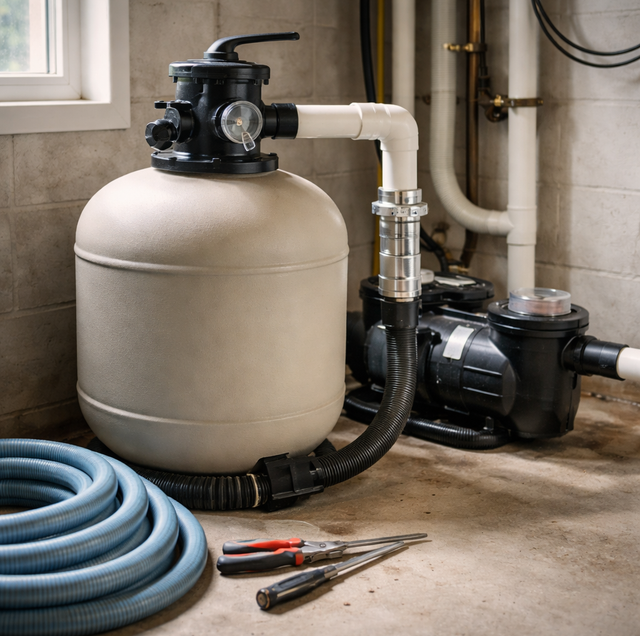
Quick Answer: Backwash a sand or diatomaceous earth (DE) filter when the pressure gauge climbs roughly 8 to 10 psi above its clean baseline. Turn the pump OFF, set the valve to backwash, run it to waste until the sight glass runs clear, rinse, then return to filter. Cartridge filters are not backwashed; you remove and hose them.
Your filter does the quiet, thankless work of pulling dirt, oils, and fine debris out of the water so the pump can keep pushing clean flow back to the pool. Over time, all that captured gunk piles up inside, and the filter starts fighting the water instead of cleaning it. Backwashing is how you flush that buildup out of a sand or DE filter, and knowing the exact moment to do it keeps your water clear without wasting a drop more than you need to.
What Backwashing Actually Does
A filter cleans by forcing pool water through a medium, sand grains, DE-coated grids, or pleated cartridge fabric, and trapping particles as the water passes. During normal filtering, water flows top-to-bottom through the tank and out the return line. Backwashing reverses that path. It sends water up through the medium from the opposite direction and carries the loosened dirt out a separate waste line, away from the pool entirely.
A doormat that has caught a season of grit shows the idea. Walking on it packs the dirt deeper; flipping it over and shaking it out from behind is the only way to release what it grabbed. Backwashing is that flip, using the pump's own flow to shake the filter clean from the inside.
Only two filter types backwash: sand and DE. Both use a multiport valve or a slide (push-pull) valve that reroutes the water without you touching the plumbing. Cartridge filters have no such valve. You clean those by opening the tank, lifting out the cartridge, and rinsing it with a hose. Trying to reverse-flow a cartridge does nothing useful, so if your system has a cartridge element, the rest of the backwash steps below do not apply to you.
Reading the Pressure Gauge
The pressure gauge mounted on the filter tank is your single most reliable signal. Every filter has a clean baseline, the pressure it reads right after a fresh backwash or a new sand or DE charge. Write that number down or note where the needle sits. On most residential setups, it lands somewhere between 10 and 20 psi, but yours is whatever it reads clean, and that personal baseline is the number that matters.
As the filter loads with debris, water has a harder time passing through, so pressure rises. When the gauge reads about 8 to 10 psi above your clean baseline, the filter is holding as much as it should before flow starts to suffer. A filter that reads 12 psi clean is due for a backwash around 20 to 22 psi. This is a range, not a hard trigger, and it is the same signal in any season: heavy debris after a storm loads a filter fast, while a calm stretch loads it slowly, but the psi rise tells the same story either way.
Why the clean baseline can shift: If your clean-baseline pressure keeps creeping up over months even right after a backwash, the medium itself may be aging. Sand can channel or clump, and DE grids can clog with mineral scale and oils that a normal backwash no longer clears. A rising floor, not just a rising peak, is a sign the medium needs deeper attention rather than another backwash.
The Step-by-Step
Work in order. The single most important rule is that the pump must be OFF before you move the valve.
Turn the pump off before you move the valve. Moving a multiport valve while it runs forces the spider gasket across pressurized flow, which can tear the gasket and jolt the whole system. Confirm the backwash hose is unkinked and draining freely too, since a blocked waste line can spike pressure fast enough to crack the filter tank.
1. Turn the pump off: Moving a multiport valve while the pump runs forces the internal spider gasket across a pressurized flow, which can tear the gasket, damage the valve, and send a jolt of pressure through the system. Always kill the pump first and let the pressure settle.
2. Set the valve to backwash: On a multiport valve, push the handle down and rotate it to the "Backwash" position, then let it seat fully. On a slide valve, pull the plunger up. Never force a multiport handle sideways without pressing down first.
3. Run the pump and watch the sight glass: Turn the pump back on. Water now flows in reverse and out the waste line. Most filters have a small sight glass on the waste plumbing. It will run dirty, often brown or cloudy, then gradually clear. Backwash until the sight glass runs clean, usually two to three minutes. Running far longer than that mostly wastes water.
4. Turn the pump off again and rinse: Shut the pump down, move the valve to "Rinse," and run the pump 20 to 30 seconds. Rinse resettles the sand bed and clears loosened debris from the plumbing so it does not blow back into the pool on startup. Slide valves skip this step.
5. Return to filter: Pump off one more time, set the valve back to "Filter," restart, and check the gauge. It should read at or near your clean baseline. Note the new number.
The extra step for DE filters: A DE filter loses its diatomaceous earth coating during backwashing, so you must recharge it. After returning to the filter, mix the correct amount of fresh DE powder with water into a slurry and pour it slowly into the skimmer while the pump runs. The powder coats the grids and rebuilds the filtering surface. Add the volume the manufacturer specifies for your grid area; too little leaves grids bare and shortens their life, too much can pack and blind them. DE powder is a respiratory hazard. Wear a mask, open the bag low and slow, and avoid breathing the dust.
Why More Is Not Better
It is tempting to backwash often to keep things spotless, but a filter works better slightly dirty than perfectly clean. The trapped debris narrows the paths water takes, and those tighter paths catch finer particles than a fresh, open medium can. A filter you just backwashed actually filters a touch coarser for the first day or two until it loads back up. Backwashing on a fixed weekly schedule, rather than on the pressure signal, means you are often flushing a filter that was doing its best work and replacing it with a less effective clean one.
Over-backwashing also burns water. Each backwash sends a meaningful volume of pool water out the waste line, water you then refill and rebalance chemically. Waiting for the 8-to-10-psi rise keeps that waste to what the filter actually needs. The two-sided truth is simple: too dirty and flow drops and the pump strains; too frequently cleaned and you lose fine filtration and waste water and chemicals. The pressure gauge is what keeps you in the middle.
Backwash on the pressure signal, not a fixed weekly schedule. A filter works a little better slightly dirty, because the trapped debris narrows the water paths and catches finer particles, so waiting for the 8-to-10-psi rise both filters better and wastes less water.
Where the Backwash Water Goes
Backwash water is dirty and carries whatever the filter pulled out, plus chlorine and other chemicals. It must never go back into the pool, and it should never flood a neighbor's yard or run into a storm drain where local rules prohibit it. Route it to an approved drainage point, a sanitary sewer cleanout, a dedicated dry well, or a permitted discharge area, following whatever your local regulations require. Rules on discharge vary from place to place, so confirm the approved method for your property before you open the waste line.
A closed or partly closed waste line during backwash is dangerous. If water cannot exit while the pump pushes hard against a blocked line, pressure spikes fast and can crack or burst the filter tank. Always confirm the backwash hose is fully rolled out, unkinked, and draining freely before you start the pump.
Signs It Is Time
Beyond the gauge, the pool tells you in other ways when the filter is choking:
High pressure with weak returns. If the gauge is high and the water coming out of your return jets feels weak, the filter is restricting flow and asking to be cleaned.
Cloudy or dull water. When chemistry is balanced, but the water still looks hazy, a loaded filter often is not moving enough water to keep it clear.
Longer clearing times. If the pool takes noticeably longer to clear after a rain or a party than it used to, the filter is running near capacity.
Trust the pressure gauge first and treat these visual signs as backup confirmation. Together they keep you backwashing on need, not on guesswork.
Frequently Asked Questions
Filter sand typically lasts about five to seven years before the grains wear smooth and lose their gripping edges. Backwashing clears trapped debris but does nothing for worn sand. If pressure climbs quickly even after a proper backwash, or the water stays cloudy with balanced chemistry, the sand itself is likely spent and due for a full change-out.
Yes. Most multiport valves include a "Waste" position, separate from "Backwash," that routes water directly out the waste line without passing through the filter. Use it when vacuuming heavy debris or a lot of fine algae after a cleanup, so the mess bypasses the filter entirely. Watch your water level closely, since it drops fast on Waste.
The spider gasket is a spoked rubber seal inside a multiport valve that directs water to the correct port for each setting. Moving the valve under pressure is what tears it. A failed spider gasket lets water leak between positions, so you may see water running out the waste line even while set to "Filter," slowly draining the pool.
Backwash first, then balance and add chemicals. Because backwashing removes water that gets replaced with fresh fill water, your chemistry shifts afterward. Adjusting before a backwash means re-testing and re-dosing once the new water is in, so doing it in that order saves a step and a second round of chemicals.
Yes. Backwashing a DE filter clears loose material, but oils and mineral scale build up on the grids over time, and a backwash cannot reach them. Once or twice a year, the tank should be opened and the grids removed, inspected for tears, and cleaned so the DE can coat evenly again. Torn grids let unfiltered water and DE pass back into the pool.
A sight glass that stays cloudy long past the usual few minutes can point to a cracked lateral or a broken standpipe inside a sand filter, which lets sand escape into the backwash flow. It can also mean the sand has channeled and water is cutting a path rather than flushing evenly. Either way, a sight glass that will not clear is a signal to inspect the filter internals.
Book a filter check before flow drops off — a properly maintained filter keeps your water clear and your pump healthy. Dog Days Pools serves Clearwater and Pinellas County. CPC1460480. Call (727) 205-0566.
