
Pool Water Chemistry Basics: The 5 Numbers That Matter
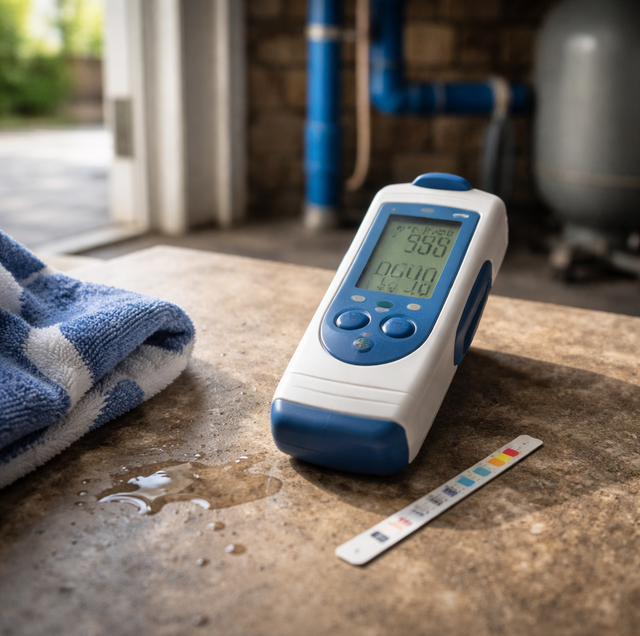
Quick Answer: The core pool numbers are free chlorine (the sanitizer), pH (acidity, ideally 7.4 to 7.6), total alkalinity (the buffer that steadies pH), cyanuric acid (stabilizer that protects chlorine from sunlight), and calcium hardness. Test and adjust in that dependency order: alkalinity first, then pH, then sanitizer.
Clear, comfortable pool water comes down to a short list of numbers, and once you know what each one does, the guesswork mostly disappears. You are not managing dozens of variables. You are watching a handful of readings that push and pull on each other, and keeping them inside sensible ranges so the water stays safe to swim in, easy to see through, and gentle on the surfaces and equipment it touches.
The trick most owners miss is that these numbers are not independent. Move one, and you often move another. So before any talk of adding chemicals, it helps to understand what each reading controls and how they lean on each other.
The Five Numbers That Actually Run Your Pool
Everything you test on a strip or in a drop kit rolls up into five readings. Each has a job, and each has a range where it does that job well.
Free chlorine, the sanitizer: Free chlorine is the portion of chlorine still available to kill bacteria and oxidize the sweat, sunscreen, and organic bits that swimmers bring in. Most residential pools aim for roughly 2 to 4 parts per million. Below that range, sanitizing slows, and algae get a foothold. Well above it, the water can feel harsh, and swimmers should wait until levels drop back before getting in. Free chlorine is the reading you check most often, because it gets used up fastest, especially under strong sun and heavy bather loads.
pH, the master dial: pH measures how acidic or basic the water is on a scale from 0 to 14, and it quietly controls almost everything else. The comfortable, effective band is about 7.4 to 7.6. That range sits close to the pH of human tears, which is why water in that zone does not sting eyes or dry out skin. It also happens to be where chlorine works efficiently. As pH climbs, a growing share of your chlorine goes chemically inactive, so the same reading on your test does less actual sanitizing. Let pH drift low, and the water turns aggressive, etching plaster and corroding metal fittings. That is why pH earns the "master dial" label.
Total alkalinity, the buffer: Total alkalinity is the water's resistance to pH change. Think of it as a shock absorber for pH. When alkalinity sits in range, usually 80 to 120 ppm, pH holds reasonably steady even as rain, swimmers, and chemical additions try to nudge it. When alkalinity is too low, pH becomes twitchy and bounces around after every small disturbance, a condition often called pH bounce. Too high, and pH tends to creep upward and gets stubborn to bring down. You stabilize alkalinity first precisely because it governs how well pH will behave afterward.
Cyanuric acid, the stabilizer: Cyanuric acid, also sold as stabilizer or conditioner, is sunscreen for chlorine. Ultraviolet light destroys unprotected chlorine within a couple of hours, so an outdoor pool with no stabilizer burns through sanitizer almost as fast as you add it. A modest reserve, commonly 30 to 50 ppm, shields chlorine so it lasts long enough to work. The catch is that more is not better. Push cyanuric acid too high, and it starts binding chlorine so tightly that the sanitizer becomes sluggish, a drag sometimes called chlorine lock. Because the only practical way to lower it is to drain and refill with fresh water, this is the one number you want to get right and then leave alone.
Cyanuric acid is the one reading to set once and leave alone. The only practical way to lower it is to drain and refill, so aim for a modest 30 to 50 ppm reserve rather than overshooting, since too much starts binding chlorine and slowing the sanitizer.
Calcium hardness, scale versus corrosion: Calcium hardness is how much dissolved calcium the water carries, typically targeted around 200 to 400 ppm. Too high and calcium drops out of solution as scale, the chalky crust that forms at the waterline and inside heaters and salt cells. Too low and the water gets hungry, pulling calcium out of plaster, grout, and concrete to satisfy itself, which shows up as etching and rough surfaces over time. Vinyl-lined pools tolerate a lower figure, while plaster and tile pools want calcium kept up to protect the finish.
How The Numbers Push On Each Other
Here is where owners either save themselves work or create it. These readings interact, so adjusting them in the wrong order means redoing your own work.
Alkalinity and pH are the clearest example. Because alkalinity buffers pH, setting alkalinity first makes every later pH adjustment stick. Correct pH while alkalinity is still off and you will be chasing the same drift again next week.
Cyanuric acid changes how you read chlorine. A pool holding 50 ppm of stabilizer needs a higher free chlorine level to stay properly protected than a pool with almost none, because the conditioner ties up a share of that chlorine at any moment. Some testing approaches express this as a ratio, keeping free chlorine at roughly 7.5 percent of the cyanuric acid reading. You do not need to memorize the math to grasp the idea: the more stabilizer in the water, the more chlorine it takes to get the same sanitizing punch.
Calcium hardness, pH, and alkalinity together decide whether water tends to scale or corrode. When those three run high, calcium tends to deposit. When they run low, water turns aggressive and starts dissolving surfaces. Balance is not one perfect number for each reading in isolation. It is the combination sitting in a range where the water neither builds crust nor eats your finish.
The Order To Test And Adjust
Sequence matters more than most owners expect. Work through the readings in dependency order so each fix holds.
1. Total alkalinity first: Set the buffer before anything else. With alkalinity in range, pH stops fighting you.
2. pH second: Once alkalinity is settled, dial pH into the 7.4 to 7.6 window. Give the water time to circulate and retest before assuming it landed where you wanted.
3. Sanitizer last: With pH correct, chlorine works at full efficiency, so you are not wasting product to overcome high-pH inefficiency. Confirm cyanuric acid is in a sensible band too, since it sets how much free chlorine you actually need.
Calcium hardness changes slowly and does not swing day to day, so it belongs on a monthly check rather than the weekly rotation, unless a fill or a heavy rain has clearly shifted it.
When Balanced Water Still Looks Cloudy
You can hit every target and still peer into a pool that looks like weak lemonade. Balanced chemistry keeps water safe and stable, but clarity also depends on filtration and on particles too fine to settle. A dirty filter, undersized for the debris load, or not running enough hours each day will leave a haze even when the numbers read perfect.
Very fine particles, stirred-up dead algae after a treatment, or a slug of calcium clouding from a recent pH swing can all cloud otherwise balanced water. The fix is rarely more chemicals. It is usually longer filter run time, a clean or backwash of the filter, and patience while circulation clears the load. If cloudiness persists for days with good chemistry and a clean filter, that is the point to have someone look closer, because a stuck reading or a struggling filter can hide behind numbers that appear fine on a strip.
A Testing Routine You Can Keep
Consistency beats intensity. A simple rhythm catches problems while they are still small and cheap to correct.
Test free chlorine and pH two or three times a week, and more often during stretches of intense sun or after a crowd has been in the water, since both conditions burn through chlorine and shift pH faster. Check total alkalinity weekly. Check cyanuric acid and calcium hardness monthly, or after you have added significant fresh water, which dilutes both.
Liquid drop kits generally read more accurately than test strips, especially for pH and chlorine, though strips are fine for a fast weekly glance. Whatever you use, test in good light, follow the reagent timing, and keep your kit out of the heat so the chemicals stay reliable. Log the results somewhere. A short history turns "the water looks off" into "alkalinity has been sliding for two weeks," which points you straight at the cause.
Handling Pool Chemicals Safely
The chemistry is only half the job. The other half is not hurting yourself while you manage it.
Never mix pool chemicals, and this matters most with chlorine and acid. Combining them, even accidentally in a bucket or a shared scoop, releases toxic gas that can send people to the hospital. Add chemicals one at a time, letting each disperse and the water circulate before the next.
Always add chemical to water, never water to chemical. Pouring water onto concentrated product can cause a violent reaction that splashes back. Wear eye protection when you dose, and keep products in their original containers, stored separately, in a cool, ventilated spot well away from children and pets. If you have raised chlorine sharply, wait until the level falls back into the swimming range before anyone gets in. When a situation feels beyond a simple adjustment, calling a professional is the safe move, not a failure.
Never mix pool chemicals, especially chlorine and acid, because combining them, even in a shared bucket or scoop, releases a toxic gas. Always add chemical to water, never water to chemical, since pouring water onto concentrated product can trigger a violent reaction that splashes back. Wear eye protection and add one product at a time.
Frequently Asked Questions
The usual culprit is little or no cyanuric acid, which lets sunlight destroy chlorine within about two hours of exposure. A heavy organic load, such as after a storm dumps leaves and pollen, also consumes chlorine rapidly as it oxidizes the debris. Check stabilizer before assuming the chlorine itself is bad.
No. A salt-chlorine generator makes chlorine from dissolved salt, so a salt pool is still a chlorine pool with the same pH, alkalinity, and stabilizer targets. Salt cells also scale up with hard water and typically need cleaning and eventual replacement, which the test numbers on a strip will not show you.
Yes, sodium bicarbonate is the active ingredient in most alkalinity increasers, so plain baking soda raises total alkalinity with only a small effect on pH. Soda ash, or sodium carbonate, is a different product used to raise pH more directly. Confusing the two is a common reason an adjustment does not land where expected.
Rain is close to neutral but very soft, so a downpour mainly dilutes calcium hardness and cyanuric acid while washing in dust and organics that eat chlorine. A brief shower barely matters, but an inch or more, or an overflow, warrants retesting alkalinity and stabilizer once things settle, not just chlorine.
Aggressive water usually means low pH, low alkalinity, or low calcium acting together, so raise them back into range rather than chasing one alone. Because etching removes surface material permanently, catching the low readings early with regular testing prevents damage that no chemical can reverse once the plaster is pitted.
Chlorine demand and pH shift with both heat and sunlight, so intense sun and warm water speed chlorine loss and evaporation in any season, while cooler, cloudier stretches slow both down. The targets themselves do not change; you test more often when the water is hot and busy, and can ease off slightly when it is cool and lightly used.
Skip the test-kit guesswork — get balanced, swim-ready water without the weekly hassle. Dog Days Pools serves Clearwater and Pinellas County. CPC1460480. Call (727) 205-0566.
