
How Fast Can a Florida Pool Become Unsafe When Maintenance Stops?
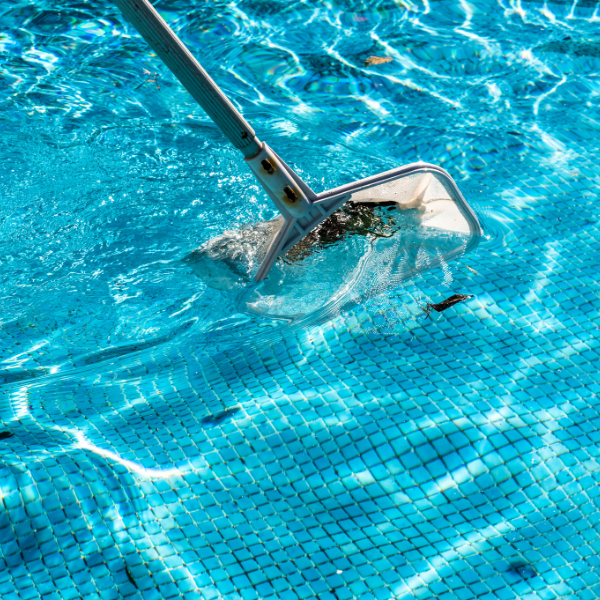
You come home from a week at the beach, and the first thing you notice is the color. The water is off — not green yet, just flat and slightly hazy, like watered-down jade. The steps have a faint slick feeling when you run your foot across them. Nothing alarming on the surface, but something is clearly wrong under it.
In a lot of climates, a pool sitting unattended for a week is an inconvenience — a few adjustments and it's back on track. In Florida, a week without maintenance is enough to put you behind the chemistry in ways that take multiple days to claw back. The reason comes down to the specific combination of conditions Florida pools deal with year-round, and understanding that combination explains why the timeline is as short as it is.
Why Florida's Climate Works Against Pool Chemistry Faster Than Almost Anywhere
Three forces are running simultaneously against any untreated Florida pool: ultraviolet radiation, heat, and biological activity — and in Florida's subtropical environment, all three run at peak intensity for eight or nine months of the year.
UV radiation destroys free chlorine through a process called photolysis. Without stabilizer (cyanuric acid, or CYA), UV can degrade up to 90% of a pool's free chlorine within two hours of direct sun exposure. Even with proper stabilizer levels at 30–50 ppm, a full Florida summer day cuts your chlorine reserve significantly. A pool that enters Monday morning at 2.5 ppm can fall below 1.0 ppm by Wednesday afternoon without any chemical additions — not because it failed to sanitize, but simply because the Florida sun burned through the reserve faster than anything is replacing it.
Water temperature makes every biological process faster. Algae that might take two weeks to bloom in a 68°F northern pool can establish visible growth in four to five days when water temperatures sit at 84–88°F — which is typical for a Pinellas County pool sitting in the sun through July and August. Warm water accelerates cell division, reduces the dissolved oxygen that inhibits certain biological growth, and makes chemical reactions faster in both directions.
Florida's afternoon rain pattern adds another layer. A storm that drops two or three inches dilutes pool chemistry the way a bucket of water dilutes a glass of juice. Chlorine concentration drops, pH shifts, phosphates spike from runoff, and the pool's alkalinity can move several points in a single afternoon. When this happens on top of chemistry that was already running low heading into the weekend, it tips the balance.
The First 72 Hours: Chlorine Disappears
At zero hours — the moment maintenance stops — a healthy pool has free chlorine in the 2–3 ppm range, pH between 7.4 and 7.6, and alkalinity at 80–120 ppm. Everything is in balance.
By hour 48 to 72 under Florida summer sun, that free chlorine reading is typically near zero. The stabilizer is still doing what it can, but the chlorine it was protecting has been consumed by UV exposure, oxidized by organic contaminants (sunscreen, sweat, debris), and simply run out with no fresh input.
The water will likely still look clear at this point. There is no visible signal that the chemistry has collapsed. This is the dangerous window — the pool looks fine, it feels fine, and anyone who jumps in would have no idea that the sanitizer protecting them from waterborne bacteria is effectively gone.
Chlorine doesn't just kill algae. It kills bacteria like E. coli, Pseudomonas aeruginosa (the bacteria behind swimmer's ear and hot tub rash), and other pathogens that enter pools from bathers, birds, and the environment. With no active sanitizer, those organisms face no resistance.
Days 4–7: The Chemistry Cascade
Once free chlorine is gone, pH begins drifting. Without the constant input of acidic chlorine compounds keeping it in check, the natural tendency of most Florida pool water — which often pulls from slightly alkaline municipal sources or wells — is to climb. A pH above 7.8 means hypochlorous acid (the active sanitizing form of chlorine) makes up an increasingly small fraction of what little chlorine is left. At pH 8.0, over 80% of free chlorine converts to the hypochlorite ion form, which sanitizes at roughly one-tenth the rate of hypochlorous acid. The effect is essentially that any trace chlorine remaining becomes almost useless.
Algae spores — which are present in every outdoor pool continuously — are now encountering no resistance. Green algae can double its cell mass every 12 to 24 hours in warm, nutrient-rich water. By day five or six, the water typically develops that characteristic flat, dull appearance as algae suspends in the water column. By day seven, most Florida pools show visible greening — either a light haze throughout the water or concentrated green tinting along the walls and in shaded corners where the pump returns circulate least.
At this stage, you cannot assume the water is safe based on appearance alone, and you certainly cannot assume it's safe based on what a test strip says. Test strips read total chlorine, not free chlorine, and a reading of 0.5 ppm in a high-pH pool may represent essentially zero effective sanitizing capacity.
Two Weeks In: What Visible Algae Actually Means
The green you see at the two-week mark isn't just an aesthetic problem — it's a sign that biological activity has been outpacing your chemistry for days. By this point, algae isn't just suspended in the water; it's beginning to attach to surfaces. The steps, the grout lines between tiles, the main drain cover, and any corner with reduced water movement all become attachment points.
Once algae is on the surface, it's harder to treat than suspended algae. Surface-attached algae forms a thin biofilm layer that physically shields the colony from chemical contact. Shocking the water raises the level of chlorine in the water column, but it takes direct contact to break down a colony that's embedded into plaster or grout.
Mustard algae — a yellowish, powdery variety common in Florida pools — is particularly frustrating at this stage. It brushes off walls easily, which gives the illusion of progress, but it resettles within hours because mustard algae has a natural resistance to standard chlorine levels — you're moving it around the pool, not killing it.
| Time Without Maintenance | Water Condition | Safe to Swim? | Recovery Timeframe |
|---|---|---|---|
| 0–48 hours | Clear, chlorine depleted | No — zero sanitizer | 4–8 hours with treatment |
| 3–7 days | Slight haze, early algae | No — biological risk | 1–2 days with treatment |
| 7–14 days | Visible algae, drifted chemistry | No — health risk | 3–5 days with treatment |
| 14–30 days | Green water, surface algae | No — significant risk | 5–10 days with treatment |
| 30+ days | Heavy algae, equipment stress | No — professional recovery | 1–2 weeks or longer |
One Month: Equipment Starts Paying the Price
Everything described above happens to the water. At the one-month mark, the damage starts extending to the equipment.
Algae-heavy water is loaded with organic material. That material passes through your filter, and a filter that isn't being backwashed or cleaned progressively clogs — raising the pressure, reducing flow rate, and eventually making the pump work harder than it was designed to. Pump seals and bearings wear faster under those conditions. Running a pump that's straining against a clogged filter is a good way to shorten its life significantly.
A salt chlorinator cell — if the pool has one — is also at risk. Salt cells work within a specific water chemistry window. When TDS (total dissolved solids) climbs from weeks of evaporation and chemical additions without water dilution, and when pH climbs and stays high, scale deposits form on the cell plates. Scale buildup reduces the cell's ability to generate chlorine and can cause it to fail prematurely.
Black algae can also take hold at the month mark. Unlike green algae, black algae isn't really algae — it's a cyanobacterium that produces a protective, waxy outer layer and sends root-like structures into the pores of pool plaster. Breaking a black algae colony requires a steel brush to physically penetrate the outer layer before chemical treatment can reach it. Even after aggressive treatment, black algae leaves behind staining that can look like active colonies and often does return if the plaster surface retains embedded cells.
Think of black algae like a weed that's gone to seed. You can pull it out, but if you don't address the root, it comes back in the same spot.
When a Neglected Pool Is No Longer a DIY Job
A pool with a few days of missed service can typically be recovered with careful home treatment: shock, pH adjustment, overnight filtering, and a follow-up test the next morning. A two-week pool is more involved but still manageable for someone who knows what they're doing.
At the three- to four-week mark, most Florida pools have crossed into professional recovery territory. Not because the chemistry is impossible to fix, but because the number of variables — filter condition, surface algae penetration, chemical costs, equipment wear, CYA levels that may require a partial drain — make guessing the treatment sequence expensive and slow. An undertreated recovery attempt typically means multiple rounds of shock at significant cost, ongoing cloudiness that keeps the pool unusable, and the risk of pushing the water chemistry further out of balance trying to correct it.
The other issue is time. A professional pool service has the experience to assess what the water actually needs in sequence — pH first, then shock, then flocculant if needed, filter run time calibrated to the severity — rather than the trial-and-error approach that often extends a recovery from a few days into two weeks.
Frequently Asked Questions
Under full sun exposure with proper stabilizer (CYA at 30–50 ppm), a Florida pool can lose half its free chlorine in a single day during peak summer. Without stabilizer, chlorine can drop to near zero within a few hours of direct sun exposure. This is why maintaining CYA levels and a consistent chemical input schedule matters more in Florida than in most other climates.
Yes. Green algae exists in every outdoor pool as spores at all times. Visible bloom is a lagging indicator — by the time you can see it, the algae population has already been growing for several days. A pool that looks slightly flat or hazy, without the clear-to-the-bottom transparency it should have, has already begun the early stages of a bloom even if you wouldn't call it "green."
Not right away. Shocking raises chlorine to a high level to kill the algae and bacteria present, but the pool needs to circulate and filter for 12–24 hours at minimum — often longer — before the water clears to a level where it's safe and the dead algae has been filtered out. Swimming in freshly shocked water that still looks green means swimming in water with significant suspended organic material and potentially high chlorine levels that can irritate eyes and skin.
A heavy storm can shift pool chemistry enough to reduce free chlorine by 30–50% in a single afternoon. When this happens mid-week on a pool that's already on the lower end of its chlorine target, it can push the pool past the threshold where algae growth begins. Florida pools in particular need to be checked after any significant rain event — especially during the summer rainy season when back-to-back storms are common.
Several variables determine how long a pool holds its chemistry: stabilizer level, bather load, sun exposure (screen enclosure vs. open pool), filter run time, and baseline starting chemistry. A pool with optimal CYA, running 10–12 hours per day, and starting the week at 3 ppm chlorine has a longer buffer than one with low stabilizer, minimal run time, and a starting chlorine of 1.5 ppm. Both pools are losing ground the moment maintenance stops — one just starts from a more forgiving position.
Draining is generally a last resort, not a first step. Most green pools — even severely neglected ones — can be chemically treated back to clear without draining, though it takes multiple treatment stages and significant filter run time. Partial or full draining becomes necessary when TDS has climbed extremely high after months of neglect, when cyanuric acid has built up beyond 100 ppm and can't be reduced chemically, or when black algae has so thoroughly penetrated the plaster that surface cleaning and chemical treatment have failed multiple rounds. A licensed pool contractor can test for these specific conditions and recommend the right approach.
Dog Days Pools provides professional pool cleaning, green pool clean-up, and algae treatment in Clearwater, Safety Harbor, Dunedin, Palm Harbor, and surrounding Pinellas County communities. Whether your pool needs a one-time rescue treatment or weekly maintenance to stay ahead of Florida's climate, our experienced team is available seven days a week. Licensed Certified Pool Contractor Larry — License #CPC1460480 — personally oversees service. Call (727) 223-7117
