
Why Your Pool Stays Cloudy Even With Balanced Chemicals
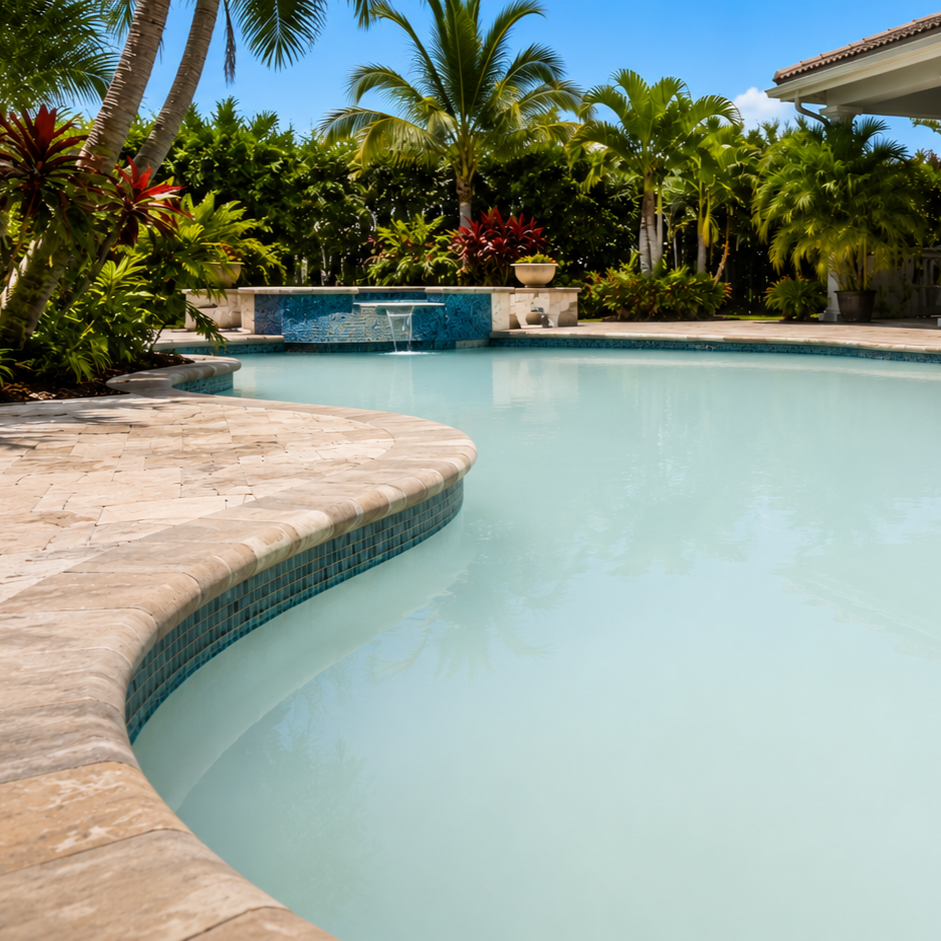
Quick Answer: When your test numbers look balanced but the water is still cloudy, the problem is usually not chemistry but filtration and circulation — the filter isn't running long enough, is dirty or undersized, or the water isn't circulating well. Very fine particles too small for the filter to catch, high calcium hardness, or an off cyanuric acid level can also cloud water that otherwise tests fine. The fixes are longer filter runtime, cleaning or fixing the filter, good circulation, and sometimes a clarifier to clump fine particles.
It's frustrating: you test the water, the chlorine and pH read right, and yet the pool looks like a glass of milk. That combination — balanced chemistry, cloudy water — is a strong clue that the cause isn't in your chemicals at all. A pool clears when three things work together: balanced water, good filtration, and good circulation. If the chemistry is handled, the answer is almost always in the other two, or in particles too fine for the filter to grab.
Why Balanced Water Can Still Be Cloudy
Cloudiness is tiny suspended particles scattering light — dust, dead algae, body oils, fine debris, mineral precipitate. Correct chlorine and pH levels mean the water is sanitized and balanced, but they don't mean those particles have been removed. That's the filter's and the pump's job. So a clear test and a cloudy pool usually mean the system isn't clearing the particles fast enough, or the particles are too small for the filter to catch. Chemistry keeps the water safe; filtration and circulation clear it.
The Real Culprits
Not Enough Filtration
This is the most common reason. If the filter isn't running long enough each day, it can't keep up with the particles entering the pool, and the water stays hazy. In warm weather and heavy use, a pool may need the pump running many hours a day, sometimes around the clock, while clearing a cloudy pool. A dirty filter that needs cleaning or backwashing, or a filter that's undersized for the pool, can't do the job, no matter how good the chemistry is.
Poor Circulation
If water isn't moving well throughout the pool — return jets aimed wrong, a weak pump, clogged baskets, or dead spots — particles settle and linger instead of being carried to the filter. Good circulation brings the whole pool's water past the filter, which is what actually clears it. Check that the skimmer and pump baskets are clean and the jets are pushing water around the whole pool.
Particles Too Fine for the Filter
Sometimes the haze comes from particles smaller than the filter can capture, so they pass right through and remain suspended. This is where a clarifier helps: it clumps the fine particles together into bigger ones that the filter can then trap. A flocculant is a stronger agent that causes particles to settle to the bottom for vacuuming out. Either can clear a haze that filtration alone is struggling with.
Chemistry That Still Matters
Even with the basics balanced, two factors can cloud water: high calcium hardness, where excess calcium precipitates and clouds the pool (common with hard fill water), and an off-balance cyanuric acid level, which affects how chlorine works. So "balanced" should include those, not just chlorine and pH.
| What's going on | Likely cause | Fix |
|---|---|---|
| Hazy despite good chlorine/pH | Filter not running enough | Increase pump runtime |
| Cloudy and filter pressure high | Dirty filter | Clean or backwash it |
| Debris settles, water stagnant | Poor circulation | Clear baskets; aim jets |
| Haze won't filter out | Particles too fine | Add a clarifier or flocculant |
| Cloudy with hard fill water | High calcium hardness | Test and correct hardness |
How to Clear It
Work the system, not just the chemistry. Run the filter longer — often much longer than usual while clearing a cloudy pool, sometimes continuously for a day or two. Clean or backwash the filter so it can actually do its job, and make sure the skimmer and pump baskets are clear and the return jets are circulating the whole pool. If the water still won't clear, add a clarifier to help the filter catch the fine particles, and check calcium hardness and cyanuric acid in case those are the off numbers. Vacuuming settled debris to waste also helps.
If you've run the filter hard, cleared the baskets, balanced the full set of numbers, tried a clarifier, and the pool is still cloudy, it's worth having it looked at — the filter may be failing or undersized, the pump or plumbing may not be circulating properly, or there may be an early algae bloom that hasn't turned green yet. A pool pro can pinpoint which part of the system is falling short.
Frequently Asked Questions
Because clear water depends on filtration and circulation, not just chemistry. Balanced chlorine and pH keep the water safe, but don't remove the tiny, suspended particles causing the haze — that's the filter and pump's job. Usually, the filter isn't running long enough, is dirty, or the water isn't circulating well. Fine particles, high calcium hardness, or an off cyanuric acid level can also cloud balanced water.
Longer than usual — often many hours a day, and sometimes continuously for a day or two while actively clearing it. A pool can't be cleared if the filter isn't running enough to process the water and catch the particles. Make sure the filter is clean first, since a dirty or clogged filter can't clear the water, no matter how long it runs. Once clear, return to a normal daily runtime.
It can, when the haze is from particles too fine for the filter to catch. A clarifier clumps those fine particles into larger ones that the filter can then trap, so it works together with good filtration rather than replacing it. A flocculant is stronger — it causes the particles to settle to the bottom for vacuuming out. Both help when filtration alone isn't clearing the water.
Yes. When calcium hardness is too high, excess calcium can precipitate out of the water and cloud it, which is common in areas with hard water. Because chlorine and pH can look fine while hardness is off, it's worth testing the full set of numbers — including calcium hardness and cyanuric acid — when a pool is cloudy despite seemingly balanced chemistry.
If you've run the filter hard, cleaned it and the baskets, confirmed good circulation, balanced the full chemistry, and tried a clarifier, and the pool is still cloudy, it's time to have it checked. The filter may be failing or undersized, the pump or plumbing may not be circulating properly, or an early algae bloom may be starting. A pro can identify which part of the system is the weak link.
A cloudy pool with balanced numbers means your filtration and circulation can't keep up — the chemistry is fine, but the particles aren't being removed. Run the filter longer, clean it, get the water circulating, and reach for a clarifier when the haze is too fine to catch. Check calcium hardness and cyanuric acid, too, since "balanced" means more than chlorine and pH. Work the system, and the water clears.
Pool still cloudy no matter what the test says? — Get the filtration, circulation, and full chemistry checked and the water cleared. Dog Days Pools serves Clearwater and Pinellas County. CPC1460480. Call (727) 205-0566.
