
Why Does Pool Water Turn Milky White Right After Adding Shock?
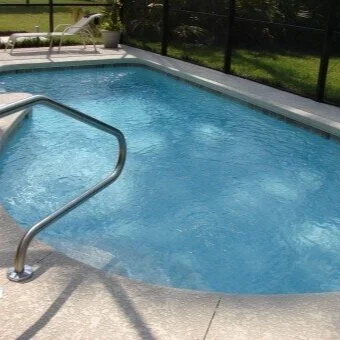
You drop the shock in, watch the granules dissolve, and within ten minutes, the water goes from clear to a flat, chalky white — like someone poured a cup of milk into the shallow end. Your instinct is that you've made things worse. That instinct is almost always wrong, but understanding what just happened to your water chemistry is worth working through before you add anything else.
Milky white water after shocking isn't random. It has specific causes that trace back to the type of shock you used, the balance of minerals already in your water, and what the shock itself was reacting to. The most common cause is temporary and self-correcting. But one version of this problem signals a water balance issue that won't fix itself — and knowing the difference will save you a lot of wasted chemical additions.
What Milky White Water Is Actually Telling You
Not all cloudiness looks or behaves the same. Milky white — the flat, opaque color that shows up immediately after adding shock — is almost always a physical event happening right in your water column. This is different from the slow grey haze that develops over days (usually filtration or early algae) or the green cloud that means active algae growth.
The white you're seeing is light scattering off suspended particles in the water. Two things produce this:
The first is chemistry: when shock contacts water with certain mineral levels, it triggers a precipitation reaction that creates very fine solid particles — essentially microscopic chalk — floating in suspension. The second is biology: shock works by rapidly oxidizing organic contaminants — body oils, sweat, dead algae, bacteria — and that oxidation reaction releases the dead material into the water column as fine suspended particles before the filter has a chance to capture them. That second type is actually a sign the shock is working. The pool looks worse for a few hours because it's actively cleaning itself.
Both produce white or hazy water. The key diagnostic is whether the white is clearing after 12–24 hours with the pump running. If it is, you're watching normal chemistry resolve. If it holds or spreads after 48 hours, there's an underlying issue driving it.
The Most Common Cause: Cal-Hypo and Your Pool's Calcium Level
Most granular pool shock sold at hardware stores and pool supply shops is calcium hypochlorite — usually labeled cal-hypo, "73%," or sold under names like HTH. This type of shock is roughly 65–78% available chlorine, and it carries significant calcium in its chemical structure.
When you dissolve cal-hypo in your pool, you're not just adding chlorine — you're adding a calcium load. If your pool water already has moderate-to-high calcium hardness or total alkalinity, the spike in dissolved calcium from the shock can push the water past its saturation point for calcium carbonate. When that happens, the excess calcium bonds with carbonates already dissolved in the water and precipitates out of solution — not as a liquid, but as a white crystalline haze suspended in the pool.
Held up in a glass and backlit, that water looks like diluted skim milk. Under a pool light at night, the whole surface reflects the white back at you. The reaction happens within minutes of adding the shock and can look alarming.
This type of cloudiness does resolve on its own. The calcium carbonate particles are fine enough to be captured by your filter, and as they're pulled through the media over the next 12–24 hours, the water clears. The key is keeping the pump running continuously.
In Florida, this reaction is more common than in most of the country. Municipal water throughout Pinellas County and surrounding communities comes from limestone-based aquifers — the same geology that gives the region its flat terrain and spring-fed character. That water arrives at your tap already carrying moderate calcium hardness and total alkalinity. Add a pound of cal-hypo to a pool sitting near the upper end of its calcium range, and the whitening reaction is almost predictable.
The pH Spike That Triggers Precipitation
Even before the calcium load causes problems, the pH of the shock itself can trigger the same reaction.
Cal-hypo carries a pH somewhere around 11–12 right out of the bag. When you add it to your pool, you create a localized pocket of extremely high-pH water before the shock has had time to dilute across the full pool volume. Calcium carbonate solubility drops sharply at high pH — the higher the pH, the less calcium the water can hold dissolved. That temporary spike drives calcium out of solution immediately, and the white cloud appears within minutes.
As the shock dilutes and pH normalizes across the pool, the precipitation stops. But the particles already suspended in the water stay there until the filter captures them.
This is why pool professionals recommend pre-dissolving shock in a bucket of pool water before adding it to the pool. Diluting the shock first softens the initial pH spike and reduces how aggressively the precipitation reaction fires. You'll still see some cloudiness, but lighter and shorter.
Undissolved Granules and the Pour-Zone Cloud
A different cause produces a concentrated white cloud right where you added the shock — a localized zone of opacity that doesn't spread evenly through the pool.
When granules are added directly without pre-dissolving, they sink and dissolve on contact with the pool floor or wherever they settle. In the few minutes before they fully dissolve, they create a dense white cloud in that spot. That localized pocket also carries a high-pH, high-concentration shock environment that can bleach plaster or etch surfaces if it sits in contact too long.
Adding shock with the pump running and walking the stream of granules in front of a return jet keeps material moving. Pre-dissolving in a five-gallon bucket eliminates the contact risk entirely.
Never add shock directly into the skimmer. If the pump stops unexpectedly while concentrated shock sits in the skimmer basket or throat, the plumbing downstream can suffer chemical damage. Always add shock to the pool water directly, or pre-dissolve in a bucket first.
Quick-Reference: Reading What You're Seeing
| What You Observe | Most Likely Cause | Expected Clearing Time |
|---|---|---|
| Whole pool turns white/opaque within minutes of adding shock | Cal-hypo calcium precipitation | 12–24 hours with the pump running |
| White cloud concentrated at the pour spot | Undissolved granules / localized pH spike | 2–6 hours with the pump running |
| White-grey haze develops 1–3 hours after shocking | Dead organics oxidized and suspended | 12–24 hours; filter pressure will rise (normal) |
| White haze plus sharp chlorine smell | High chlorine off-gassing from over-dosing | 24–48 hours; test before swimming |
| White haze clears, returns at next shock treatment | High alkalinity or calcium hardness driving repeat reactions | Test and adjust chemistry first |
| White water persists 48+ hours with pump running | Filter not processing; chemical imbalance | Test all parameters; professional diagnosis likely needed |
When White Water After Shock Is Actually a Problem
The scenarios in the table with 12–24 hour timelines are normal chemistry and resolve on their own. The scenarios that need attention are different.
If your water is still white or hazy after 48 hours with the pump running continuously, the filter isn't processing the suspended material fast enough. This is usually a combination: filter media that's already dirty and restricted, combined with a water chemistry issue keeping new particles forming. High total alkalinity — above 120 ppm — makes calcium precipitation far more likely every time you shock. High calcium hardness above 400 ppm makes it worse. Without correcting those numbers between treatments, the cloudiness will return with every shock dose.
If the water turned white and carries an intense, eye-watering chlorine smell that doesn't fade after a few hours, you may have over-shocked. The standard dose for granular cal-hypo is 1 pound per 10,000 gallons of pool water. Adding significantly more than that pushes free chlorine into ranges where off-gassing is visible, and the smell is sharp. Over-shocked water won't damage the pool, but no one should swim until the chlorine drops back to 1–3 ppm. Test before anyone gets in.
A less common but worth-knowing cause: metals. If your pool water has elevated copper or iron — from corroding heater elements, well water additions, or algaecides that contain copper — shocking with chlorine can oxidize those metals and precipitate them out of solution. The cloudiness from metals often has a slight color to it — greenish from copper, brownish-orange from iron — rather than pure white. If your water clarity follows that pattern, a metal sequestrant is the treatment, not more chlorine.
How to Clear It Faster
Once you've confirmed the white water is a normal shock reaction, the approach is simple: keep the system running and let the filter do its job.
Run the pump continuously — not just on its normal schedule — until the water clears. A standard residential pool pump turns over the full pool volume roughly once every 8–10 hours. Two complete turnovers is the minimum for clearing a normal shock reaction. For most pools, 24 hours of continuous circulation handles it.
Brush the pool floor and walls once the shock has fully dissolved. This keeps settled particles back in suspension where the filter can grab them, rather than letting them pack into dead zones near steps, the main drain, or behind ladders.
Watch the filter pressure gauge as the water clears. A rising pressure reading during clearing is actually a good sign — it means the filter is actively capturing the suspended material. Backwash (sand or DE) or rinse (cartridge) when the pressure climbs 8–10 psi above its normal clean baseline, then let it run again. The water will clear noticeably faster after each backwash during heavy particle loads.
Hold off on adding a clarifier for the first 12 hours. Clarifiers clump fine particles so the filter can catch them — but they need reasonably clean filter media to work. If the filter is already under load from the shock particles, adding clarifier too early can overload the media and extend the cloudiness instead of shortening it. Give the filter time to work first, then add clarifier if the water is still hazy at the 12-hour mark.
Frequently Asked Questions
Not immediately. Even when the cloudiness is a normal calcium reaction and not a chemical problem, the shock has raised free chlorine well above safe swimming levels. Wait until the chlorine drops back to 1–3 ppm and confirm it with a test before anyone gets in. The white color itself isn't the hazard — the chlorine level is.
The type of shock matters more than the brand. Calcium hypochlorite (granular shock) carries additional calcium and has a pH around 11–12, which together trigger the precipitation reaction in water with moderate-to-high alkalinity or calcium hardness. Dichloro-s-triazinetrione (dichlor) and sodium hypochlorite (liquid chlorine) don't add extra calcium and carry lower pH, so they rarely produce the same bright-white cloud effect. If white cloudiness after shock is a recurring problem for your pool, switching to liquid chlorine for shock treatments eliminates the calcium input entirely.
Pre-dissolve the granules in a five-gallon bucket of pool water before adding them. This dilutes the initial concentration and softens the pH spike, which reduces how aggressively the calcium precipitation reaction fires. Also check your pH (target 7.4–7.6) and total alkalinity (target 80–120 ppm) before shocking — if either is already on the high end, bring them down first.
Yes, rising filter pressure during the clearing process is actually what you want to see. It means the filter is actively pulling the suspended particles out of the water column. Backwash or rinse when the pressure climbs 8–10 psi above its normal baseline, then let the pump keep running. Pressure dropping back to normal and water clarity improving together is the sign that the clearing cycle is complete.
Recurring whiteness after every shock treatment almost always points to persistently high total alkalinity or high calcium hardness. These numbers keep the water near its calcium carbonate saturation point — so any additional calcium or pH spike from shock pushes it over the edge. Test both parameters after the water clears and adjust before the next treatment. If alkalinity is above 120 ppm, bring it down with muriatic acid first. If calcium hardness is above 400 ppm, partial draining and refilling with fresh water is the only reliable way to lower it.
Run the pump continuously for a minimum of 8 hours after adding shock, and 24 hours if the water is visibly cloudy. The goal is to push the full pool volume through the filter at least twice. For most normal shock reactions, 24 hours of uninterrupted circulation with clean filter media resolves it. If the water is still cloudy at 24 hours, backwash or rinse the filter and run another 12–24 hours before deciding whether the problem is chemical rather than mechanical.
Dog Days Pools offers a complete, one-stop solution for professional pool services in Clearwater, Safety Harbor, and surrounding areas, including pool chemical balancing, shock treatments, green pool clean-up, and weekly pool maintenance with chemicals always included. Our experienced team services residential pool systems with a focus on clean water, safe swimming conditions, and long-term performance. Whether you need routine pool maintenance or an urgent pool repair, we provide reliable service and responsive care. Schedule your pool service today — call (727) 205-0566.
