
The Florida Pool Maintenance Checklist You Actually Need
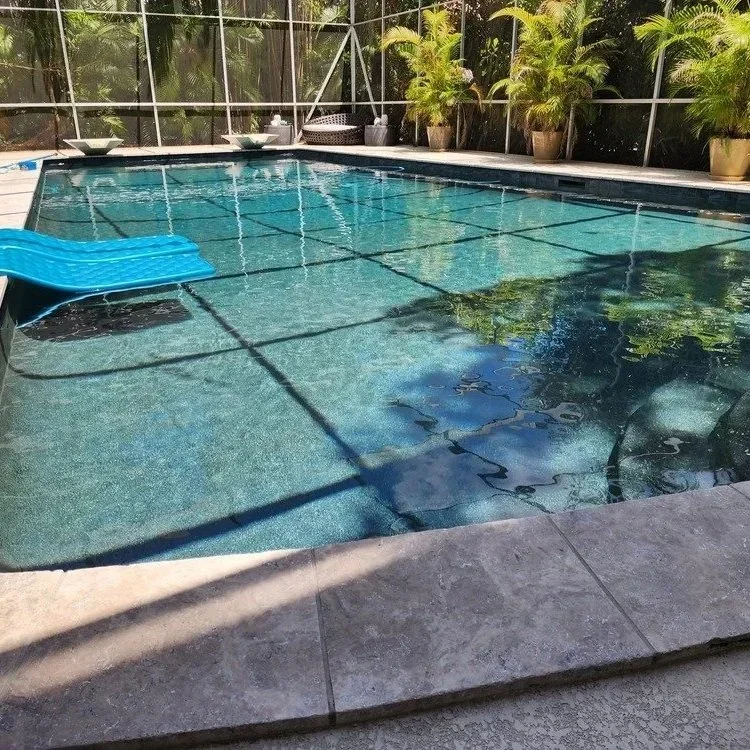
Florida pool ownership has a way of punishing the improvised approach faster than anywhere else in the country, and it's because the climate here doesn't give your pool any grace period when something slips.
You've been meaning to get organized about pool maintenance all season — and instead you've spent three weekends chasing problems you could have avoided. The water's been cloudy, the filter alarm went off, and last month you paid more to fix something that had been quietly getting worse for weeks than you ever would have spent just staying on top of it. Florida pool ownership has a way of punishing the improvised approach faster than anywhere else in the country, and it's because the climate here doesn't give your pool any grace period when something slips.
A real pool maintenance checklist for Florida homeowners isn't a generic list pulled from a manufacturer's guide. It's built around the realities of twelve-month swimming seasons, intense UV exposure, regular heavy rainfall, and water temperatures that never drop low enough to slow algae growth for more than a few weeks. What works for a pool in Ohio or Arizona doesn't translate cleanly to Clearwater, FL, or anywhere else along the Gulf Coast. The checklist below reflects what actually needs to happen — and when — to keep a Florida pool healthy, safe, and operational without emergency service calls.
The Daily Habits That Save You Money Later
Daily pool maintenance in Florida doesn't have to be time-consuming, but a few quick checks each day prevent the kind of compounding problems that turn into expensive repairs. Every day, check your water clarity from the pool deck. You shouldn't need to lean over and squint — if the water is balanced and the filter is running properly, you should be able to see the bottom clearly from across the pool. Slight haziness that develops between service visits is an early chemical warning, not just a cosmetic inconvenience. Catching it on day one gives you time to test and adjust. Catching it on day four means you're already behind, and catching it on day seven means you may be looking at a green pool cleanup.
You should also do a quick visual on your skimmer basket every day, especially during periods of heavy leaf drop or windstorm activity. A full skimmer basket restricts water flow to the pump, forcing the motor to work harder and eventually leading to cavitation — a grinding, air-sucking condition that damages the pump impeller over time. It takes about thirty seconds to pull the basket, dump it, and drop it back in. Those 30 seconds, done consistently, protect a pump that costs several hundred dollars to replace. The same logic applies to your pump basket — check it a few times a week and clear it before it gets more than half full.
Weekly Tasks That Can't Be Skipped in This Climate
Weekly pool maintenance in Florida needs to cover water chemistry testing and adjustment, physical cleaning, and a basic equipment check — every single week, without exception. For chemistry, test your chlorine, pH, alkalinity, and calcium hardness at a minimum. In Florida's heat, chlorine burns off faster than the label on your chemical bottle suggests, and UV exposure destroys it even faster if your stabilizer level isn't maintained. Aim for free chlorine between one and three ppm, pH between 7.4 and 7.6, and total alkalinity between 80 and 120 ppm. These aren't arbitrary targets — they're the range at which chlorine operates at its actual designed effectiveness. Outside that window, you can have perfectly readable chlorine levels in a test and still have ineffective sanitation.
Physical cleaning every week should include brushing the walls and the floor —not just vacuuming or skimming. Brushing disrupts biofilm and early algae colonies before they become visible and before they grip the plaster or tile. Algae doesn't start as a green pool. It starts as a thin, invisible layer on shaded surfaces, on the step risers, behind the ladder, along the waterline. Brushing those surfaces weekly breaks that cycle before it starts. Vacuum after brushing so the disturbed material gets pulled through the filter rather than resettling on the floor. And clean your tiles at the waterline, where body oils and mineral scale accumulate — in Clearwater, FL, the combination of high calcium content in the water and heat makes tile scale build up faster than homeowners expect.
The Monthly Items Most Florida Homeowners Miss
Monthly pool maintenance tasks are the ones most often deferred because they feel less urgent than the daily and weekly work. The filter is the biggest offender. Whether you have a cartridge filter, a sand filter, or a DE filter, it needs a thorough cleaning at least once a month — not just a backwash, but an actual disassembly and inspection. Cartridge filters that aren't cleaned monthly accumulate oils, scale, and fine particles that can't be removed by rinsing alone. Over time, this reduces their effectiveness and causes the filter to run at higher pressure, which strains every component downstream. A filter running at eight to ten PSI above its normal operating pressure is working significantly harder than it should be, and that stress shortens the life of your pump.
Monthly checks should also include your pool's stabilizer level, also called cyanuric acid (CYA). The stabilizer protects chlorine from UV degradation, but it needs to stay within the right range — typically 30-50 ppm. Too low and your chlorine evaporates before it has a chance to sanitize. Too high and it binds to the chlorine and reduces its effectiveness, a condition called chlorine lock that requires partial draining to correct. In Florida, where outdoor pools are exposed to intense sunlight year-round, stabilizer levels can fluctuate with pool water replacement after splashing, rainfall, and evaporation. Monthly testing catches these shifts before they create a chemistry problem that's harder to reverse.
Seasonal Adjustments That Florida Pools Demand
Florida pools don't have seasons in the traditional sense. Still, the rainy season — typically May through October — represents a maintenance period that demands a different approach than the drier winter months. During the rainy season, your pool water is diluted by fresh rainwater nearly weekly. Each significant rainstorm resets your chemical balance to some degree, lowering your pH, dropping your alkalinity, and diluting your chlorine. In a wet week, you may need to test and adjust chemistry two or three times rather than once. Homeowners who don't adjust their maintenance frequency to the rainy season are almost always the ones calling for green pool-cleaning services in August.
The winter months in Clearwater, FL, don't allow you to relax the maintenance schedule as much as you might hope. While temperatures do drop enough to slow algae growth somewhat, the pool is still being used, still collecting debris from surrounding trees and landscaping, and still requiring chemical management. Winter is, however, a good time to service equipment — check your pump seals, inspect your filter housing for cracks, test your pool light GFCI, and look at your plumbing fittings for signs of slow leaks. These are easy to overlook during the peak of swimming season, when everything seems to be working fine, but they're far cheaper to address during a routine inspection than after a seal fails mid-summer.
The Equipment Checks That Protect Your Investment
A complete pool maintenance checklist goes beyond the water and includes regular attention to the equipment that keeps everything running. Your pool pump, filter, heater, and valves are not maintenance-free systems. They have expected service intervals and wear patterns that, if ignored, lead to failures at the worst possible time. One of the most overlooked items on any homeowner's list is the pool pump's O-rings and lid seal. These rubber components dry out over time — especially in Florida's heat — and when they fail, they allow air into the suction line, which causes the pump to lose prime and run dry. A pump that runs dry, even briefly, can overheat and seize.
Check your pool equipment monthly for anything that seems off from its normal operation — unusual noises, water appearing where it shouldn't, pressure readings that have shifted from their baseline, or valves that feel stiff or don't seat properly. Your filter pressure gauge should be read at the same point in the pump cycle each time so you have a consistent comparison. A pressure that's climbed eight to ten PSI above its normal reading after a fresh cleaning is telling you the filter is loaded and needs attention. These aren't complicated checks — they're visual and tactile, the kind of thing you learn to notice once you know what normal looks and feels like for your specific system.
Act Fast to Protect Your Pool: Florida Pool Care FAQs
How often should I test pool water chemistry in Florida?
During peak swimming season and Florida’s rainy season, test your pool water at least twice a week. In quieter winter months, once a week may be sufficient. After heavy rainfall, test within 24 hours regardless of your last test. Consistent testing is one of the most effective preventive steps for pool health.
Do I need to clean the pool filter if I just had it cleaned last month?
Yes. Monthly filter cleaning is the standard recommendation for Florida pools, and heavy use or debris may require even more frequent cleaning. A clogged filter increases strain on your pump, raises energy costs, and shortens equipment lifespan.
What does cyanuric acid do, and why does it matter for Florida pools?
Cyanuric acid (stabilizer) protects chlorine from being broken down by sunlight. Without it, chlorine can dissipate quickly in Florida sun, leaving water under-sanitized. The ideal range is 30–50 ppm; too low wastes chlorine, and too high reduces chlorine effectiveness and may require dilution.
Is it worth hiring a professional pool service if I'm doing most of the maintenance myself?
Yes. Even with good DIY maintenance, professional pool service can detect early equipment issues, chemical imbalance, and algae growth before they become serious problems. Regular professional checks help catch subtle warning signs like pressure changes, water clarity shifts, or pump noise.
How do I know if my pool has a slow leak vs. normal evaporation?
Use the bucket test: place a water-filled bucket on a pool step, mark water levels inside the bucket and pool, and compare after 24 hours. If the pool level drops more than the bucket, you likely have a leak. In Florida, normal evaporation can account for 1–2 inches of water loss per week.
Dog Days Pools offers a complete, one-stop solution for professional pool services in Clearwater, Safety Harbor, and surrounding areas, including pool cleaning, pool maintenance, weekly pool service, and green pool cleanups. Our experienced team services residential pool systems with a focus on clean water, safe swimming conditions, and long-term performance. Whether you need routine pool maintenance or an urgent pool repairs, we provide reliable service and responsive care. Schedule your pool service today and enjoy a clean, safe pool without the hassle.