
Is That Yellow Stuff in My Pool Mustard Algae or Pollen?
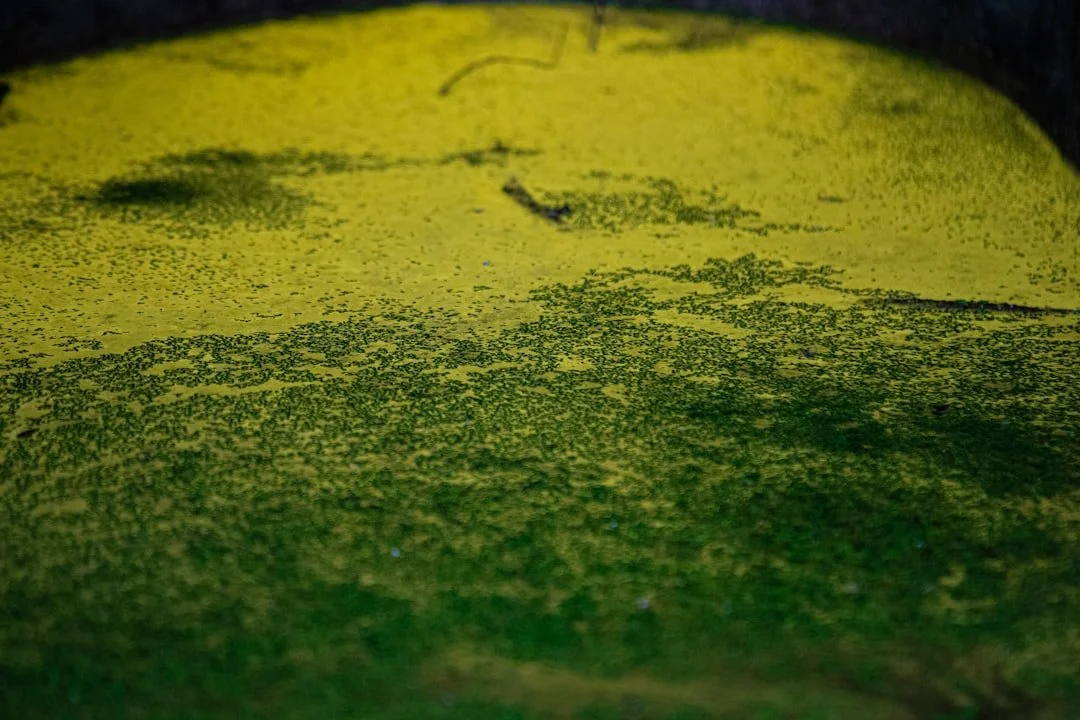
You walk out to your pool on a Sunday morning, and the bottom looks like something dusted it with yellow powder overnight. Maybe the walls have a pale yellow-green haze in the corners, or the water's surface has a dusty film that wasn't there last week. Before you reach for the shock or the algaecide, you need to know what you're actually dealing with — because mustard algae and pollen look nearly identical in a pool, and treating the wrong one is either a waste of money or the start of a much bigger problem.
Mustard Algae vs. Pollen: Why Getting It Right First Matters
Pollen rinses out. Mustard algae does not. That difference is the entire reason this question matters before you do anything to the water. If oak pollen or pine pollen settled onto the pool surface and sank to the floor, vacuuming and a few hours of filtration will clear it up. With mustard algae — sometimes called yellow algae or sand algae — vacuuming does nothing permanent, and a basic shock dose usually fails the first time. Mustard algae is chlorine-resistant by nature, which is what makes it one of the most stubborn problems in residential pools.
Florida pools get hit with both. Pinellas County's oak season runs from late February through April, and during a heavy pollen week, a screen-enclosed pool can develop a visible yellow film on the surface in a single afternoon. At the same time, mustard algae thrives in Florida's heat and can establish itself in shaded corners, on pool walls, and on equipment surfaces wherever chlorine levels dip even briefly.
Reading the Signs: A Quick-Reference Diagnostic
| What you observe | More likely: pollen | More likely: mustard algae |
|---|---|---|
| Yellow material floats on surface, disperses easily when agitated | ✓ | Rare |
| Yellow dust settles on floor, wipes away and stays gone | ✓ | Less likely |
| Yellow patches on walls, steps, or shaded corners | Unlikely | ✓ |
| Brushing the spot makes it disappear — then it comes back | Unlikely | ✓ (within 24–48 hrs) |
| Material reappears in the same spot after vacuuming | Rare | ✓ |
| Water is otherwise clear | ✓ | ✓ (mustard algae often doesn't cloud the water) |
| Only appeared after a windy day during tree pollen season | ✓ | Less likely |
The observation that separates them definitively is regrowth. Pollen is debris — it doesn't grow back. Mustard algae is a living organism that reattaches to surfaces within a day or two, even after aggressive brushing. If you scrubbed a yellow patch off the wall and it came back in the same spot within 48 hours, you're not dealing with pollen.
What Mustard Algae Is and Why It's So Hard to Kill
Mustard algae (Chrysophyta) produces a biofilm — a thin, protective coating that shields it from chlorine at normal operating concentrations. This is why you can have water testing at 2 or 3 ppm free chlorine and still find yellow algae growing on the back wall or along the steps. The chlorine is present, but it can't penetrate the biofilm fast enough to kill the organism before it regenerates.
Florida's climate makes this problem worse in a specific way. Intense UV exposure burns through stabilized chlorine quickly. Water temperatures stay above 80°F for six or seven months of the year. Heavy summer use adds organic load that eats through sanitizer faster. Together, these conditions create frequent short windows where chlorine drops just low enough for mustard algae to take hold in corners and shaded spots the sun never directly hits.
One fact that catches many pool owners off guard: mustard algae can survive outside the water. It lives on pool brushes, nets, vacuum hoses, and swimsuits. A pool that keeps getting mustard algae shortly after treatment is often being reintroduced through equipment or swimwear that wasn't properly sanitized after the last outbreak. Treat the algae, skip sanitizing the gear, and you're essentially re-seeding the pool yourself.
What Pollen Looks Like in a Pool
Pollen grains are hydrophobic — they have a waxy outer coating that helps them shed moisture in their natural environment. That same property causes them to clump on the pool surface instead of dispersing evenly through the water. On a calm morning, you'll often see a slick or dusty film on the surface that settles to the floor by afternoon as it breaks apart and sinks.
In Clearwater and across Pinellas County, live oak and pine are the main sources. Oak pollen is particularly fine-grained and produces that powdery yellow-green film that looks alarming from across the yard. Pine pollen arrives in larger, more visible particles and tends to collect in corners and on steps. Both respond the same way: they vacuum, filter, and rinse out cleanly without any chemical treatment.
The behavior test is reliable without getting into the water at all. Agitate the surface with a brush or your hand. If the yellow material disperses freely and doesn't immediately reattach to surfaces, you're almost certainly looking at pollen. Mustard algae cling — it doesn't float freely the same way.
The Brush Test: The Most Reliable Confirmation
Take a nylon pool brush — not steel wire, which damages plaster — and scrub the most affected wall or floor section. Then wait 24 hours without adding any chemicals. Check the same spot.
If the yellow material is gone and hasn't returned, you had pollen, or at minimum, whatever it was isn't algae. If the yellow haze has reappeared in the same location, you have mustard algae, and the treatment is completely different from a basic cleanup.
This waiting period matters because standard water chemistry testing does not rule out mustard algae. You can have textbook-perfect chlorine, pH, and alkalinity readings while yellow algae grows on the walls — the biofilm makes that possible. A test strip won't catch it. The brush test will.
If you're still uncertain, scoop a sample of pool water into a clean white bucket and hold it up to light. Pollen settles quickly and you'll see visible particles at the bottom. Water from a pool with mustard algae often looks normal in a bucket sample because the algae clings to surfaces rather than floating in suspension.
Why the Treatment Is Completely Different
Pollen removal is mechanical. Run the filter continuously, vacuum the pool floor, and clean the filter cartridge or backwash after vacuuming to remove the trapped particles. A dose of pool clarifier helps clump the fine pollen grains so the filter captures them more efficiently. The pool clears in a day or two. Chemistry barely changes.
Mustard algae requires a multi-step chemical protocol because surface scrubbing alone can't breach the biofilm. Here's what actually works:
Step 1 — Brush all affected surfaces- Every wall, step, corner, and floor section. Do this in the evening so chemicals work overnight without UV breaking them down.
Step 2 — Shock to 30 ppm free chlorine- That's roughly four to five times a standard shock dose for most residential pools. That higher concentration is what forces penetration through the biofilm layer. Standard shock at 10 ppm knocks the algae back but rarely eradicates an established infestation — which is why the pool clears, looks fine for two weeks, then turns yellow again.
Step 3 — Add a polyquat algaecide rated for mustard algae- Look for a 60% polyquat product. These are different from the copper-based algaecides sold for general green algae prevention. Polyquat acts through a different mechanism and stays effective against the biofilm layer that copper-based products can't penetrate reliably.
Step 4 — Sanitize all equipment- Brushes, nets, vacuum parts, and hoses should be soaked in a diluted chlorine solution for at least 30 minutes. This step gets skipped regularly, and it's why infestations come back even after a successful chemical treatment.
Step 5 — Run the filter continuously for 24–48 hours- Dead algae cells and biofilm material need to be captured and removed from the water.
If the infestation is severe or has survived multiple treatment rounds, a partial drain and refill combined with professional treatment is usually more effective than trying another chemical pass at normal concentrations.
What Happens When Mustard Algae Goes Untreated
Mustard algae doesn't turn the pool green the way green algae does. The water can stay relatively clear while yellow patches spread along walls and floors across weeks — which is exactly what makes it tempting to dismiss as a cosmetic issue. It isn't.
Untreated mustard algae creates three real problems. The same biofilm that protects the algae also shelters bacteria, including Pseudomonas aeruginosa, the pathogen responsible for swimmer's ear and folliculitis. A pool with active mustard algae is a less sanitary pool even when it looks acceptable to the eye. Second, the algae creates a persistent chlorine demand that eats through sanitizer faster than normal, producing periodic drops in free chlorine that leave the water open to additional problems. Third, mustard algae embeds itself in pool plaster and grout given enough time. Once it's inside the surface material, standard chemical treatment no longer reaches it, and professional intervention — potentially including resurfacing — becomes the only realistic path forward.
Frequently Asked Questions
Yes — this is one of the most common reinfection paths after treatment. Mustard algae survives on fabric and pool equipment for hours. Wash swimsuits in detergent and let them dry fully in direct sunlight after exposure. Soak pool brushes, nets, and vacuum hoses in a diluted chlorine solution before returning them to a treated pool. If any equipment has been in contact with another pool, sanitize it first regardless of whether that pool showed signs of algae.
The biofilm coating allows mustard algae to survive at chlorine concentrations that would kill green algae without difficulty. The chlorine reads correctly in the open water, but the effective concentration at the algae's surface — filtered through the biofilm — is far lower. Eliminating mustard algae requires a chlorine spike high enough to force penetration through that protective layer, not just a maintenance-level reading. This is why a 30 ppm shock is necessary rather than a standard 10 ppm treatment.
Three causes cover most cases. The shock dose was too low to fully breach the biofilm. Equipment wasn't sanitized and reintroduced the algae after treatment. Or high cyanuric acid (CYA) above 80 ppm is neutralizing the free chlorine before it can work at full strength. High CYA is common in Florida pools that use stabilized chlorine tablets year-round — the CYA builds up in the water with no way out except dilution. If your CYA is too high, even an aggressive shock dose produces far less effective chlorine than the test reading suggests.
Yellow or yellow-green water color is more often caused by dissolved metals than by algae. Copper from corroding equipment, algaecide overuse, or source water is the typical culprit. Mustard algae shows up as surface deposits on walls and floors, not as an overall water color. If the water itself looks yellow but the surfaces appear clean, run a metals test before treating for algae — adding shock to water with high copper levels can cause brown staining that's much harder to fix than the original problem.
Consistent brushing is a good prevention habit and does help by disrupting early-stage surface growth before it can anchor deeply. But once mustard algae is established, brushing alone spreads the problem rather than solving it — you're dislodging cells into the water where they reattach to other surfaces. Eliminating an active infestation requires the full chemical protocol: high-dose shock, polyquat algaecide, and equipment sanitization. Brushing is the first step of treatment, not a substitute for the chemistry.
Pollen Cleans Up. Mustard Algae Needs a Plan.
If the brush test points to pollen, the fix is simple — continuous filtration, vacuuming, and time. Staying on top of filter maintenance during peak oak and pine pollen months in Pinellas County keeps it from building up to a noticeable level in the first place.
Mustard algae is a different situation. A pool that clears up and turns yellow again, or that doesn't fully respond to a standard shock treatment, is telling you the algae has established itself beyond what basic chemistry can address. At that point, the choice is between a correctly executed high-dose protocol done right the first time, or a call to a licensed pool tech who can assess the full picture — CYA levels, chlorine demand, surface condition, and equipment — before the algae works its way into the plaster.
Dog Days Pools offers professional green pool clean-up, algae treatment, and weekly pool maintenance in Clearwater, Safety Harbor, Dunedin, Palm Harbor, and surrounding Pinellas County communities. Whether you are dealing with mustard algae, pollen buildup, or a pool that keeps turning yellow after treatment, our licensed team provides reliable, same-week service with no contracts required. Call (727) 205-0566 to schedule your pool assessment. License #CPC1460480.
