

High TDS in Your Pool: When Chemicals Stop Working
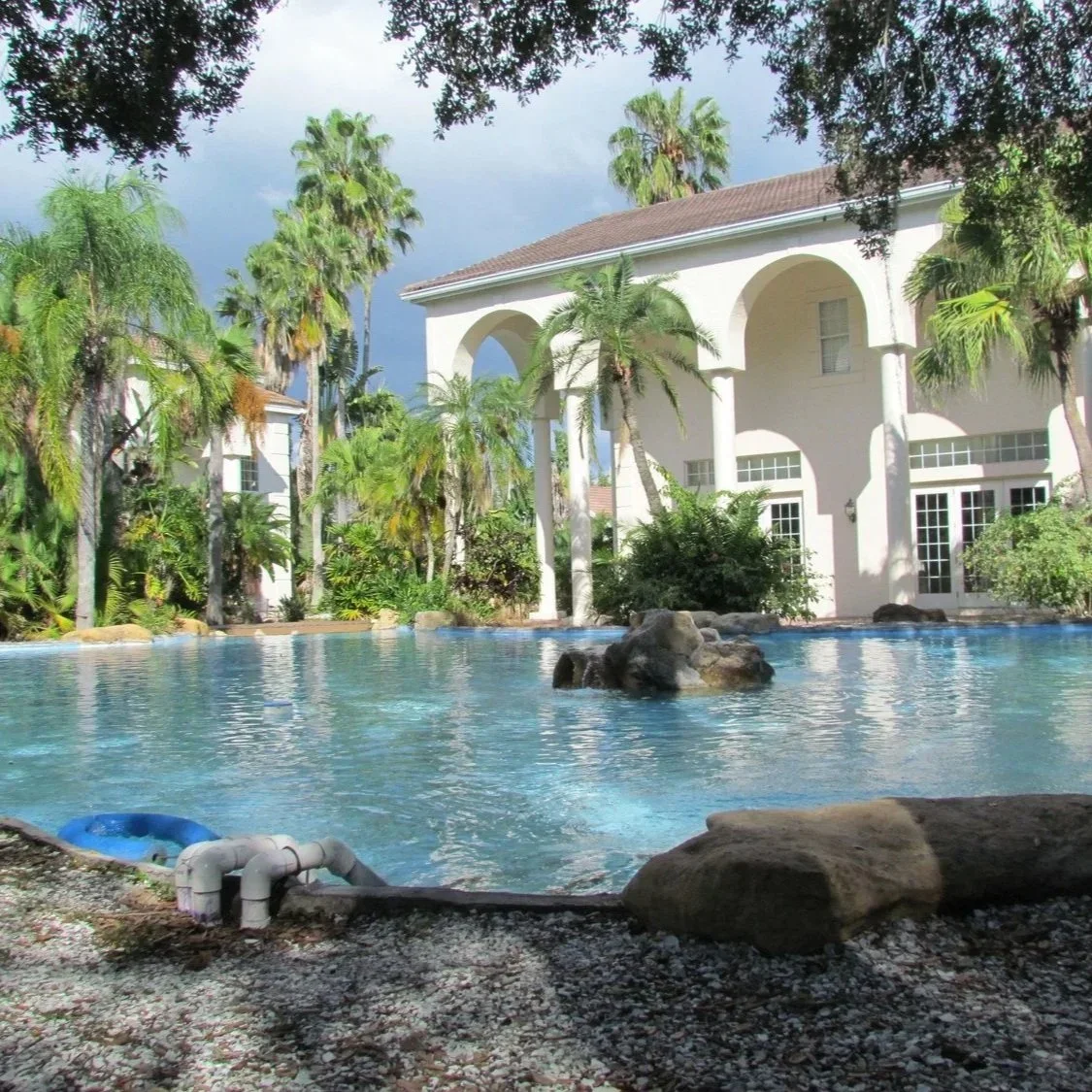
A pool that has not been significantly drained in several years is almost certainly carrying a TDS burden that is affecting its chemistry behavior in ways that are hard to diagnose without knowing to look for it.
You have been adding chemicals all summer, and the pool just does not respond the way it used to. The water looks a little off, even when everything tests in range. You shock it, and the clarity improves for a day, then drifts back. Your pool technician has been adjusting the chemistry every week, and things hold for a few days, but not longer. Before you blame the chemicals or the equipment, there is a number worth checking that most homeowners have never heard of: TDS — total dissolved solids. When TDS levels in a pool climb too high, the water's behavior changes in ways that make standard chemical treatment progressively less effective, and no amount of additional chemical intervention will fix it until the water is partially or fully replaced.
Total dissolved solids is a measure of everything dissolved in your pool water — minerals, salts, chemicals you have added, byproducts of sanitation, calcium, metals, and organic compounds that have accumulated over time. Every chemical addition, every swimmer, every rainstorm, and every evaporation cycle contributes to the TDS count. Evaporation is particularly significant: as pool water evaporates, the water itself leaves, while the dissolved solids remain behind, concentrating with each cycle. In Florida's climate — where pools lose significant water to evaporation year-round and are in continuous use — TDS accumulates faster than in colder climates where pools are seasonally closed and partially drained. A pool that has not been significantly drained in several years is almost certainly carrying a TDS burden that is affecting its chemistry behavior in ways that are hard to diagnose without knowing to look for it.
What TDS Actually Means and Why It Matters
The target TDS range for most residential pools is 1,500-2,000 ppm. At levels above 2,000 to 2,500 ppm, the water begins to behave chemically differently from fresh, balanced pool water. Sanitizers become less effective at the same concentrations that would be sufficient in lower-TDS water. Scale formation accelerates. The water can take on a dull or slightly murky appearance even when chemical parameters are within range. Equipment scaling on salt cell plates, filter media, and heat exchanger surfaces increases. The water simply becomes harder to work with as dissolved solids accumulate, and the solutions that worked at lower TDS levels stop producing the same results.
In a saltwater pool, TDS is naturally higher because the salt itself is a dissolved solid, so the threshold for concern is adjusted accordingly. Non-salt pools accumulate TDS solely through chemical additions, swimmer contributions, source water minerals, and evaporation. A pool that has been running on trichlor tablets for years has been accumulating small amounts of cyanuric acid, calcium, and chloride with every tablet, on top of the natural accumulation from use and evaporation. After three to five years without a significant water change, the TDS in that pool reflects all of those accumulated additions — and the chemistry behavior reflects it too, often in ways that are frustratingly subtle rather than dramatic and obvious.
How Florida's Climate Accelerates TDS Buildup
Clearwater, FL, pools face a TDS accumulation rate higher than that in most other climates, for several compounding reasons. First, evaporation: Florida's heat means pools can lose one to two inches of water per week during peak summer months, and each evaporation cycle concentrates dissolved solids in the remaining water. Second, year-round use: pools in Clearwater, FL, do not undergo the seasonal drain-and-refill required by winter closing in colder climates, so there is no natural reset point for the water chemistry. Third, chemical consumption: maintaining chemistry in a year-round outdoor pool in Florida's climate requires more frequent chemical additions than in a seasonally used pool, and each addition contributes to TDS levels.
The source water in Clearwater, FL, and surrounding areas also enters the pool with its own dissolved mineral content — calcium, magnesium, chloride, and other minerals that are native to the local municipal supply. Each time you top off the pool with a hose, you add fresh water that provides a new mineral contribution. Over years of topping off a pool that also concentrates solids through evaporation, the TDS steadily climbs. Homeowners who notice their pool chemistry becoming progressively harder to manage over a period of years — requiring more chemicals to achieve the same result, experiencing more frequent cloudiness or scale issues — are often observing the effects of accumulated TDS without realizing that the water itself, not the chemical program, is the root of the problem.
The Signs That TDS Has Become a Problem in Your Pool
TDS problems announce themselves through a pattern of symptoms rather than a single dramatic change, which is why they are often attributed to other causes for a long time before TDS is identified. The most common presentation is chemistry that requires significantly more product to achieve and hold the same results that used to require less. If your chlorine consumption has increased substantially over the past season without an obvious explanation, such as a higher bather load, TDS is worth investigating. If scale is appearing on your tile, your salt cell, or your equipment at a faster rate than it used to, elevated calcium and other dissolved minerals contributing to TDS are likely driving it.
A subtle dullness or flatness in the water's appearance, even when it tests within range on all parameters, is another TDS indicator that experienced pool technicians recognize. The water looks clean but not quite crisp. It does not have the sparkle that well-maintained pool water should have. What is happening chemically is that high dissolved solids interfere with the way light passes through and reflects in the water. The high dissolved material background makes it harder to achieve the water clarity that lower-TDS pools display naturally. If your pool has been looking progressively less sharp over the past couple of seasons despite consistent maintenance, a TDS test is worth adding to the diagnostic picture before spending more on chemicals.
Testing for TDS and Understanding the Results
TDS is not measured by standard pool test kits or test strips — you need a dedicated TDS meter, an inexpensive digital device that reads TDS in parts per million. Pool supply stores can also test TDS as part of a comprehensive water analysis. For most residential pools, testing TDS once or twice a year is sufficient to monitor the level and determine whether it is trending toward a water change. If your pool has never had a TDS test and has not been significantly drained in three or more years, testing now may explain chemistry problems you have been dealing with without a clear cause.
When interpreting TDS results, context matters. A freshwater pool reading approaching 2,000 ppm should be flagged as nearing the threshold where chemistry management becomes more difficult. Above 2,500 ppm, a partial drain and refill is a reasonable corrective step. Above 3,000 ppm, a significant water change is almost certainly necessary to restore the pool's ability to properly hold chemistry. In saltwater pools, baseline TDS is higher, and the action threshold is different, but even in saltwater pools, TDS components beyond the salt itself should still be monitored. Your pool service provider can help interpret TDS readings in the context of your specific pool's full chemistry history.
When to Drain Your Pool: Practical Guidance for Clearwater, FL, Homeowners
Draining a pool in Clearwater, FL, involves practical considerations beyond just the chemistry. Florida has a high water table, and pools that are fully drained can experience hydrostatic pressure from groundwater below that can push the pool shell upward out of the ground — a serious failure called pool flotation. Full drains in Florida should always be handled by a professional who can assess water-table conditions and has the equipment to manage the process safely. Partial drains — where 20 to 30 percent of the water is removed and replaced with fresh water — can be performed more routinely and are the standard approach for addressing elevated TDS without the risks of a complete drain.
How often should a Clearwater, FL, pool be partially drained? A reasonable guideline is every two to three years for a well-maintained pool in regular use, with a comprehensive TDS test guiding the timing. Pools with very high bather loads, heavy chemical use, or older water may need more frequent attention. Pools with carefully managed water and controlled evaporation makeup may be able to go longer between water changes. The pool's chemistry performance is the most practical indicator: when the water stops responding to treatment the way it should. TDS is elevated; a partial drain and refill is often the most cost-effective chemistry reset available—and it usually costs far less in the long run than the ongoing chemical expense of trying to manage water that has reached the point where it simply cannot hold balance anymore.
High TDS Can Ruin Your Pool: Fix It Before It Gets Worse
What is TDS in a swimming pool, and why does it matter?
TDS stands for total dissolved solids — a measurement of all the minerals, salts, chemicals, and compounds dissolved in pool water. As TDS rises, water becomes harder to balance, chemicals become less effective, and issues like scaling and cloudy water increase. For freshwater pools, levels around 2,000 to 2,500 ppm typically signal the need for corrective action.
How often should a Florida pool be drained or partially drained?
Most residential pools benefit from a partial drain and refill every two to three years. More frequent service may be needed if TDS climbs or water chemistry becomes difficult to manage. Full drains should be handled by professionals due to hydrostatic pressure risks, while partial drains of 20–30% are a safer routine approach.
How do I test my pool for TDS?
TDS is measured using a digital TDS meter, which provides readings in parts per million. Standard pool test kits do not measure TDS. The process is simple—dip the probe and read the result. Pool stores also offer professional water testing that includes TDS analysis.
Can high TDS make a pool unsafe to swim in?
High TDS alone does not make water unsafe, but it makes maintaining proper chemical balance more difficult. Over time, this can reduce sanitizer effectiveness and indirectly increase safety risks if water chemistry is not carefully managed.
Does a saltwater pool have higher TDS than a traditional chlorine pool?
Yes. Saltwater pools naturally have higher TDS because dissolved salt contributes significantly to the total. These pools operate under different baseline levels, so TDS must be evaluated in context rather than compared directly to freshwater pool standards.
Dog Days Pools offers a complete, one-stop solution for professional pool services in Clearwater, Safety Harbor, and surrounding areas, including pool cleaning, pool maintenance, weekly pool service, and green pool cleanups. Our experienced team services residential pool systems with a focus on clean water, safe swimming conditions, and long-term performance. Whether you need routine pool maintenance or an urgent pool repairs, we provide reliable service and responsive care. Schedule your pool service today and enjoy a clean, safe pool without the hassle.