
What Does a Professional Pool Cleaning Service Actually Do on Each Visit?
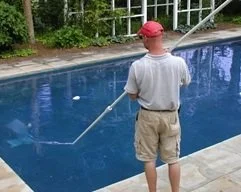
You saw the truck pull up, watched someone work for twenty minutes, and waved as they drove off. The water looks roughly the same as it did before. Was everything covered? Did they brush the walls? Did they actually test the chemistry or just eyeball it? That uncertainty is worth clearing up — because a thorough pool service visit and a rushed one look nearly identical from the pool deck.
The Scope of a Professional Pool Cleaning Visit
A proper weekly visit covers four categories of work: water chemistry testing and adjustment, physical cleaning of the pool surface and equipment baskets, an equipment inspection, and visit documentation. How much time goes into each category depends on current conditions and the service company — but a competent weekly visit should address all four, not just the ones that are quick and visible.
Most technicians work through a consistent sequence. They arrive and look at the pool before touching anything — checking water clarity, color, and surface condition. A slight green cast, a film on the surface, or unusual debris patterns all signal something before the test kit comes out. Skipping this read-first step means treating the water without understanding what it's already showing you.
Water Chemistry: The Part You Can't See
Testing pool water is not a single measurement. A complete reading covers free chlorine, pH, total alkalinity, cyanuric acid (CYA), and calcium hardness. Each of those values interacts with the others, and a pool that looks perfectly clear can be chemically off-balance in ways that damage equipment or irritate swimmers.
In Florida's climate, chlorine demand runs high all year. Direct sunlight degrades chlorine rapidly without adequate stabilizer, and Clearwater's summer water temperatures regularly climb into the mid-to-upper 80s — conditions where algae can take hold in less than 48 hours if sanitizer levels drop. A proper chemical adjustment isn't simply adding chlorine; it's calculating the correct dose based on current readings, water volume, recent rainfall, and pool usage.
After testing, a thorough technician adjusts every parameter that's outside its target range and records what was added. If chemicals are included in your service plan (they should be), this step is where the bulk of the value sits. A service that tests accurately and doses correctly is worth far more than one that adds a fixed amount of chlorine each week, regardless of what the water actually shows.
Cyanuric acid (CYA) should stay between 30–50 ppm in a Florida pool. Above 80 ppm, CYA binds chlorine molecules so tightly they can no longer sanitize effectively — even when a test strip shows chlorine is present. Bringing CYA down requires a partial drain and refill, which a consistent weekly service catches before it gets that far.
Physical Cleaning: Surface, Walls, Baskets, and Floor
The most visible part of a pool service visit involves skimming, brushing, vacuuming, and clearing the equipment baskets. Each task does something specific that goes beyond appearance.
Skimming pulls floating debris — leaves, insects, pollen — before it sinks and begins to break down. Organic material releases phosphates and other compounds into the water as it decomposes, and those compounds consume chlorine and lower pH. In Clearwater, afternoon storms during summer months can dump significant debris into open pools; screen enclosures reduce that load but trap humidity and restrict airflow, which can encourage biological growth in shaded corners near the water line.
Wall and step brushing matters even when the pool looks clean. Algae doesn't appear all at once — it starts as a nearly invisible film on the plaster surface before it becomes visible as green or yellow discoloration. Regular brushing disrupts that early film and puts it into suspension where the filter can capture it. Skipping brushing because the water "looks clear" gives that film an entire week to establish itself.
The skimmer basket and pump basket both exist to catch debris before it reaches the filter. A full skimmer basket starves the system of water flow, which forces the pump to work against increased resistance. A full pump basket is worse: it can cause the pump to lose prime, run dry, and seize — a repair that runs hundreds of dollars and could have been prevented by a two-minute basket check.
| Cleaning Task | Why It Matters |
|---|---|
| Surface skimming | Removes organic debris before it decays and consumes chlorine |
| Wall and step brushing | Disrupts early algae film before it becomes visible |
| Floor vacuuming | Clears settled debris that skimmers don't reach |
| Skimmer basket clearing | Keeps water flow to the pump at normal volume |
| Pump basket clearing | Prevents the pump from running dry and seizing |
Equipment Inspection: A Trained Eye on the Hardware
Beyond chemistry and cleaning, a thorough visit includes looking at the pool equipment — not a full diagnostic, but a quick check for anything that's changed since the last visit.
A pump that ran quietly last week and now has a low grinding undertone is in early mechanical trouble. A pump that's louder at startup and quieter after a minute may be pulling air somewhere in the suction line. Neither issue announces itself dramatically at first. Both are easy to catch early and expensive to ignore until something fails.
Filter pressure tells you how hard the pump is working to push water through the media. Every filter has a normal operating range, and pressure that's climbed 8–10 PSI above baseline means it's time to backwash (for sand or DE filters) or rinse the cartridge. A filter running above its normal pressure range slows circulation throughout the whole system and shortens equipment life across the board.
A technician who checks water level, notes any drips at equipment fittings, and looks at the tile line and plaster condition is functioning as an early-warning system for your pool. A failing o-ring caught at a routine visit costs a few dollars to replace. The same fitting ignored for two months eventually fails completely — and you come home to a puddle around the equipment pad and a pump that's been running hot.
What Weekly Service Doesn't Cover
A standard weekly visit is maintenance — it keeps an already healthy pool clean and chemically balanced. Knowing what falls outside that scope helps you set the right expectations.
Structural repairs — replacing a pump, fixing a leak, resurfacing plaster, repairing a multiport valve — fall outside routine maintenance. A good service technician will notice those problems during a visit and contact you the same day, but the repair itself requires a separate appointment and different work. Think of the weekly visit as the routine checkup and the repair call as the follow-up appointment.
Severely neglected pools — water that's gone weeks without chemicals, heavy algae, water that needs to be partially drained to bring CYA back into range — are typically handled as a one-time pool cleanup before ongoing weekly service begins. You can't maintain a swamp on a weekly schedule; the pool has to be rescued first, then maintained.
What Separates a Thorough Visit from a Fast One
Not every pool service company operates at the same standard. Here's what actually indicates you're getting what you're paying for.
Visit documentation- A professional service logs what was tested and what was added at every single visit. Without that record, you have no way to track whether CYA has been drifting for six months or whether pH keeps returning to the same problem range week after week. Ask any company you're evaluating to show you a sample visit log before you hire them.
Consistent technician- A tech who visits your pool every week knows what your pump sounds like, what your water typically does after a heavy rainstorm, and where algae tends to appear first on your steps. Rotating crews start from scratch each visit and are far less likely to notice gradual changes before they turn into problems.
Chemicals included in the flat rate- When chemicals are included, the technician has no financial reason to underdose. When chemicals are billed separately as a line item, the math sometimes works against you. This is one of the more meaningful differences between service plans — and it's worth asking about directly.
Same-day communication when something's wrong- If a technician notices a pump issue or an unusual chemical reading, you should hear about it before the day is out — not when you check the pool yourself three days later and find something's been off all week.
Frequently Asked Questions
A thorough weekly visit typically runs 20–35 minutes depending on pool size, current condition, and what the water chemistry needs. Visits shorter than 10 minutes are worth asking about — there's a minimum amount of time it takes to test accurately, brush the full surface, and clear all the baskets. If visits are consistently under 15 minutes, something is likely being skipped.
A full-service plan should cover chlorine, pH adjustment (muriatic acid or soda ash as needed), alkalinity adjusters, and cyanuric acid when required. Specialty chemicals like algaecide, phosphate remover, or clarifiers may or may not be included depending on the service agreement. Before signing with any company, ask specifically what's covered — and confirm whether any chemical costs pass through as additional charges on top of the monthly rate.
You don't need to be present for a standard weekly visit. Most pool service companies work efficiently with gate access and have no need for you to be there. It's worth being home occasionally to see the work performed firsthand and to walk through any questions with the technician directly. Any reputable service should also be reachable by phone or text if something comes up during a visit.
Ask the company to confirm brushing as a specific item in your service agreement. Between visits, run your hand along the plaster on the steps and walls — a faintly slick texture that wasn't there right after the last service can be early algae film. You can also check the water in the first few hours after a visit; it may be slightly cloudy as brushed material gets processed by the filter, which is a normal sign that the brushing actually happened.
Vacuuming and brushing stir up fine particles that have settled on the pool floor and walls. That material goes into suspension temporarily, and the filter needs a few hours to process it. The water typically clears within 4–6 hours. If cloudiness lasts past 24 hours or has a greenish tint, the water chemistry was likely borderline before the visit, or the adjustment made during the visit needs more time and circulation to take effect — your technician can explain if you reach out.
A one-time cleaning is more intensive — it brings a neglected pool back from a poor condition through vacuum-to-waste, heavy brushing, and targeted chemical treatment. Weekly service is maintenance: it keeps an already-clean, balanced pool in that condition between visits. If a pool has declined to the point where it needs a rescue, the one-time service gets it there, and weekly service afterward keeps it from going back.
Dog Days Pools offers complete professional pool services in Clearwater, Safety Harbor, Dunedin, Palm Harbor, Oldsmar, and throughout Pinellas County — including weekly pool cleaning and maintenance, chemical balancing, equipment inspections, and one-time pool cleanups. No contracts, chemicals always included, available 7 days a week. For reliable pool care from a licensed team, call (727) 205-0566.
