
Is a Variable Speed Pool Pump Worth the Extra Cost?
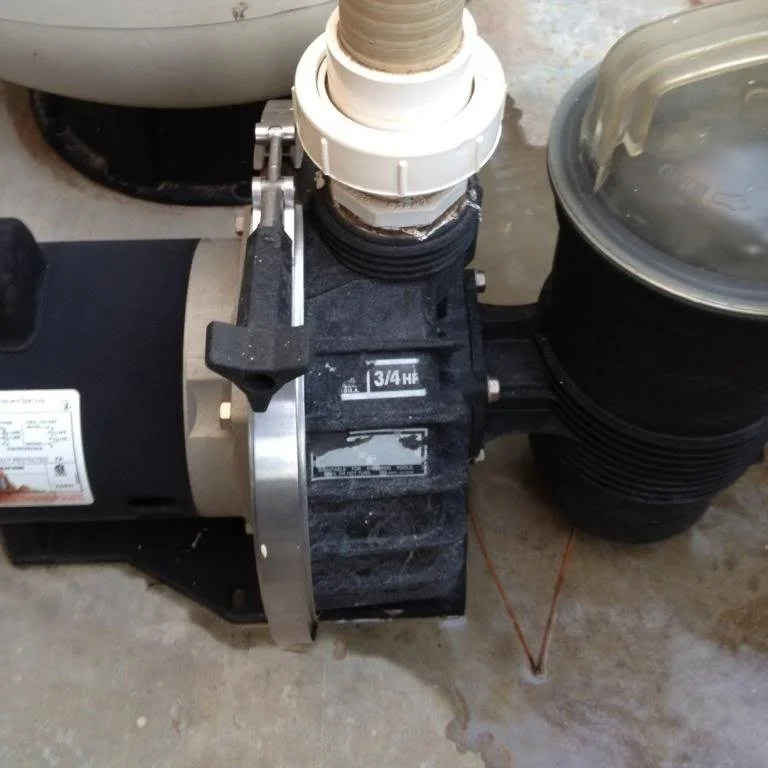
Your electricity bill lands in August, and the pool pump line reads higher than you expected. You have heard variable speed pumps save money — but then someone quotes you $800 for the pump alone, and suddenly you're wondering whether the savings are real or just sales pitch.
They are real. For most Florida pools running year-round, a variable speed pump pays for itself, drops your electricity bill, and outlasts the unit it replaced. The math is worth understanding, because it explains why the savings are as large as they are — and why the upgrade argument has only gotten stronger.
How a Variable Speed Pump Motor Is Different
A standard single-speed pump does exactly what the name says: it runs at one speed, all the time it's on. That speed is typically 3,450 RPM — full power, pulling full wattage, whether the pump is doing light overnight filtration or pushing water hard through a pressure cleaner. It has no middle ground.
A variable speed pump uses a permanent magnet motor — the same class of motor found in electric vehicles and high-efficiency HVAC equipment. It runs efficiently across a wide speed range, from roughly 600 RPM up to 3,450 RPM, and you program it to match speed to task. Low speed handles daily filtration. Medium speed runs a robotic cleaner. High speed covers vacuuming, backwash cycles, or post-storm chemical mixing.
The motor type matters for one specific reason: at full speed, a permanent magnet motor already draws less power than a conventional induction motor doing the same work. At low speed, the advantage grows dramatically — which brings us to the physics that drives the savings.
The Affinity Law: Why Slowing Down Saves So Much
The pump affinity law describes how power consumption relates to impeller speed. It applies to every rotating pump in existence, regardless of brand or motor type.
The rule: power consumption drops by the cube of the speed reduction. Cut the pump's RPM in half, and you don't use half the energy — you use one-eighth of it. Run a pump at 1,725 RPM instead of 3,450 RPM, and energy draw falls to roughly 12–15% of what it was at full speed.
| Operating Speed | Speed (% of max) | Power Draw (% of max) |
|---|---|---|
| 3,450 RPM | 100% | 100% |
| 2,450 RPM | ~71% | ~36% |
| 1,725 RPM | 50% | ~12.5% |
| 1,200 RPM | ~35% | ~4% |
A single-speed 1.5 HP pump draws 1,200 to 1,800 watts while running. The same pool's daily filtration work, handled by a variable speed pump at 1,200–1,500 RPM, draws 100 to 200 watts. That gap is what turns into several hundred dollars per year on your electricity bill.
What the Electricity Savings Actually Look Like
A single-speed pump running eight hours a day consumes roughly 9.6 to 14.4 kWh daily. At Florida electricity rates averaging $0.12 to $0.14 per kWh, that adds up to $420 to $550 per year for the pump alone.
A variable speed pump running twelve hours a day at a low filtration speed draws 150 to 300 watts — consuming 1.8 to 3.6 kWh daily. Annual operating cost: $80 to $185.
That's a difference of $250 to $450 per year. For a pool in Clearwater, Palm Harbor, or Safety Harbor running every month of the year — which describes most Florida residential pools — that savings adds up from day one.
| Single-Speed Pump | Variable Speed Pump | |
|---|---|---|
| Operating speed | Fixed 3,450 RPM | Programmable 600–3,450 RPM |
| Wattage (typical) | 1,200–1,800 W | 150–300 W (filtration speed) |
| Daily energy use (8–12 hrs) | 9.6–14.4 kWh | 1.8–3.6 kWh |
| Annual electricity cost | $420–$550 | $80–$185 |
| Estimated annual savings | — | $250–$450 |
The Purchase Price, the Payback, and the DOE Rule
A quality variable speed pump runs $500 to $1,200, depending on horsepower and brand. Installation adds another $200 to $400 in most residential setups. Total out-of-pocket: $700 to $1,600.
At $300 to $450 in annual electricity savings, most homeowners break even in two to four years. Pools with high daily run-times and higher electricity rates often land closer to eighteen to twenty-four months.
There's a regulatory dimension that changes this conversation for anyone replacing a failed pump. In July 2021, the U.S. Department of Energy issued efficiency standards that effectively ended the manufacture of new single-speed replacement pumps above 1.0 HP for residential in-ground pools. Most standard residential pools use 1.5 or 2.0 HP pumps. The practical result: if your single-speed pump fails today, you're unlikely to find a direct single-speed replacement from any distributor. The choice is no longer "variable speed vs. single speed." It's "which variable speed pump fits your pool."
Variable speed pumps also outlast their single-speed predecessors. Permanent magnet motors run cooler, generate less thermal stress at operating speeds, and are typically rated for ten to fifteen years under normal use — versus five to ten years for a conventional induction motor pump.
Both Duke Energy Florida and Tampa Electric have historically offered rebates of $100–$200 for residential variable speed pump upgrades. Check your utility's current program before scheduling the installation — a $150 rebate on a $1,000 upgrade cuts your payback period by six to twelve months.
Why Florida Pools Get More Out of This Upgrade
In northern states, where pools run six months a year, the payback math still works — it just takes longer. Florida pools run year-round, and summer heat means many need ten to twelve hours of daily circulation to hold stable chemistry. More annual run-hours means the energy savings accumulate faster than they would with a seasonal pool.
Florida's subtropical climate also creates continuous algae pressure. One of the less-discussed benefits of variable speed operation is what happens to filtration quality at low flow rates. Water moving slowly through a filter — whether cartridge, sand, or DE — has more contact time with the filter media, which captures finer particles more effectively. Pool technicians who service both pump types often notice cleaner, clearer water after homeowners switch from short high-speed cycles to extended low-speed filtration runs.
Then there's noise. A single-speed pump at full speed produces a constant mechanical hum that fills the equipment pad and carries across the yard. A variable speed pump running at its filtration speed is close to inaudible. If your equipment pad sits near a patio, a bedroom window, or a neighbor's fence line, the quiet is immediate and obvious.
When the Upgrade Makes the Most Sense
Your existing pump just failed- This shifts the math entirely. You're no longer weighing "spend $1,000 to upgrade a working pump" — you're comparing two replacement units. Given DOE regulations, the comparison has already narrowed to variable speed models. It's a matter of picking the right one for your pool size and plumbing.
You're running the pool year-round- More annual run-hours mean faster payback. A Florida pool running twelve months recovers the upgrade cost faster than any seasonal setup, full stop.
Your electricity bill is already bothering you- Pool pumps are typically among the top two or three electricity draws in a Florida home. A variable speed upgrade is one of the most direct and predictable ways to reduce that cost.
When the Case Is More Complicated
Pools with heavy water features — large waterfalls, spa jets requiring sustained high flow, or multiple high-flow return lines — often need the pump running near full speed for significant portions of the day. The energy savings come from low-speed operation. If your setup demands high speed most of the time, the payback period stretches out. Most VS pumps can still schedule low-speed overnight filtration cycles, which recovers at least some of the savings.
If you're planning to sell the home in the next twelve to eighteen months, the full payback window may not close before you leave. Variable speed pumps do appear in real estate listings and inspections as a recognized upgrade in Florida, but you'd be leaving some of the financial benefit behind.
Frequently Asked Questions
Most Florida pool owners with a variable speed pump save between $250 and $450 per year compared to running a single-speed pump on a similar daily schedule. The specific number depends on your current pump's wattage, your daily run time, and your electricity rate. Pools running twelve or more hours a day in Florida's summer months typically land toward the higher end of that range.
The pump itself runs $500 to $1,200 depending on horsepower and brand. Installation adds $200 to $400. Most residential pools come in between $700 and $1,600 total. Some Florida utility providers offer rebates of $100 to $200 that reduce the net cost before payback calculations.
At typical savings and installation costs, most pools reach payback in two to four years. Pools with longer daily run-times and higher electricity rates sometimes break even in eighteen to twenty-four months. After payback, the lower operating cost continues for the remaining life of the pump — which typically runs ten to fifteen years.
For most residential in-ground pools, no. Federal efficiency regulations that took effect in July 2021 effectively ended the manufacture of new single-speed replacement pumps above 1.0 HP for in-ground residential use. If your current pump fails, a variable speed replacement is the standard path forward.
In most cases, yes. Variable speed pumps are designed to fit standard pump pads and connect to existing plumbing. The electrical connection may need updating depending on your current wiring setup. If your pool has non-standard plumbing or older proprietary equipment, a technician should inspect the configuration before selecting a replacement unit.
Yes — and often more thoroughly than short high-speed cycles. Slow, continuous flow through a filter gives the media more time to capture fine particles with each pass. Pool technicians frequently note improved water clarity after homeowners switch to extended low-speed filtration. The trade-off is a longer daily run time, but since energy use at low speed drops so steeply, total electricity consumption still falls well below what a single-speed pump used in less time.
The Real Numbers Win
The question used to be whether variable speed was worth the premium. The federal efficiency rules and the affinity law math have largely settled it. If your pump is working, the upgrade pays back within a few years. If your pump just failed, the replacement market has already answered the question for you.
Dog Days Pools offers a complete, one-stop solution for professional pool services in Clearwater, Safety Harbor, and surrounding areas, including pool pump repair, pump replacement, and variable speed pump upgrades. Our experienced team services residential pool systems with a focus on clean water, safe swimming conditions, and long-term performance. Whether you need routine pool maintenance or an urgent pool repair, we provide reliable service and responsive care. Schedule your pool service today — call (727) 205-0566.
