
How to Shock a Neglected Pool Back to Life Without Damaging It
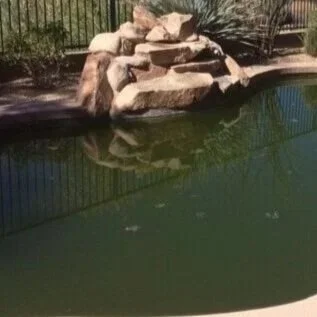
You pulled the cover off last week. Or last month. Maybe longer — you lost track. The water is the color of pea soup, there's something floating near the drain, and the filter is probably struggling. Before you reach for the shock, a few things need to happen first. Skip them and you'll spend three times as much product to get half the result, and you may come out the other side with a cloudy, chemical-saturated pool that still isn't clean.
Shocking a neglected pool isn't hard. It is sequential. The order matters more than the dose.
Why Pouring Shock Directly into Green Water Usually Fails
The instinct makes sense: the pool is green, chlorine kills algae, add chlorine. The problem is that a neglected pool has two conditions that make chlorine almost useless at standard doses.
The first is elevated pH. Pool pH drifts up when the water sits untreated — aeration, algae photosynthesis, and decomposing organic matter all push it higher. At pH 7.8, only about 25 percent of your chlorine exists in the active form (hypochlorous acid) that kills algae. At pH 8.0 or above, that drops to 10 percent or less. Adding a pound of shock to a pool at pH 8.2 is chemically similar to adding one-tenth of a pound to a properly balanced pool. You'll see brief improvement and full regression within 48 hours.
The second is cyanuric acid (CYA), the stabilizer that protects chlorine from UV degradation. CYA binds chlorine molecules and holds them inactive, releasing them slowly as demand arises. At low levels — 30 to 50 ppm — this extends chlorine life significantly. But pools that have been running trichlor tablets for multiple seasons without a water change can easily reach 100 to 200 ppm CYA. At those levels, the stabilizer holds so much available chlorine in reserve that even high total chlorine readings leave the pool effectively unprotected. There is no chemical that removes CYA from the water. The only fix is dilution — a partial drain and refill.
If your CYA is above 70 ppm before you start, address that first. Adding shock to high-CYA water wastes product and won't clear the pool.
How a Neglected Pool Changes What "Correct Dose" Means
A normally maintained pool requires about 1 to 2 ppm of free chlorine to stay clean. A neglected pool is a different system entirely.
Algae and the organic waste that accumulate in neglected water create what pool technicians call chlorine demand — a continuous draw on available chlorine from the organic mass, the dead algae cells from any partial kills, and the biofilm layer algae builds on pool surfaces. Every unit of chlorine that hits that demand gets consumed before it can do sanitizing work. Standard shock doses — typically 1 pound per 10,000 gallons — are designed for maintenance shocking in a functioning pool, not for breaking through an established algae bloom.
For a visibly green, neglected pool, the target is superchlorination: free chlorine at 10 times the CYA level, held there for 24 to 48 hours with continuous pump operation. At 40 ppm CYA — a reasonable target after a partial drain — that's 400 ppm free chlorine. In a 15,000-gallon pool, that's a significant shock dose, usually spread across multiple applications timed to keep the level elevated rather than spiking and falling back.
This is why a partial drain before shocking isn't optional when CYA is high. It isn't just about the CYA. It's about what CYA forces the math to be.
The Right Order of Operations
Done in sequence, a neglected pool can clear in three to five days. Done out of sequence, the same products produce weeks of marginal improvement, heavy chemical expenditure, and a pool that stays cloudy even when the green is gone.
Step 1 — Remove debris first. Skim and vacuum everything you can before adding any chemistry. Organic debris consumes chlorine and feeds the demand that makes shocking difficult. Every leaf pulled out before shocking is chlorine that doesn't get eaten by organics.
Step 2 — Run a complete water panel. Test free chlorine, total chlorine, pH, total alkalinity, CYA, and calcium hardness. A single test-strip reading isn't enough — you need the full picture before spending money on chemicals.
Step 3 — Address CYA if it's above 70 ppm. Partial drain and refill to bring CYA below 50 ppm. In Clearwater and across Pinellas County, summer water temperatures accelerate CYA accumulation from trichlor tablets. Pools that have been closed or neglected through a Florida summer can reach CYA readings well above 100 ppm. Drain first. Then chemistry.
Step 4 — Correct pH to 7.2–7.4. Add pH decreaser (muriatic acid or sodium bisulfate) to bring pH into range. Run the pump for at least two hours before testing again and shocking. This single step often has more impact on shock effectiveness than any other adjustment.
Step 5 — Brush every surface. Walls, floor, steps, behind the ladder, inside the skimmer basket area — all of it. Algae builds a protective biofilm on pool surfaces, and shock that hits intact biofilm is far less effective than shock hitting exposed algae cells directly. Brushing breaks the film and substantially improves the penetration of the chemical treatment that follows.
Step 6 — Shock at dusk with the pump running. UV from direct sunlight destroys free chlorine quickly. Shocking after sunset gives the chlorine hours to work before UV exposure begins. Keep the pump running continuously for the full 24 to 48-hour treatment window to circulate treated water through dead spots and behind pool features.
Step 7 — Clean the filter 12 to 24 hours in. The filter will capture dying algae cells rapidly in the first day of treatment. Backwash or rinse the filter early to restore flow rate — a clogged filter slows the clearing process significantly.
Where the Damage Happens
The chemistry mistakes that damage pool surfaces almost always come from rushing or using the wrong shock product for the pool type.
Calcium hypochlorite (cal-hypo) is the most effective shock for neglected pool recovery — high available chlorine content, no CYA addition, and strong oxidizing power. But cal-hypo added to vinyl liner pools must be pre-dissolved before going in. Dropping undissolved cal-hypo granules directly onto vinyl can bleach the liner permanently. Pre-dissolve in a bucket of pool water, then distribute the solution around the perimeter with the pump running.
Trichlor tablets should never be used as the shock product for a neglected pool. Each pound of trichlor adds approximately 6 ppm of CYA to the water. In a pool that already has elevated CYA, trichlor-as-shock pushes the CYA problem further in the wrong direction and leaves you worse off than when you started.
Liquid chlorine (sodium hypochlorite) is the safest choice for vinyl liner pools — no dissolving required, no CYA addition. The tradeoff is lower available chlorine per volume, which means more product to hit superchlorination levels.
Adding too much calcium hypochlorite in a pool with existing high calcium hardness can push calcium hardness into scaling range. This is rarely a problem in the initial shock session but becomes a factor if repeated heavy treatments happen over several days without retesting.
| Shock product | Available chlorine | CYA addition | Vinyl-safe as-is | Notes |
|---|---|---|---|---|
| Calcium hypochlorite (cal-hypo) | 65–73% | None | No — pre-dissolve required | Best for neglected pool recovery; strong oxidizer |
| Liquid chlorine (sodium hypochlorite) | 10–12.5% | None | Yes | Safest for vinyl; higher volume needed |
| Sodium dichlor | 56–62% | ~9 ppm per pound | Yes | Adds CYA — use sparingly |
| Trichlor | 90% | ~6 ppm per pound | Not for shock | Never use for neglected pool recovery |
Frequently Asked Questions
Three to five days is typical for a pool with corrected chemistry and functioning filtration running at full capacity. A heavily neglected pool with loaded filter media, high CYA, or significant surface biofilm can take seven to ten days — particularly if the filter needs cleaning mid-process. Clearing happens faster when pH is corrected before shocking, CYA is in range, and the pump runs continuously through the treatment window.
Not usually. A proper superchlorination done with corrected pH and CYA levels should kill algae effectively without a separate algaecide. Algaecide can help prevent algae from reestablishing after the pool clears, but it's not a substitute for correct shock dosing. Some algaecides are copper-based, which can produce a green or brownish tinting if added while chlorine levels are still high. Add algaecide after the pool clears and free chlorine has returned to the normal 1 to 3 ppm range.
Black algae is significantly harder to clear than green algae because it forms a dense, waxy cap over each cell that resists chemical penetration. Superchlorination alone often won't eliminate it. Black algae patches require aggressive physical brushing — stainless steel bristle brush on plaster, nylon on vinyl — to break through the protective outer layer before shock can reach the cells underneath. Even then, black algae frequently returns until the affected surface is treated or resurfaced.
No. Free chlorine should return to 1 to 3 ppm before swimming. After superchlorination to 10 to 20 ppm, this typically takes 24 to 48 hours with the pump running and normal UV exposure. Test before getting in — don't estimate based on how long it's been. Elevated chlorine levels cause eye and skin irritation and can bleach swimsuits.
With vinyl liners, undissolved cal-hypo granules on the liner surface are the main risk — concentrated chlorine contact bleaches vinyl permanently. Pre-dissolved products distributed properly pose minimal surface risk. Mechanical equipment, such as rubber gaskets, o-rings, and seals, can degrade with repeated extended exposure to very high chlorine, but a single shock treatment isn't a concern for equipment that's otherwise in good condition.
Yes, significantly. The pump circulates treated water through every part of the pool, including corners and dead spots where algae persists in still water. Pump run time also pushes water through the filter, removing dead algae cells that would otherwise stay suspended and keep the water cloudy. Run the pump continuously — 24 hours a day — through the entire clearing process.
Getting to Clear and Keeping It There
A neglected pool can come back without damage and without excessive chemical cost — as long as the sequence is right. Correct the pH. Drain if CYA is high. Brush before you shock. Hit the full superchlorination dose. Clean the filter before it restricts flow. The pool should clear within a week.
What keeps it from happening again is what follows: consistent weekly chemistry checks, CYA monitoring every few months in trichlor tablet pools, and catching drift early before the water turns. Florida's heat and UV intensity mean the window between "slightly off balance" and "visibly green" is short. A few days of missed maintenance in a Clearwater summer can set up the same problem all over again — and the second time around, the algae reestablishes faster because it never fully left the filter media the first time.
Dog Days Pools provides professional green pool clean-up, chemical balancing, and weekly pool maintenance in Clearwater, Safety Harbor, Dunedin, Palm Harbor, and surrounding Pinellas County communities. Our team identifies why your pool keeps going green — not just treats the color — and keeps it clear week after week with no contracts required and chemicals always included. Call (727) 205-0566 — Licensed Certified Pool Contractor #CPC1460480.
