
How to Balance Pool Skimmer and Main Drain Valves for Maximum Suction
Your pool has a corner where the algae keeps winning. You treat it, the water clears up, three weeks pass, and it's back in the exact same spot. Or debris settles along the bottom step every week, no matter how long the pump runs, and the deep end always feels a couple degrees warmer than the shallow end. None of that is random. Those are circulation problems — and most of the time, they trace back to two valves at your equipment pad that nobody has touched since the pool was built.
Most pool owners never learn they exist.
What Your Skimmer and Main Drain Valves Actually Control
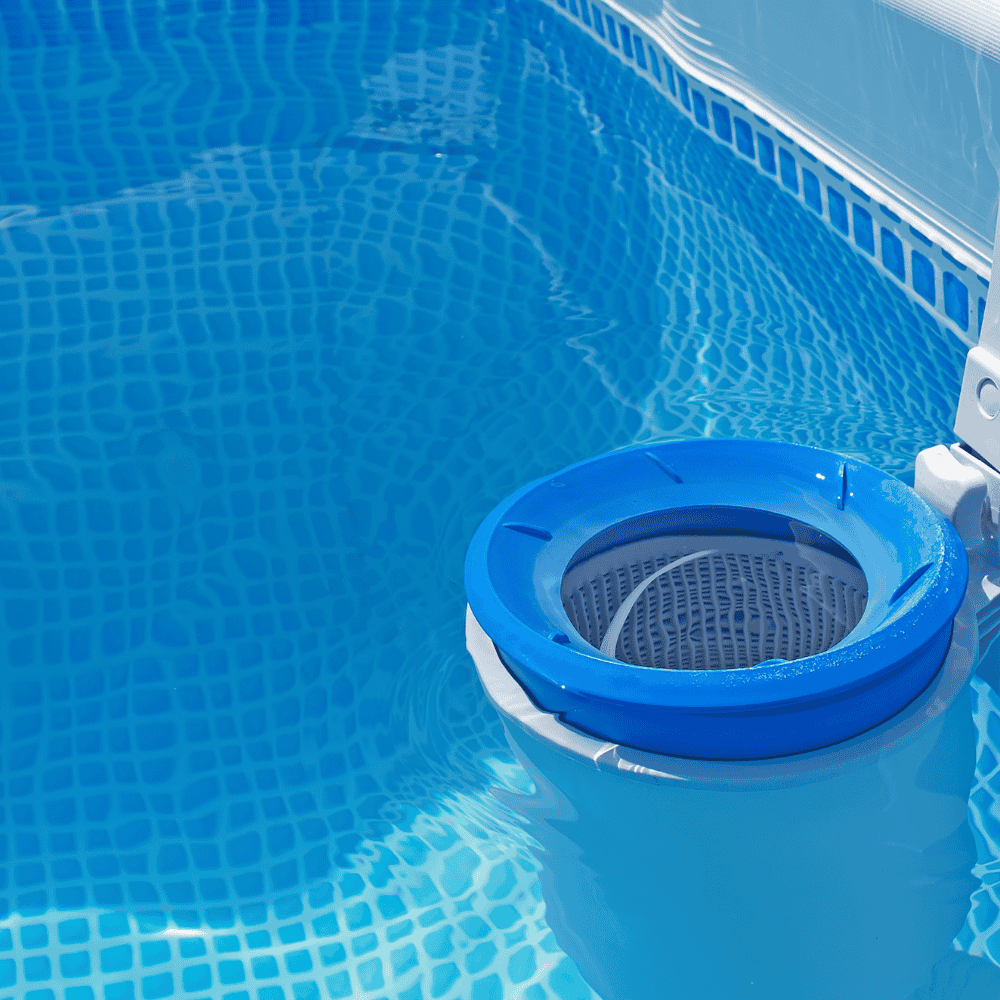
Your pump pulls water from two places: the skimmer near the surface and the main drain at the pool floor. They do different jobs. The skimmer catches floating debris — leaves, sunscreen, pollen, dead insects — before it waterloads and sinks. The main drain pulls from the lowest point of the pool, keeping water moving along the floor and helping chemicals spread through the whole water column instead of sitting near the top.
The valves between those inlets and the pump decide how much of the pump's total suction each source gets. Open both fully and the pump splits the pull between them. Close one partway and the pump draws harder from the other. Close one entirely and you've cut off a circulation path — which creates dead spots. In Florida's heat, dead spots become algae patches in 48 to 72 hours. It's that fast.
Getting the balance right means finding a ratio that keeps water moving at every depth without starving either inlet or overworking the pump.
Where to Find the Valves and How to Read Them
Walk to your equipment pad — the area beside your pump and filter where the underground plumbing comes up from the ground. You'll see two main suction lines coming in from the pool, one from the skimmer and one from the main drain, converging before they reach the pump basket. Each line should have its own valve.
Ball valves are what you'll find on most residential pools built in the last 20-odd years. The handle runs parallel to the pipe when fully open, perpendicular when closed. Older pools often use gate valves — round handwheel type, spin to open or tighten to close. Some pools built in the 1990s and early 2000s use a three-port diverter instead of two separate inline valves: one outlet to the pump, two inlets from the skimmer and the drain, with a single rotary handle that dials between them.
The mechanism is different. The balancing logic is exactly the same.
Before touching anything, take a photo of the current valve positions. If an adjustment causes a problem — air in the pump, pressure spike, lost suction — you need to know exactly where to go back.
Why the Skimmer Equalizer Valve Also Matters
Here's a wrinkle most homeowners never hear about. There's a second place where skimmer/drain balance gets controlled, and it's inside the skimmer body itself — not at the equipment pad.
Many skimmers have an equalizer line, a pipe connecting the bottom of the skimmer basket to the main drain. A small float valve covers the entrance to that line. When the water level is normal, the float keeps the equalizer closed, and the skimmer pulls from the surface. If the water level drops — from evaporation, backwash, or a developing leak — the float drops with it, the equalizer opens, and the pump starts drawing from the main drain instead of pulling air and losing prime.
What this means for your setup: on some plumbing configurations, the main drain valve at the equipment pad doesn't serve as the primary circulation path from the floor at all. The equalizer handles that. If your pool was set up this way, the drain valve at the equipment pad may be partially or fully open by design, and throttling it further could starve the equalizer of the pressure it needs to function.
Not sure which setup you have? Worth confirming with a pool tech before you start adjusting. Getting it wrong doesn't break anything immediately, but it makes your balancing work count for less.
Starting Points: What the Ratio Should Look Like
There's no single right answer for every pool. But for most residential pools in Pinellas County, a reasonable place to start is roughly 70–80% skimmer / 20–30% main drain. The skimmer valve stays mostly open while the drain gets enough opening to provide real floor circulation without overtaking skimmer pull.
A few things push that ratio in one direction or the other:
| Variable | How It Shifts the Ratio |
|---|---|
| Pool depth | Deeper pools need more main drain pull to circulate floor water; open the drain more |
| Multiple skimmers | Two skimmers vs. one means more surface capacity; you can reduce skimmer opening slightly |
| Screen enclosure | Less wind-blown debris means the skimmer doesn't work as hard; allows slightly more drain pull |
| Return jet placement | Jets aimed at the surface rather than down across the floor mean the main drain works harder |
| Aging pump | Reduced pump efficiency may need both valves more open to maintain adequate suction |
A screened Clearwater pool with two skimmers and a newer variable-speed pump will need a different ratio than an open, single-skimmer pool in Palm Harbor running a 10-year-old single-speed unit. The table points you in a direction. Observation tells you when you've arrived.
How to Make the Adjustment
Photo taken, pump running. Make changes in quarter-turns — not full rotations. Watch what happens before moving further.
Step one: Note your starting filter pressure. This is your baseline. If pressure climbs after an adjustment, the pump is working harder because suction got restricted. If pressure drops, suction improved.
Step two: Partially close the skimmer valve toward 75% open. Watch the pump basket sight glass. A burst of air bubbles that doesn't clear within 60 seconds means the skimmer doesn't have enough water pull — either the water level is low or you've closed the valve too far. Back off.
Step three: With the skimmer adjusted, open the main drain slightly — around 25–30% open. The pump basket should run clear. Pressure should hold steady or drop a bit from your baseline.
Step four: Check the return jets. Water coming through should feel consistent across all of them. One noticeably weaker jet usually points to a return-side issue, not a suction-valve problem — but it's worth knowing before you walk away.
Step five: Let it run. A full pump cycle — typically eight hours in a Florida summer — and then walk the pool. Check the problem spots. Have the debris patterns shifted? Are the algae-prone corners seeing better water movement?
And give any adjustments 24 to 48 hours before you conclude. Circulation changes don't show up immediately, especially in a warm pool where evaporation and chemical interaction are constantly running.
Signs the Balance Is Still Off After Adjustment
| Symptom | What It Suggests | What to Try |
|---|---|---|
| Debris consistently collecting on pool floor | Main drain suction too low | Open the main drain valve slightly more |
| Algae returning in the same deep-end corner | Bottom circulation inadequate | Increase the main drain pull; check return jet direction |
| Pump basket filling with air bubbles | Skimmer starved of water or main drain too closed | Raise water level; open main drain more |
| Pressure higher than normal after adjustment | Overall suction restriction | Open both valves slightly more |
| Surface debris not clearing within an hour | Skimmer pull too low | Open skimmer valve more |
| Pump losing prime intermittently | Skimmer running dry or suction-side air leak | Check water level; inspect suction fittings for cracks |
When Valve Adjustment Won't Fix the Problem
Valve balancing works within the limits of your plumbing and equipment. If something else is broken, no valve position corrects it.
Blocked main drain grate. If the main drain cover has debris sitting on it, a displaced cap, or a robotic cleaner parked directly over it, you won't get useful bottom suction regardless of valve position. Check the grate first.
Worn or stuck valves. Older gate valves and some diverters wear out internally and become impossible to position precisely. A gate valve set at half-open may drift toward closed over the next few hours as the packing shifts. If your valve won't hold where you set it, the valve needs service — not more adjustment.
Undersized or failing pump. A pump running a worn impeller, aging past its efficiency curve, or simply too small for the pool won't circulate properly no matter where the valves sit. That's an equipment problem. Variable-speed pump upgrades address it at the source.
Suction-line damage. A cracked fitting, a partially collapsed underground pipe, or root intrusion in the suction run creates loss that no valve position can compensate for. Erratic pressure, air that keeps returning to the pump basket, or a pump that won't hold prime after you've checked everything else — those are suction-line symptoms, not valve symptoms.
If you've balanced the valves and still see persistent algae or dead spots in the same location after 72 hours of adjusted circulation, the problem is almost certainly equipment or plumbing rather than valve setting. At that point, a diagnostic visit is more productive than further valve adjustment.
Frequently Asked Questions
Not during normal operation. Closing it completely kills bottom circulation, creates dead spots along the pool floor, and puts the full suction load on the skimmer. The only time fully closing it makes sense is during specific troubleshooting — isolating a suspected suction-side air leak, for instance — and even then only temporarily while the pump runs under supervision.
All pump suction comes from the main drain. The pump may struggle to hold prime if the drain is deep or the run is long, and nothing clears the water surface. The bigger risk: if the main drain has any restriction — a partially blocked grate, a worn equalizer valve — the pump can run dry and damage the seal and impeller in minutes. Don't fully close the skimmer with the pump running.
Once you find a balance that works, you won't need to revisit it routinely. Check again if the pool's circulation behavior changes — new dead spots, shifting debris patterns, the pump losing prime. Also check after any suction-line repair, a backwash session where someone may have opened the wrong valve, or any equipment-pad work where a helper might have bumped a handle.
Yes — that's actually the right way to do it, because you can see the immediate effect on pump basket air, filter pressure, and return flow. Make changes in quarter-turns, not full rotations, and never snap a valve fully closed with the pump running. Keep the pump going continuously through the adjustment rather than cycling it off and on.
Because that corner consistently has less chlorine activity than the rest of the pool — and that almost always means the water isn't moving through it. Chemical treatment clears the active growth but doesn't fix the circulation pattern that let it take hold. Check whether return jets can be aimed toward that corner and whether your main drain valve is open enough to pull from the floor. If no return covers that area at all, valve adjustment alone may not be enough — the jet direction matters too.
Ball valves are quarter-turn — one 90-degree rotation takes them fully open to fully closed. They're easier to set precisely and seal reliably over time. Gate valves use a threaded handwheel requiring multiple full rotations, and they're prone to internal wear that makes them drift from whatever position you set. If you have gate valves and can't hold a setting, upgrading to ball valves is a minor repair with a meaningful long-term payoff.
Circulation Is What Makes the Rest of Pool Care Work
Every chemical you add depends on water moving it where it needs to go. A filter can only clean what actually reaches it. When parts of your pool sit in slow or still water, chlorine doesn't arrive in the concentration it needs, and you end up adding more product and getting less response.
But the valves are a five-minute fix. Two handles. Small adjustments. The effect on those problem spots — the corners that keep going green, the bottom step where debris won't stop collecting — shows up within a few days of consistent circulation.
Dog Days Pools provides professional pool pipe and valve repair and weekly pool maintenance in Clearwater, Safety Harbor, Dunedin, Palm Harbor, Oldsmar, and surrounding Pinellas County areas. If your circulation problems point to a worn valve, a failing pump, or a suction line issue, we diagnose and repair it the same week. Licensed Certified Pool Contractor #CPC1460480. Call (727) 205-0566 to schedule.
