
How Long Can You Wait to Repair a Pool Leak Before It Causes Serious Damage?
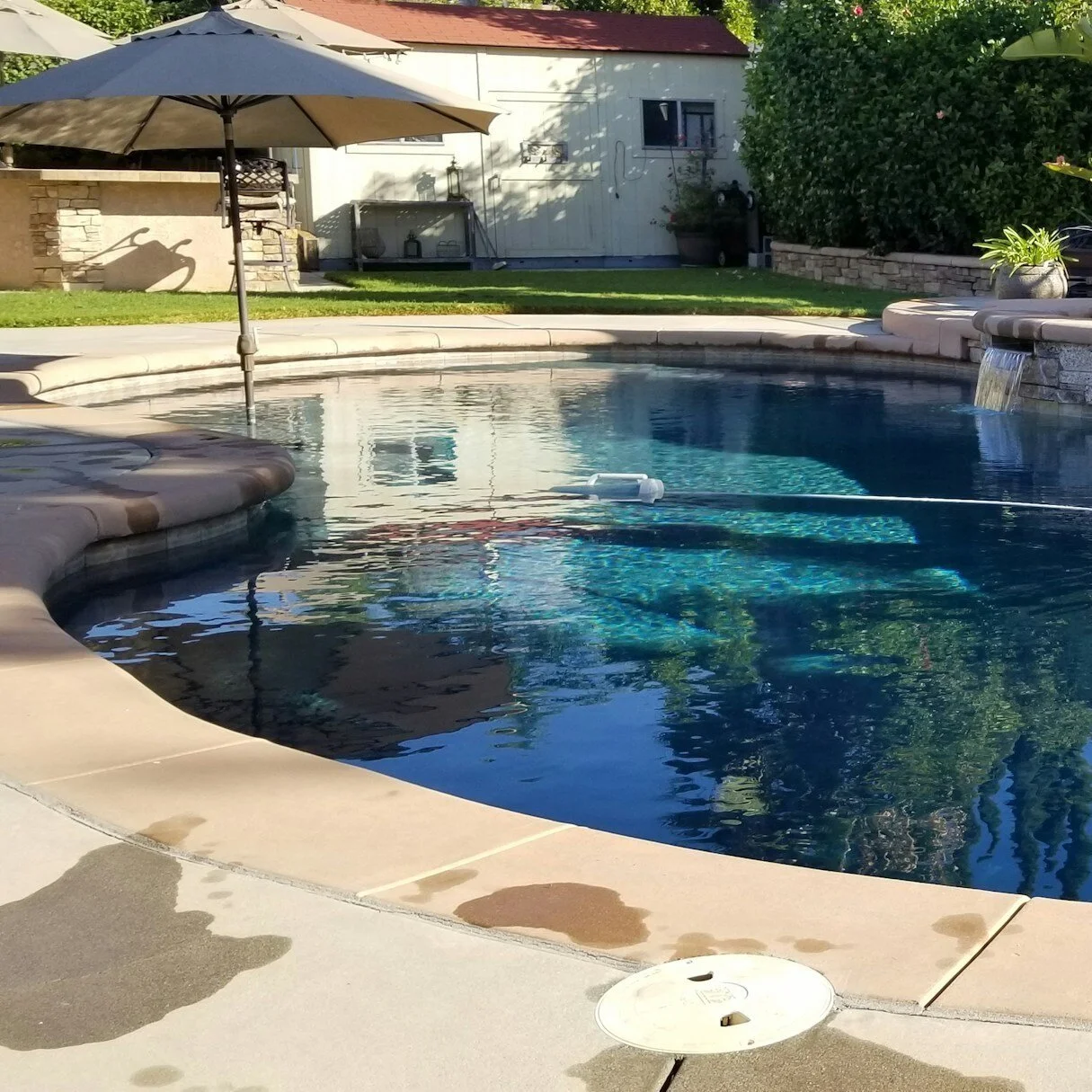
You've been adding water to the pool more often than usual. Once a week, sometimes twice. The level always seems a little low when you check it, and you've been telling yourself it's evaporation — this is Florida, after all, and the summer heat is relentless. But evaporation has a ceiling. The water you keep adding isn't just disappearing into the air.
A pool leak doesn't announce itself the way a burst pipe does. It's quiet, gradual, and very easy to rationalize away until you can't anymore. The real cost of waiting isn't the water you've wasted — it's what that water has been doing underground, inside your equipment, and to your pool chemistry while you waited.
Why a Pool Leak Gets Worse, Not Better
A pool leak doesn't stabilize on its own. A failing gasket continues to fail. A hairline crack at a fitting widens under the constant pressure of circulating water. A skimmer throat that's pulling away from the pool shell keeps pulling.
What makes the timeline so important is what the escaping water does after it leaves the pool. It doesn't disappear — it migrates into the soil around and beneath the pool. In sandy Florida soil, that migration is fast. Sand doesn't hold water the way clay does; it channels it. And as water moves through sandy soil repeatedly, it carries fine particles with it. That process — invisible, unrelenting, and accelerating — is what turns a minor leak into a major repair.
The Damage Timeline: What Happens at Each Stage
The severity of the damage a pool leak causes depends on how long it has been active and how fast it's losing water. A moderate leak — roughly 500 gallons per week, or about one inch per day in a 15,000-gallon pool — causes damage that follows a predictable arc.
| Time Without Repair | Cumulative Water Loss | What's Happening |
|---|---|---|
| 1–2 weeks | 500–1,000 gallons | Soil saturation begins around the leak point; no visible damage yet |
| 3–6 weeks | 1,500–3,000 gallons | Air entrainment possible in pump; chemistry drift begins |
| 1–3 months | 6,000–18,000 gallons | Soil erosion underway; pump wear increasing; deck cracks may appear |
| 3–6 months | 18,000–48,000 gallons | Void formation beneath deck likely; tile displacement possible |
| 6+ months | 48,000+ gallons | Structural deck failure risk; equipment replacement range; plumbing displacement |
A faster leak — a failed fitting, a cracked skimmer, a compromised main drain — compresses this timeline dramatically. A pool losing two inches per day reaches the three-month threshold in a matter of weeks.
Where Pool Leaks Most Often Start
Knowing the most common leak sources helps you know where to look — and what to tell a pool professional when you call.
Skimmer fittings: The joint where the skimmer housing meets the pool shell is one of the highest-stress points in any pool. The skimmer is plastic; the shell is concrete or fiberglass. They expand and contract at different rates with Florida's temperature swings, and that stress eventually opens a gap at the throat. Skimmer leaks are among the most common and, caught early, among the easiest to repair.
Return line fittings: The return jets that push water back into the pool are sealed with gaskets and O-rings that degrade with age and chemical exposure. A failing return fitting may look fine above the waterline while leaking steadily at the back of the fitting — invisible without a dye test or pressure check.
Light niches: Pool lights are set into a recessed housing that penetrates the shell. The conduit connection at the back of the niche is a known weak point. Because the area isn't visible to the naked eye, light niche leaks are frequently missed until the water loss becomes obvious.
Main drain assembly: Main drains sit recessed into the pool floor, secured with screws and gaskets that wear out. A leaking main drain is harder to confirm without professional pressure testing, and because it's at the bottom of the pool, water migrates downward into the subgrade where it does the most erosion damage.
Underground plumbing joints: Pipe joint leaks underground are the most difficult and costly to locate. They tend to occur at glued PVC joints that have shifted over time — a particular risk in Pinellas County's expansive-and-contractive soil conditions — and require pressure testing and sometimes excavation to find and fix.
What a Leak Does to Your Equipment
Your pool pump moves water. It is not designed to move air. When a leak lowers the pool level enough to expose the skimmer throat — or when a plumbing leak introduces air into the suction line — the pump begins pulling air along with water. That process is called cavitation.
Cavitation isn't just noisy. It's destructive. Vapor bubbles form inside the pump housing and collapse violently against the impeller and casing, eroding the metal with each cycle. A pump that cavitates for a few days produces vibration and noise. A pump that cavitates for months loses impeller material progressively, degrades its mechanical seal, and eventually fails — either seizing up or burning out the motor.
Pump replacement typically runs $400–$900 for a standard single-speed unit. A variable-speed pump — the current standard for energy efficiency in Florida — runs $800–$1,500 or more. A leak that has been running the pump in a partially cavitated state for three months can turn a simple repair call into a full equipment replacement.
If your pool water level is within 6 inches of the bottom of the skimmer throat, the pump is at risk of pulling air on its suction cycle. That's the threshold worth knowing if you're monitoring a suspected leak.
What a Leak Does to Your Chemistry
A leaking pool is a pool being constantly diluted, and every gallon of fill water you add to compensate has its own chemistry profile. Tap water in Pinellas County doesn't arrive balanced for your pool — it has its own pH, alkalinity, and calcium hardness that may be quite different from what your water needs.
More critically, fill water contains no cyanuric acid. Cyanuric acid is the stabilizer that shields chlorine from UV breakdown, and in Florida's intense sunlight, it matters enormously. A pool that's losing 15–20% of its volume monthly through a leak — and being refilled regularly — is continuously diluting its stabilizer level. Without adequate stabilizer, chlorine burns off fast in sunlight, and that's exactly how a pool develops algae problems even when the owner is adding chemicals every week.
If you've been fighting recurring cloudiness or algae since early in the season, and you've also been topping off the water frequently, those two facts are almost certainly connected.
The Structural Risk in Sandy Florida Soil
The soil beneath most pool decks in Pinellas County is sandy loam — permeable and fast-draining, which is normally a good thing. But when a sustained leak introduces repeated water flow through that soil, fine particles start moving with the drainage. The water goes; the particles go with it. That process hollows out voids beneath the pool deck and surrounding patio area — slowly at first, then faster as the void creates less resistance to the next pass.
A void beneath a concrete pool deck doesn't have to be large to cause a visible problem. Six inches of void distributed under a 10-square-foot section of deck is enough to produce a crack when weight is applied. A void beneath the coping can cause sections to lift or separate from the shell. Think of the pool deck as a table with one leg being steadily removed — the surface looks fine right up until it doesn't.
When voids reach the pool shell itself, the shell can shift enough to crack at fitting penetrations. That opens new leaks. The problem multiplies.
How to Confirm You Actually Have a Leak
The bucket test is the most reliable first step. Fill a 5-gallon bucket with pool water and set it on the first or second step. Mark the water level inside the bucket and the pool level outside it with tape. Run the pump on its normal cycle. After 24–48 hours, compare the loss: if the pool lost significantly more water than the bucket, you have a leak, not just evaporation.
A useful variation: run the test twice — once with the pump running and once with the pump off for 24 hours. If the pool loses more water with the pump on, the leak is in the plumbing or equipment under pressure. If the loss rate is roughly the same either way, the leak is in the shell, skimmer, or fittings, independent of pump pressure. That distinction narrows the search considerably before you bring in a professional.
Normal evaporation for a Florida pool runs 1/4 to 1/2 inch per day in summer. Anything consistently above that is a leak signal.
Early Repair vs. Late Repair: Where the Numbers Diverge
A skimmer fitting or return gasket repair, caught before soil erosion begins, is typically a one-visit job in the range of $150–$400. An underground plumbing leak, located cleanly before the surrounding soil has shifted, adds pressure testing and careful excavation — but stays in the $500–$1,500 range in most cases.
Once soil erosion has progressed and voids have formed beneath the deck, the repair scope expands into structural territory. Deck crack repair, void filling, coping restoration, and tile replacement each add their own cost on top of the plumbing work. A repair that would have cost $400 at six weeks can run $3,000–$8,000 or more at six months — before any equipment replacement is factored in. The leak itself doesn't get harder to fix. Everything it has damaged in the meantime does.
Frequently Asked Questions
A well-maintained pool in Florida's climate typically loses between 1/4 inch and 1/2 inch of water daily through evaporation, depending on temperature, sun exposure, wind, and whether you run a water feature. Anything consistently above 1/2 inch per day warrants a bucket test to rule out a leak. If the pool is losing more than an inch per day, treat it as a probable leak until confirmed otherwise.
Pool leaks don't resolve on their own. A hairline crack may appear to slow temporarily, when mineral deposits partially fill the gap, but the structural stress that opened the crack doesn't go away — and water pressure will widen it again. Gaskets and O-rings continue to degrade with age and chemical exposure. The only "leaks" that disappear are ones that were never structural to begin with, typically evaporation or splash-out being mistaken for a slow drain.
A full inspection — including pressure testing the plumbing lines, checking all fittings and penetrations, and using dye testing on the shell — typically takes two to four hours depending on the pool's size and plumbing layout. Electronic detection equipment can pinpoint underground leaks that aren't reachable by eye. Skipping the detection step and guessing at the source almost always costs more than the inspection itself.
Standard homeowner's policies generally do not cover pool leaks or the resulting plumbing repairs. Insurance is designed for sudden, accidental damage — not gradual wear or maintenance failures. If a leak caused secondary property damage (a sunken patio section, a cracked deck), that portion might qualify, depending on how the policy defines covered perils, but the pool repair itself is almost always out-of-pocket. Check directly with your insurer and don't assume coverage in either direction.
Sometimes. A pump pulling air often produces a louder or higher-pitched sound than normal — a gurgling or whining quality instead of the steady hum of a well-primed pump. You may also see bubbles returning through the jets into the pool, which indicates air in the suction line. Cavitation damage can also develop without dramatic warning signs — no unusual sounds, no obvious symptoms — until the bearing gives out.
Cracks in the pool deck that weren't there before — especially ones that widen or shift between visits — are the strongest surface indicator that soil movement has already begun beneath the concrete. Other signs include tiles separating from the waterline, sections of coping that rock or have lifted, and patio areas near the pool that have settled unevenly relative to the surrounding yard. At that stage, the repair scope extends well beyond the plumbing.
The Leak You Wait on Is the Leak That Costs the Most
A pool leak is forgiving when it's caught in the first few weeks and genuinely expensive when it isn't. The water loss is the symptom. The soil erosion, the equipment wear, and the chemistry instability are the damage. None of them show up on the surface right away — but all of them build in the background, visible or not.
Dog Days Pools offers professional pool leak detection and repair in Clearwater, Safety Harbor, Dunedin, Palm Harbor, and throughout Pinellas County. Our licensed team pressure-tests plumbing lines, checks all fittings and penetrations, and pinpoints leaks before they become structural problems. Whether you need routine pool maintenance or an urgent repair, we're available 7 days a week, 9 a.m. to 9 p.m. Call (727) 205-0566 — License #CPC1460480.
